Gubert Fernanda, Decotelli Ana B, Bonacossa-Pereira Igor, Figueiredo Fernanda R, Zaverucha-do-Valle Camila, Tovar-Moll Fernanda, Hoffmann Luísa, Urmenyi Turan P, Santiago Marcelo F, Mendez-Otero Rosalia
Instituto de Biofísica Carlos Chagas Filho, Centro de Ciências da Saúde, Sala G2-028, Universidade Federal do Rio de Janeiro, Cidade Universitária, RJ 21941-902, Rio de Janeiro, Brazil.
Evandro Chagas National Institute of Infectious Diseases (INI), Oswaldo Cruz Foundation, Avenida Brasil 4365, Maguinhos, RJ 21040-900, Rio de Janeiro, Brazil.
Stem Cell Res Ther. 2016 Mar 15;7:41. doi: 10.1186/s13287-016-0293-4.
Amyotrophic lateral sclerosis (ALS) is a progressive neurological disease that selectively affects the motor neurons. The details of the mechanisms of selective motor-neuron death remain unknown and no effective therapy has been developed. We investigated the therapy with bone-marrow mononuclear cells (BMMC) in a mouse model of ALS (SOD1(G93A) mice).
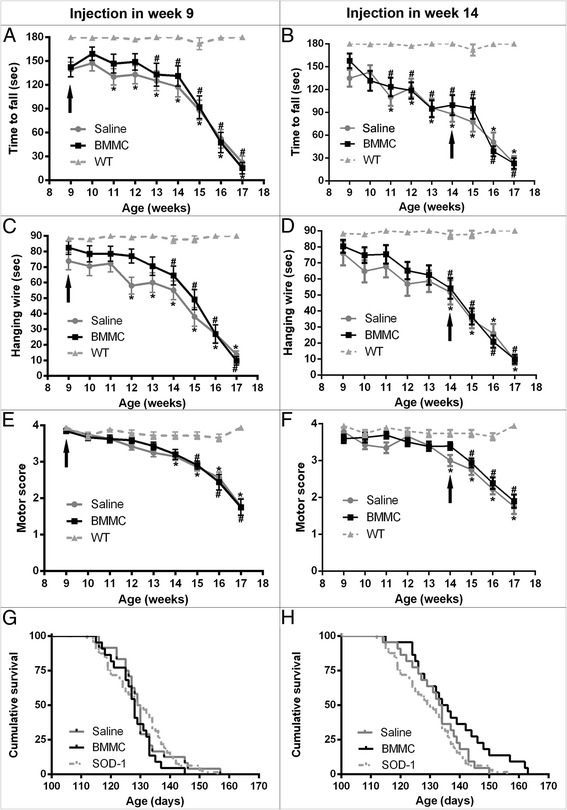
We injected 10(6) BMMC into the lumbar portion of the spinal cord of SOD1(G93A) mice in presymptomatic (9 weeks old) and symptomatic (14 weeks old) phases. In each condition, we analyzed the progression of disease and the lifespan of the animals.
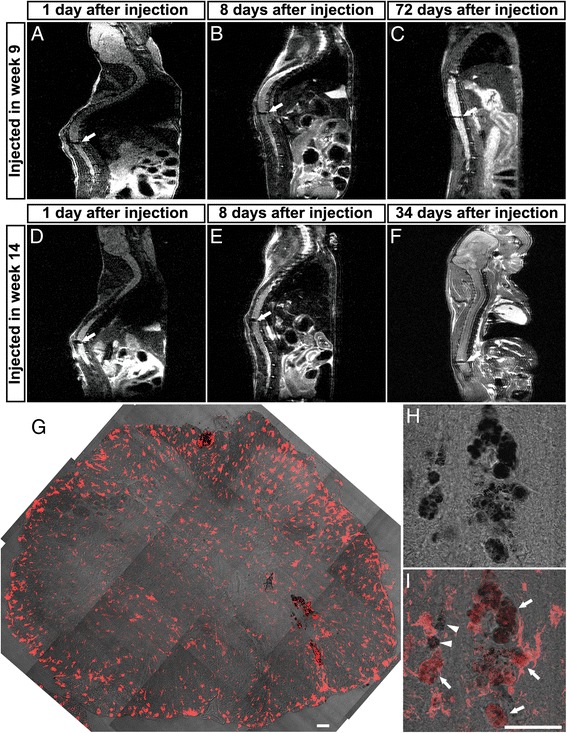
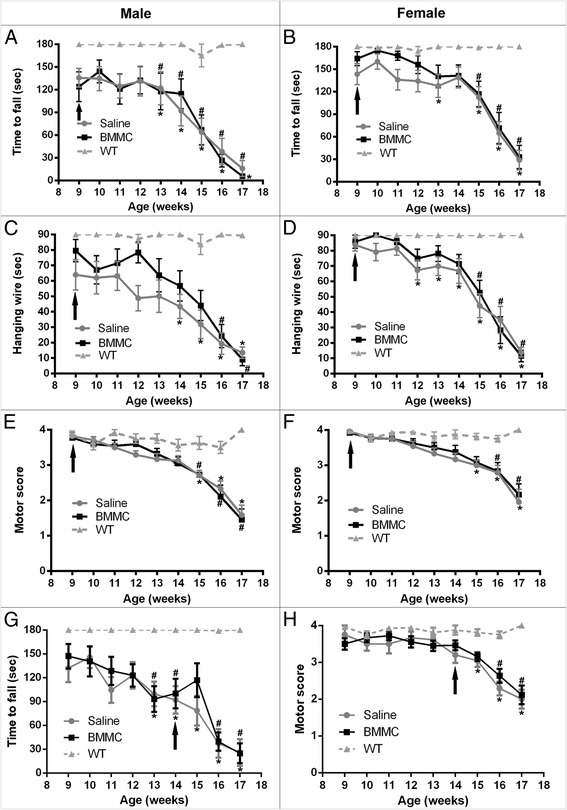
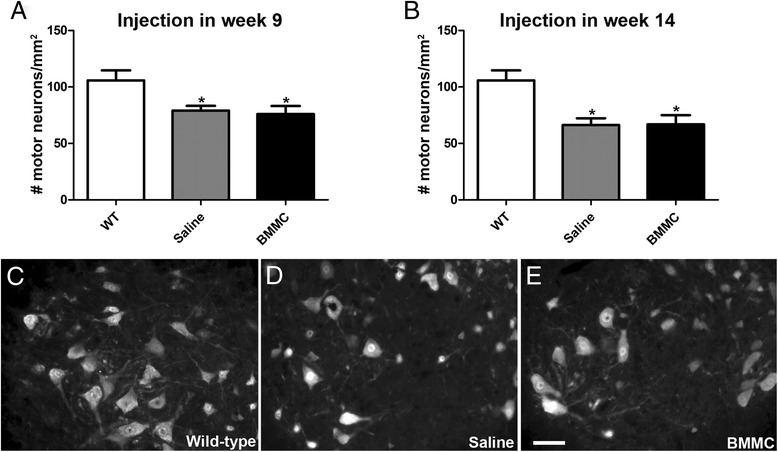
We observed a mild transitory delay in the disease progression in the animals injected with BMMC in the presymptomatic phase. However, we observed no increase in the lifespan. When we injected BMMC in the symptomatic phase, we observed no difference in the animals' lifespan or in the disease progression. Immunohistochemistry for NeuN showed a decrease in the number of motor neurons during the course of the disease, and this decrease was not affected by either treatment. Using different strategies to track the BMMC, we noted that few cells remained in the spinal cord after transplantation. This observation could explain why the BMMC therapy had only a transitory effect.
This is the first report of intraspinal BMMC therapy in a mouse model of ALS. We conclude this cellular therapy has only a mild transitory effect when performed in the presymptomatic phase of the disease.
肌萎缩侧索硬化症(ALS)是一种选择性影响运动神经元的进行性神经疾病。选择性运动神经元死亡的机制细节仍不清楚,且尚未开发出有效的治疗方法。我们在ALS小鼠模型(SOD1(G93A)小鼠)中研究了骨髓单个核细胞(BMMC)治疗。
我们在症状前期(9周龄)和症状期(14周龄)将10^6个BMMC注射到SOD1(G93A)小鼠的脊髓腰段。在每种情况下,我们分析了疾病进展和动物寿命。
我们观察到在症状前期注射BMMC的动物中,疾病进展有轻微的短暂延迟。然而,我们未观察到寿命增加。当我们在症状期注射BMMC时,我们未观察到动物寿命或疾病进展有差异。NeuN免疫组化显示疾病过程中运动神经元数量减少,且这种减少不受任何一种治疗的影响。使用不同策略追踪BMMC,我们注意到移植后脊髓中仅残留少量细胞。这一观察结果可以解释为什么BMMC治疗仅具有短暂效应。
这是关于在ALS小鼠模型中进行脊髓内BMMC治疗(的效果)的首份报告。我们得出结论,在疾病的症状前期进行这种细胞治疗仅具有轻微的短暂效应。