Homoródi Nóra, Kovács Emese G, Leé Sarolta, Katona Éva, Shemirani Amir H, Haramura Gizella, Balogh László, Bereczky Zsuzsanna, Szőke Gabriella, Péterfy Hajna, Kiss Róbert G, Édes István, Muszbek László
Institute of Cardiology and Heart Surgery, University of Debrecen, 22 Móricz Zsigmond Krt., 4032, Debrecen, Hungary.
Division of Clinical Laboratory Science, Department of Laboratory Medicine, University of Debrecen, 98 Nagyerdei Krt., 4032, Debrecen, Hungary.
J Transl Med. 2016 Mar 15;14:74. doi: 10.1186/s12967-016-0827-7.
Aspirin resistance established by different laboratory methods is still a debated problem. Using COX1 specific methods no aspirin resistance was detected among healthy volunteers. Here we tested the effect of chronic aspirin treatment on platelets from patients with stable coronary artery disease. The expression of COX2 mRNA in platelets and its influences on the effect of aspirin was also investigated.
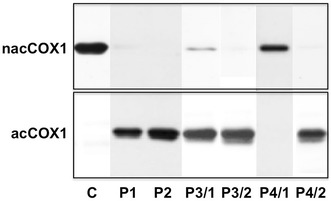
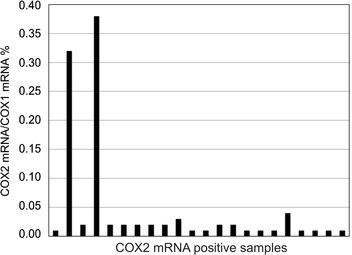
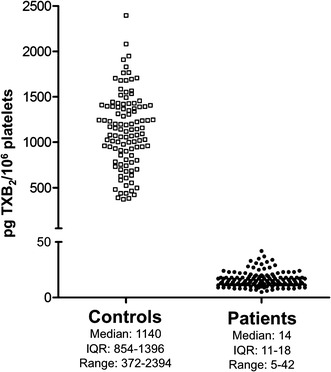
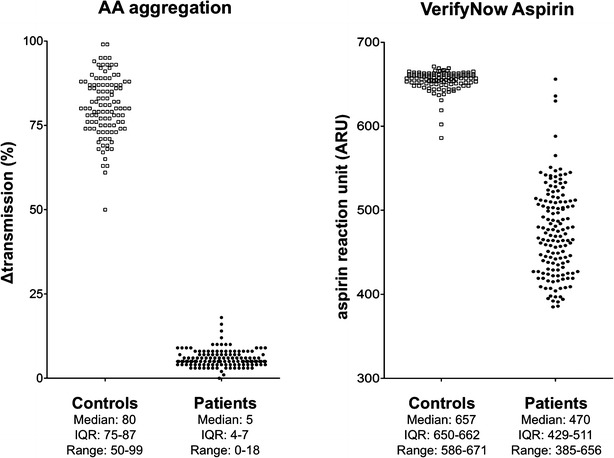
One hundred and forty four patients were enrolled in the study. The direct measurement of COX1 acetylation was carried out by monoclonal antibodies specific to acetylated and non-acetylated COX1 (acCOX1 and nacCOX1) using Western blotting technique. Arachidonic acid (AA) induced TXB2 production by platelets was measured by competitive immunoassay. AA induced platelet aggregation, ATP secretion and VerifyNow Aspirin Assay were also performed. COX2 and COX1 mRNA expression in platelets were measured in 56 patients by RT-qPCR.
In 138 patients only acCOX1 was detected, in the remaining six patients nacCOX1 disappeared after a compliance period. AA induced TXB2 production by platelets was very low in all patients including the 6 patients after compliance. AA induced platelet aggregation, secretion and with a few exceptions the VerifyNow Assay also demonstrated the effect of aspirin. Smoking, diabetes mellitus and inflammatory conditions did not influence the results. The very low amount of COX2 mRNA detected in 39 % of the investigated platelets did not influence the effect of aspirin.
No aspirin resistance was detected among patients with stable coronary artery disease. COX2 expression in platelets did not influence the effect of aspirin.
通过不同实验室方法确定的阿司匹林抵抗仍是一个存在争议的问题。采用COX1特异性方法,在健康志愿者中未检测到阿司匹林抵抗。在此,我们测试了慢性阿司匹林治疗对稳定型冠状动脉疾病患者血小板的影响。还研究了血小板中COX2 mRNA的表达及其对阿司匹林效果的影响。
144例患者纳入本研究。使用蛋白质印迹技术,通过针对乙酰化和非乙酰化COX1(acCOX1和nacCOX1)的单克隆抗体对COX1乙酰化进行直接测量。通过竞争性免疫测定法测量花生四烯酸(AA)诱导的血小板TXB2生成。还进行了AA诱导的血小板聚集、ATP分泌及VerifyNow阿司匹林检测。采用RT-qPCR法检测了56例患者血小板中COX2和COX1 mRNA的表达。
138例患者仅检测到acCOX1,其余6例患者在一个依从期后nacCOX1消失。在所有患者中,包括6例依从期后的患者,AA诱导的血小板TXB2生成均非常低。AA诱导的血小板聚集、分泌,除少数例外,VerifyNow检测也证实了阿司匹林的效果。吸烟、糖尿病和炎症状态均未影响结果。在39%的被研究血小板中检测到的极低量COX2 mRNA未影响阿司匹林的效果。
在稳定型冠状动脉疾病患者中未检测到阿司匹林抵抗。血小板中COX2的表达未影响阿司匹林的效果。