Bradford James R, Wappett Mark, Beran Garry, Logie Armelle, Delpuech Oona, Brown Henry, Boros Joanna, Camp Nicola J, McEwen Robert, Mazzola Anne Marie, D'Cruz Celina, Barry Simon T
Department of Oncology and Metabolism, University of Sheffield, Sheffield, South Yorkshire, UK.
Oncology iMED, AstraZeneca Pharmaceuticals, Alderley Park, Cheshire, UK.
Oncotarget. 2016 Apr 12;7(15):20773-87. doi: 10.18632/oncotarget.8014.
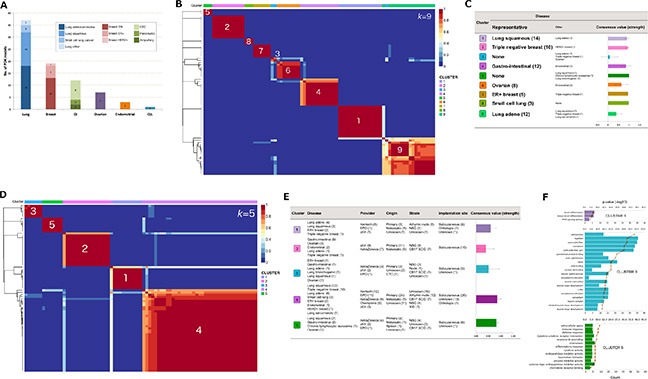
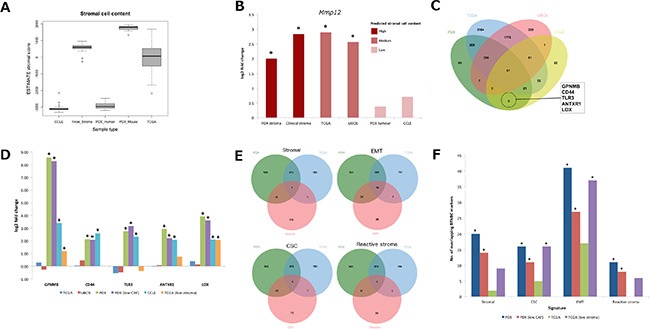
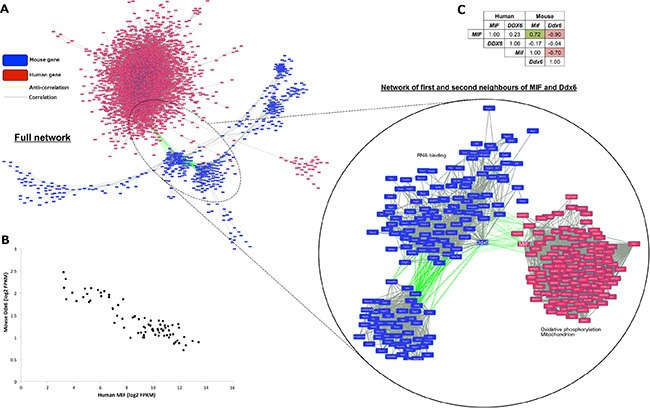
The tumor microenvironment is emerging as a key regulator of cancer growth and progression, however the exact mechanisms of interaction with the tumor are poorly understood. Whilst the majority of genomic profiling efforts thus far have focused on the tumor, here we investigate RNA-Seq as a hypothesis-free tool to generate independent tumor and stromal biomarkers, and explore tumor-stroma interactions by exploiting the human-murine compartment specificity of patient-derived xenografts (PDX).Across a pan-cancer cohort of 79 PDX models, we determine that mouse stroma can be separated into distinct clusters, each corresponding to a specific stromal cell type. This implies heterogeneous recruitment of mouse stroma to the xenograft independent of tumor type. We then generate cross-species expression networks to recapitulate a known association between tumor epithelial cells and fibroblast activation, and propose a potentially novel relationship between two hypoxia-associated genes, human MIF and mouse Ddx6. Assessment of disease subtype also reveals MMP12 as a putative stromal marker of triple-negative breast cancer. Finally, we establish that our ability to dissect recruited stroma from trans-differentiated tumor cells is crucial to identifying stem-like poor-prognosis signatures in the tumor compartment.In conclusion, RNA-Seq is a powerful, cost-effective solution to global analysis of human tumor and mouse stroma simultaneously, providing new insights into mouse stromal heterogeneity and compartment-specific disease markers that are otherwise overlooked by alternative technologies. The study represents the first comprehensive analysis of its kind across multiple PDX models, and supports adoption of the approach in pre-clinical drug efficacy studies, and compartment-specific biomarker discovery.
肿瘤微环境正逐渐成为癌症生长和进展的关键调节因子,然而其与肿瘤相互作用的确切机制仍知之甚少。虽然迄今为止大多数基因组分析工作都集中在肿瘤上,但在此我们研究RNA测序作为一种无假设工具,以生成独立的肿瘤和基质生物标志物,并通过利用患者来源异种移植(PDX)的人鼠隔室特异性来探索肿瘤-基质相互作用。在79个PDX模型的泛癌队列中,我们确定小鼠基质可分为不同的簇,每个簇对应一种特定的基质细胞类型。这意味着小鼠基质向异种移植的异质性募集与肿瘤类型无关。然后我们生成跨物种表达网络,以重现肿瘤上皮细胞和成纤维细胞激活之间的已知关联,并提出人类MIF和小鼠Ddx6这两个缺氧相关基因之间可能存在的新关系。疾病亚型评估还揭示MMP12是三阴性乳腺癌的一种假定基质标志物。最后,我们确定从转分化肿瘤细胞中分离募集的基质的能力对于识别肿瘤隔室中类似干细胞的不良预后特征至关重要。
总之,RNA测序是一种强大且经济高效的解决方案,可同时对人类肿瘤和小鼠基质进行全局分析,为小鼠基质异质性和隔室特异性疾病标志物提供新见解,而这些是其他技术可能会忽略的。该研究是对多个PDX模型进行的同类首次全面分析,并支持在临床前药物疗效研究和隔室特异性生物标志物发现中采用这种方法。