Martínez-Alcántara Belén, Martínez-Cuenca Mary-Rus, Fernández Carlos, Legaz Francisco, Quiñones Ana
Department of Citriculture and Vegetable Production, Instituto Valenciano de Investigaciones Agrarias, Moncada (Valencia), Spain.
Institute of Animal Science and Technology, Valencian Polytechnic University, Valencia, Spain.
PLoS One. 2016 Mar 16;11(3):e0150851. doi: 10.1371/journal.pone.0150851. eCollection 2016.
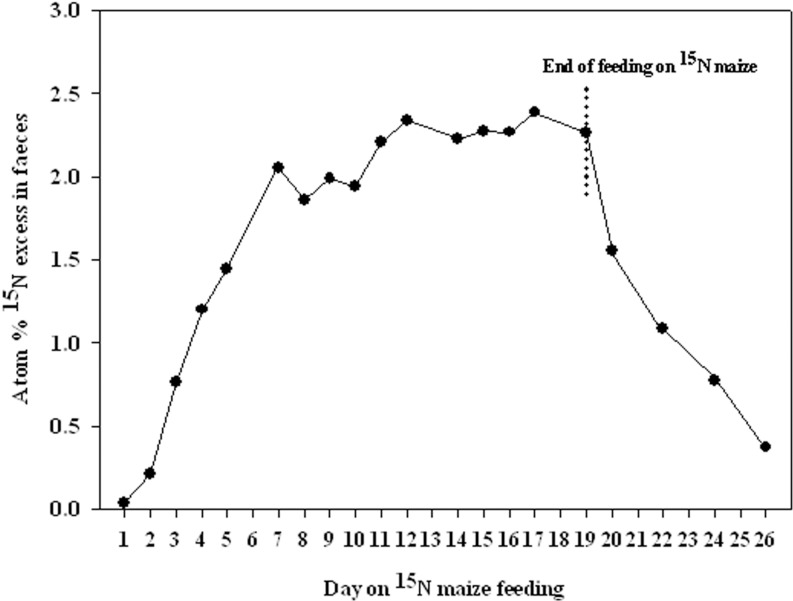
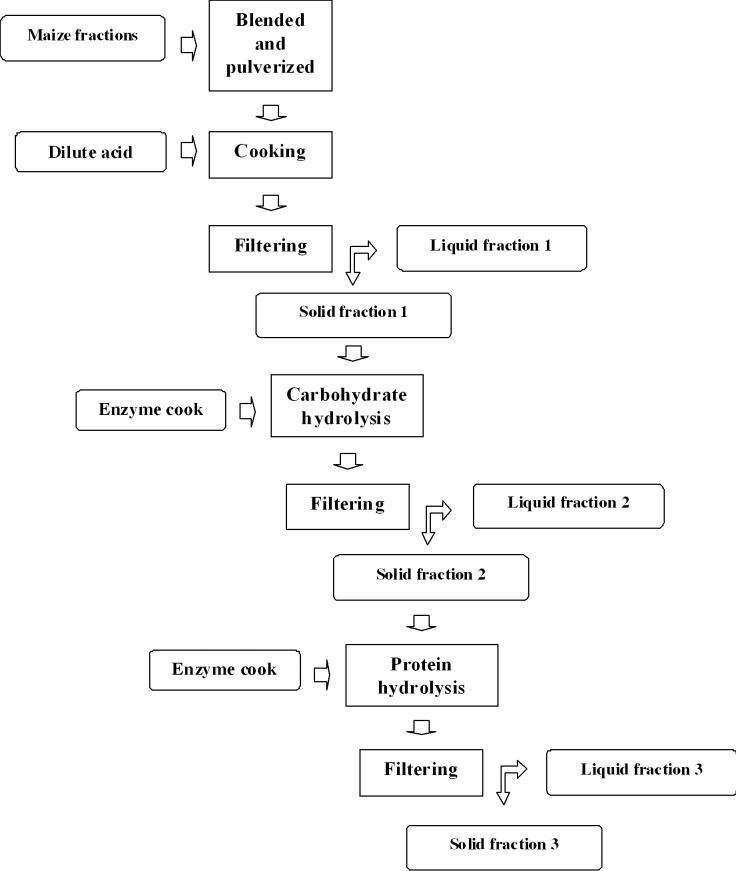
Large quantities of crop residue and animal manure from agricultural and livestock activities are annually produced worldwide. With proper management, these residues are potentially valuable sources of plant nutrients, mainly N. Recycling such subproducts in sustainably-based agricultural systems can minimise the use of mineral fertilisers, and hence reduce the potential risk of surface and groundwater pollution. Therefore, the purpose of this study was to obtain (small scale) two liquid labelled-organic fertilisers, an animal- and a vegetal-based organic (AO and VO, respectively) fertiliser, to be used as organic N sources in subsequent fertigation studies. Forage maize (Zea mays L.) grown under 15N-labelled fertiliser supply was used as raw material for VO fertiliser production, and also as 15N-labelled sheep feed to obtain 15N-labelled manure. The labelled faeces fraction was used as raw material for the AO fertiliser. The VO fertiliser was obtained after an acidic and an enzyme-driven hydrolysis. The AO fertiliser was obtained after acidic hydrolysis. The VO liquid fertiliser presented an N concentration of 330 mg·L-1, 85% of total N was organic, while ammonium and nitrate N accounted for 55% and 45% of the mineral nitrogen fraction, respectively. This fertiliser also exhibited high K, Ca and S concentrations and notable values for the remaining macro- and micronutrients. The AO liquid fertiliser had a similar total N concentration (496 mg·L-1, 82% of total N in an organic form) to that of VO, but its mineral N fraction significantly differed, which came in a predominantly (95%) ammonia form. It also had a high content of N, P, K and other macronutrients, and sufficient Fe, Zn, Mn, Cu and B levels, which suggests its suitability as a potential fertiliser. The percentage of 15N enrichment in both VO and AO liquid fertilisers exceeded 2% 15N atom excess, which enabled their use in subsequent assays run to assess nitrogen uptake efficiency.
全球农业和畜牧活动每年都会产生大量的农作物秸秆和动物粪便。如果管理得当,这些残留物可能是植物养分(主要是氮)的宝贵来源。在可持续农业系统中循环利用这些副产品可以减少矿物肥料的使用,从而降低地表水和地下水污染的潜在风险。因此,本研究的目的是制备(小规模)两种液体标记有机肥料,一种是动物源有机肥料,另一种是植物源有机肥料(分别为AO和VO),用作后续施肥灌溉研究中的有机氮源。在15N标记肥料供应条件下种植的饲用玉米(Zea mays L.)用作VO肥料生产的原料,也用作15N标记的绵羊饲料以获取15N标记的粪便。标记的粪便部分用作AO肥料的原料。VO肥料是经过酸性和酶促水解后获得的。AO肥料是经过酸性水解后获得的。VO液体肥料的氮浓度为330 mg·L-1,总氮的85%为有机氮,而铵态氮和硝态氮分别占矿质氮部分的55%和45%。这种肥料还具有较高的钾、钙和硫浓度,其余大量和微量营养元素的含量也很可观。AO液体肥料的总氮浓度(496 mg·L-1,82%的总氮为有机形态)与VO相似,但其矿质氮部分有显著差异,主要以氨态(95%)形式存在。它还含有高含量的氮、磷、钾和其他大量营养元素,以及充足的铁、锌、锰、铜和硼含量,这表明它适合作为潜在肥料。VO和AO液体肥料中15N的富集百分比均超过2%的15N原子过量,这使得它们能够用于后续评估氮吸收效率的试验。