Kozak Sandra, Lercher Lukas, Karanth Megha N, Meijers Rob, Carlomagno Teresa, Boivin Stephane
SPC Facility, European Molecular Biology Laboratory (EMBL), Hamburg Outstation, Notkestrasse 85, 22607, Hamburg, Germany.
SCB Unit, European Molecular Biology Laboratory (EMBL), Meyerhofstrasse 1, 69117, Heidelberg, Germany.
J Biomol NMR. 2016 Apr;64(4):281-9. doi: 10.1007/s10858-016-0027-z. Epub 2016 Mar 17.
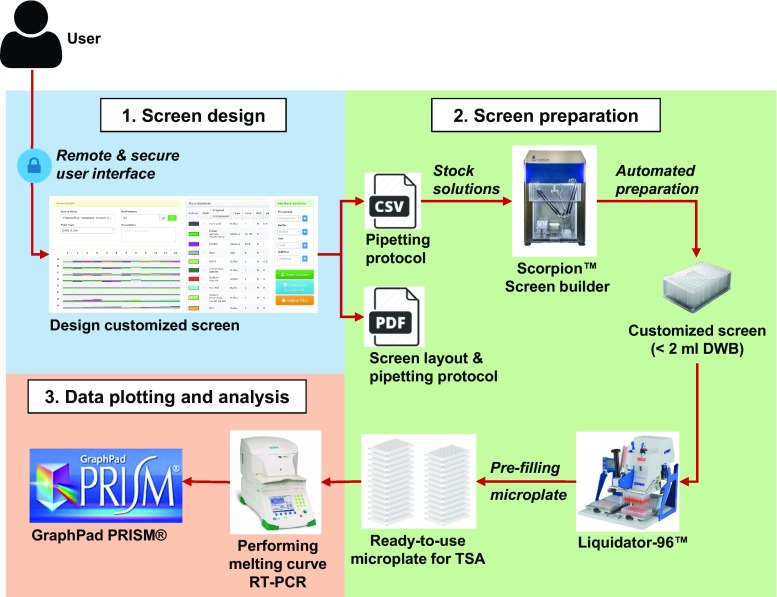
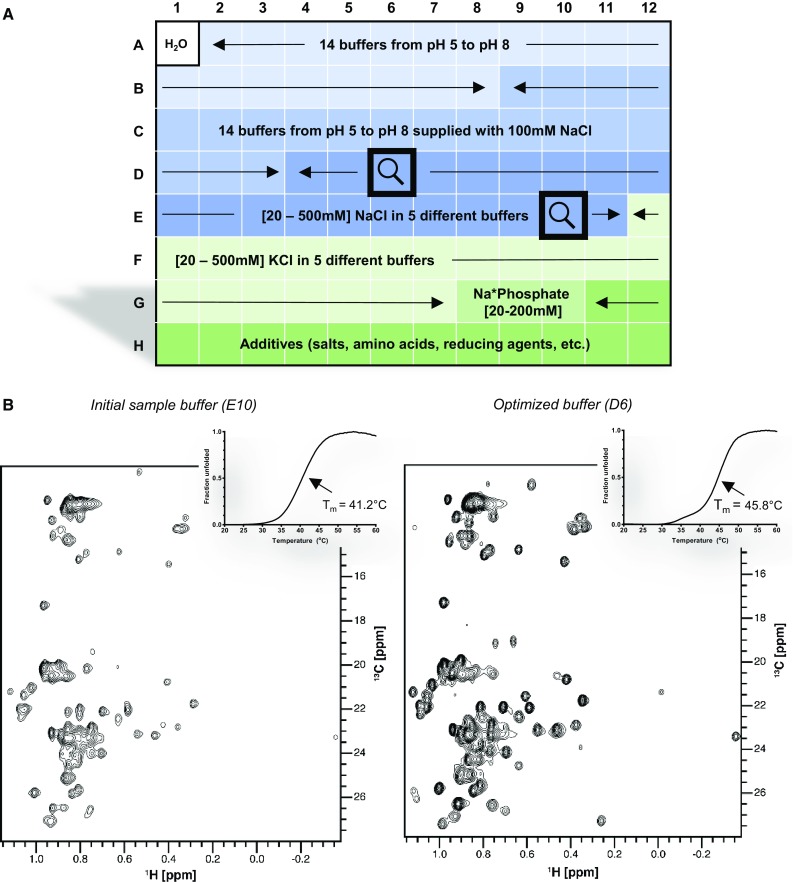
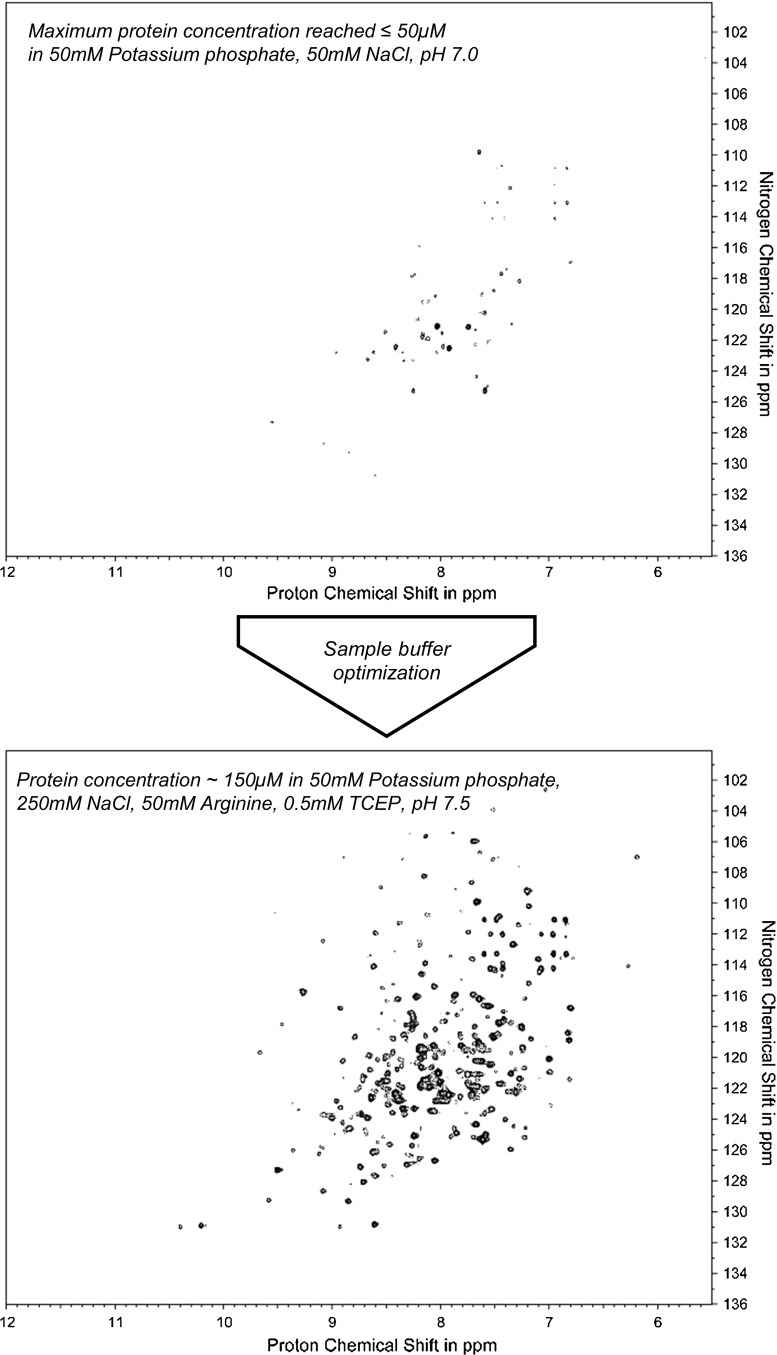
Maintaining a stable fold for recombinant proteins is challenging, especially when working with highly purified and concentrated samples at temperatures >20 °C. Therefore, it is worthwhile to screen for different buffer components that can stabilize protein samples. Thermal shift assays or ThermoFluor(®) provide a high-throughput screening method to assess the thermal stability of a sample under several conditions simultaneously. Here, we describe a thermal shift assay that is designed to optimize conditions for nuclear magnetic resonance studies, which typically require stable samples at high concentration and ambient (or higher) temperature. We demonstrate that for two challenging proteins, the multicomponent screen helped to identify ingredients that increased protein stability, leading to clear improvements in the quality of the spectra. Thermal shift assays provide an economic and time-efficient method to find optimal conditions for NMR structural studies.
维持重组蛋白的稳定折叠具有挑战性,尤其是在温度高于20°C的条件下处理高度纯化和浓缩的样品时。因此,筛选能够稳定蛋白质样品的不同缓冲液成分是值得的。热迁移分析或热荧光分析提供了一种高通量筛选方法,可同时在多种条件下评估样品的热稳定性。在此,我们描述了一种热迁移分析方法,该方法旨在优化核磁共振研究的条件,核磁共振研究通常需要高浓度且在环境温度(或更高温度)下稳定的样品。我们证明,对于两种具有挑战性的蛋白质,多组分筛选有助于识别提高蛋白质稳定性的成分,从而显著改善光谱质量。热迁移分析为寻找核磁共振结构研究的最佳条件提供了一种经济且高效的方法。