Masroori Nasser, Merindol Natacha, Berthoux Lionel
Laboratory of Retrovirology, Department of Medical Biology and BioMed Research Group, Université du Québec à Trois-Rivières, Trois-Rivières, QC, Canada.
Retrovirology. 2016 Mar 22;13:19. doi: 10.1186/s12977-016-0253-1.
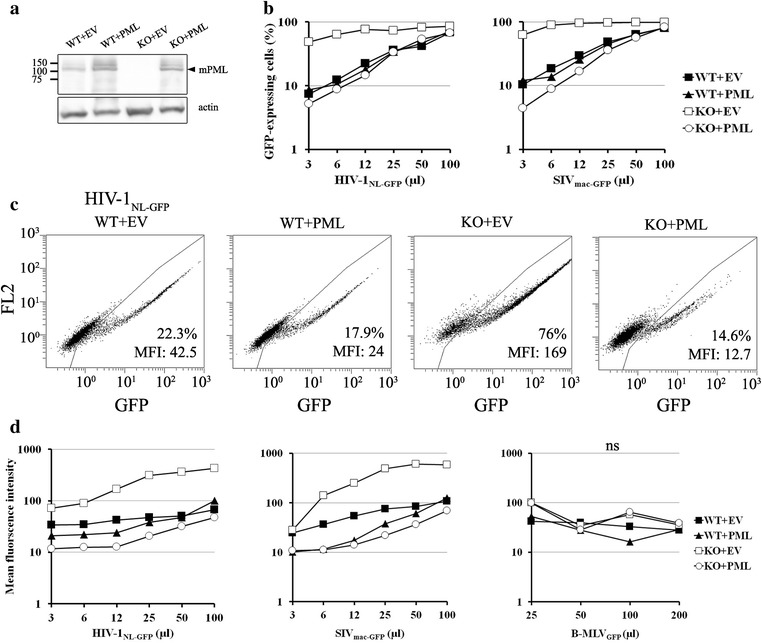
The promyelocytic leukemia (PML) protein, a type I interferon (IFN-I)-induced gene product and a member of the tripartite motif (TRIM) family, modulates the transcriptional activity of viruses belonging to various families. Whether PML has an impact on the replication of HIV-1 has not been fully addressed, but recent studies point to its possible involvement in the restriction of HIV-1 in human cells and in the maintenance of transcriptional latency in human cell lines in which HIV-1 is constitutively repressed. We investigated further the restriction of HIV-1 and a related lentivirus, SIVmac, by PML in murine cells and in a lymphocytic human cell line. In particular, we studied the relevance of PML to IFN-I-mediated inhibition and the role of individual human isoforms.
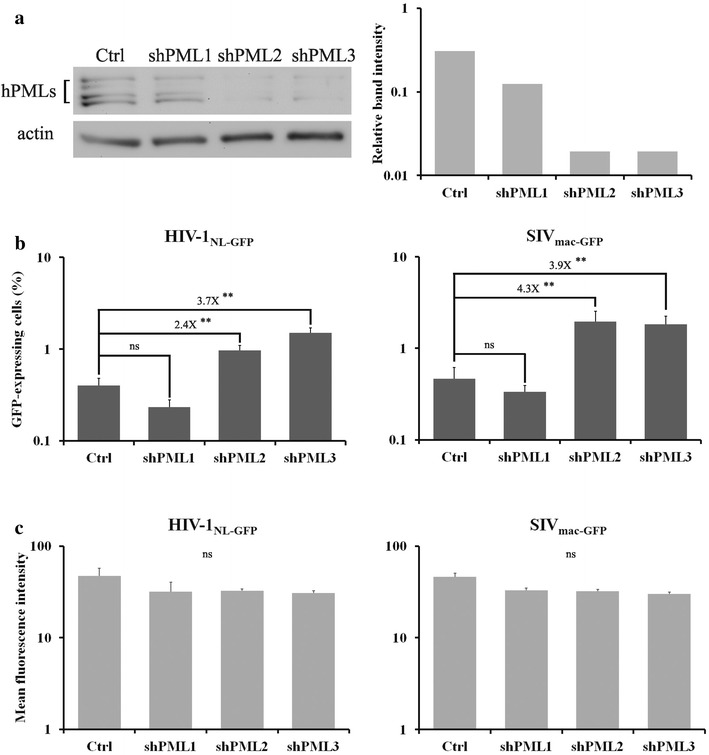
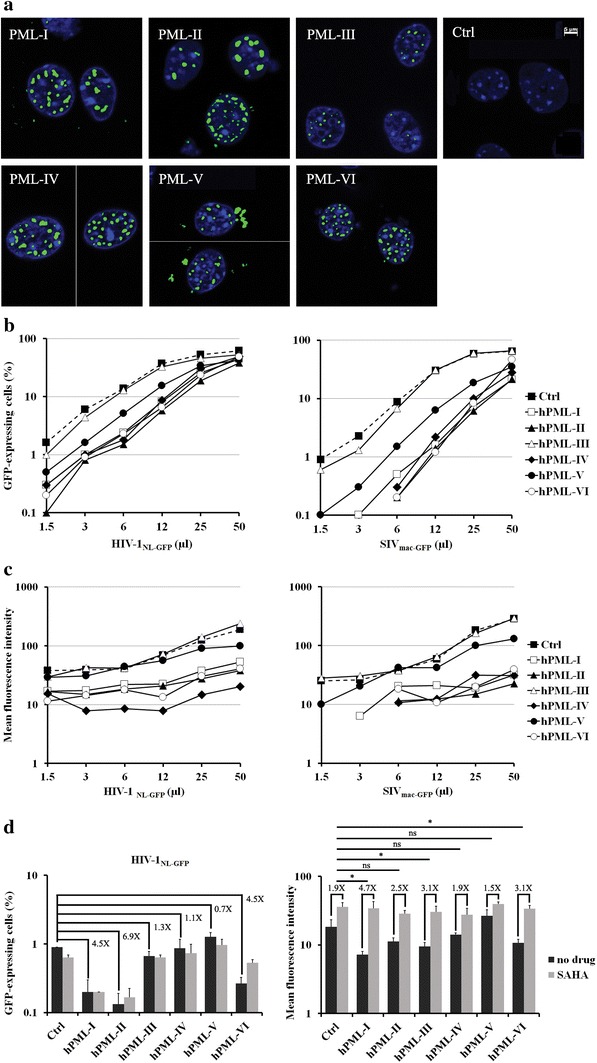
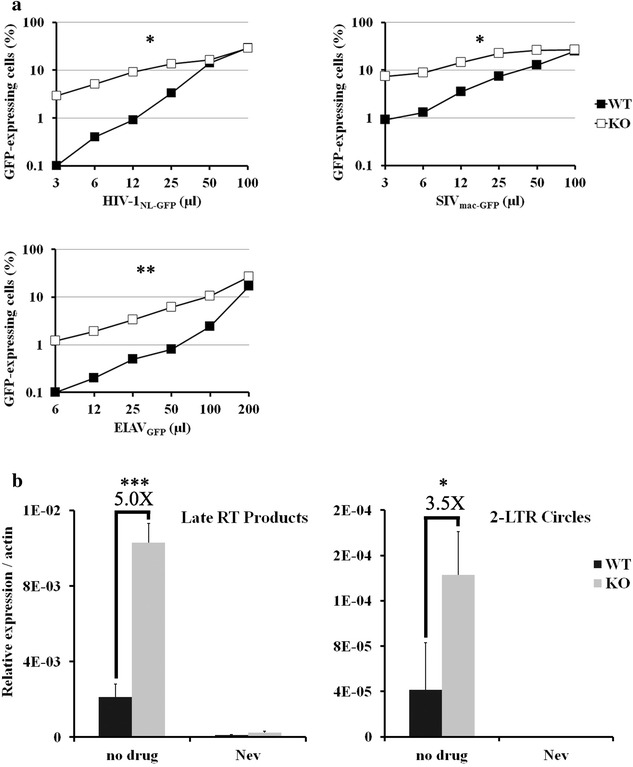
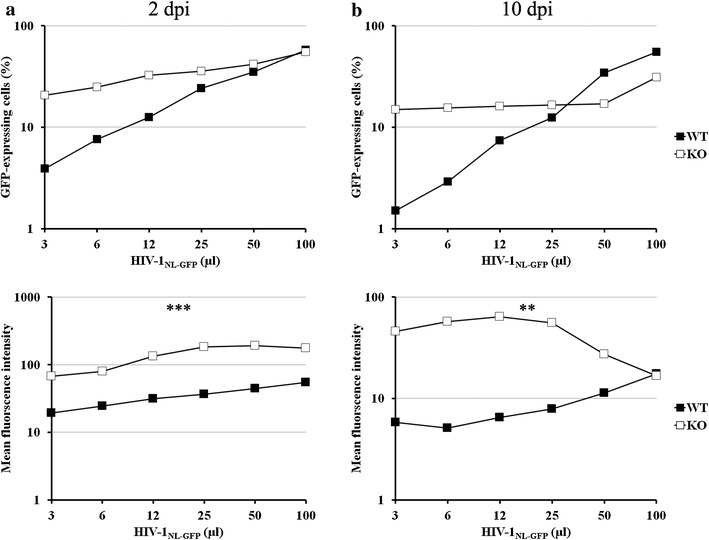
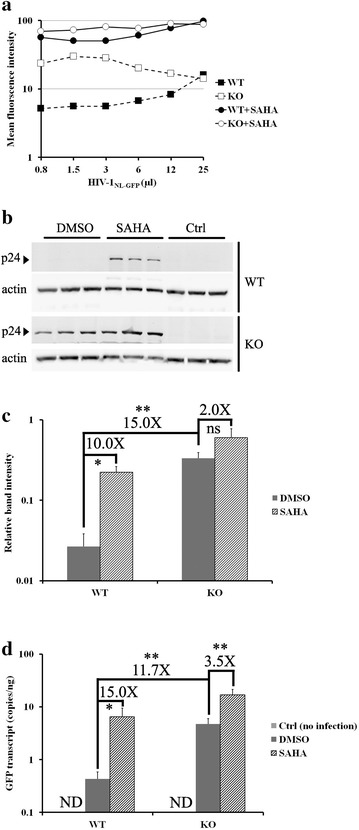
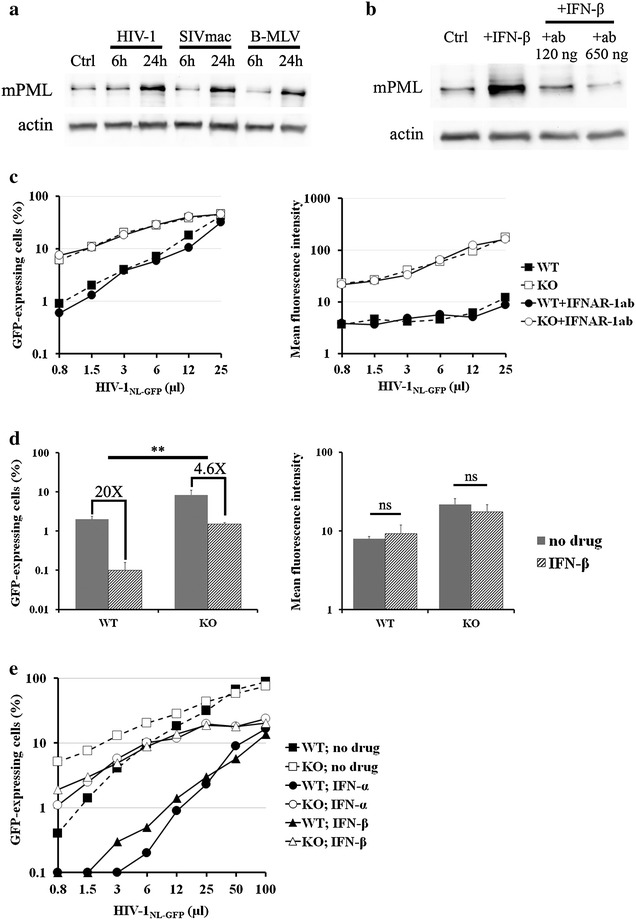
We demonstrate that both human PML (hPML) and murine PML (mPML) inhibit the early post-entry stages of the replication of HIV-1 and a related lentivirus, SIVmac. In addition, HIV-1 was transcriptionally silenced by mPML and by hPML isoforms I, II, IV and VI in MEFs. This PML-mediated transcriptional repression was attenuated in presence of the histone deacetylase inhibitor SAHA. In contrast, depletion of PML had no effect on HIV-1 gene expression in a human T cell line. PML was found to contribute to the inhibition of HIV-1 by IFN-I. Specifically, IFN-α and IFN-β treatments of MEFs enhanced the PML-dependent inhibition of HIV-1 early replication stages.
We show that PML can inhibit HIV-1 and other lentiviruses as part of the IFN-I-mediated response. The restriction takes place at two distinct steps, i.e. reverse transcription and transcription, and in an isoform-specific, cellular context-specific fashion. Our results support a model in which PML activates innate immune antilentiviral effectors. These data are relevant to the development of latency reversal-inducing pharmacological agents, since PML was previously proposed as a pharmacological target for such inhibitors. This study also has implications for the development of murine models of HIV-1.
早幼粒细胞白血病(PML)蛋白是一种I型干扰素(IFN-I)诱导的基因产物,也是三联基序(TRIM)家族的成员,可调节属于不同家族的病毒的转录活性。PML是否对HIV-1的复制有影响尚未完全明确,但最近的研究表明其可能参与人类细胞中HIV-1的限制以及HIV-1组成型抑制的人类细胞系中转录潜伏期的维持。我们进一步研究了PML在鼠细胞和人淋巴细胞系中对HIV-1及相关慢病毒SIVmac的限制作用。特别是,我们研究了PML与IFN-I介导的抑制作用的相关性以及个体人类异构体的作用。
我们证明,人PML(hPML)和鼠PML(mPML)均抑制HIV-1及相关慢病毒SIVmac复制的早期进入后阶段。此外,mPML以及hPML异构体I、II、IV和VI在小鼠胚胎成纤维细胞(MEF)中使HIV-1转录沉默。在组蛋白脱乙酰酶抑制剂SAHA存在的情况下,这种PML介导的转录抑制作用减弱。相反,在人T细胞系中PML的缺失对HIV-1基因表达没有影响。发现PML有助于IFN-I对HIV-1的抑制作用。具体而言,用IFN-α和IFN-β处理MEF可增强PML依赖性对HIV-1早期复制阶段的抑制作用。
我们表明,作为IFN-I介导反应的一部分,PML可抑制HIV-1和其他慢病毒。这种限制发生在两个不同的步骤,即逆转录和转录,并且以异构体特异性、细胞背景特异性的方式进行。我们的结果支持一种模型,即PML激活先天性免疫抗慢病毒效应器。这些数据与潜伏期逆转诱导药物的开发相关,因为PML先前被提议作为此类抑制剂的药理学靶点。这项研究也对HIV-1小鼠模型的开发有影响。