Lu Lijun, Zhang Si-Ming, Mutuku Martin W, Mkoji Gerald M, Loker Eric S
Center for Evolutionary and Theoretical Immunology, Department of Biology, University of New Mexico, Albuquerque, 87131, USA.
Center for Biotechnology Research and Development, Kenya Medical Research Institute (KEMRI), P.O Box 54840-00200, Nairobi, Kenya.
Parasit Vectors. 2016 Mar 21;9:166. doi: 10.1186/s13071-016-1457-x.
Schistosoma mansoni is hosted by several species of Biomphalaria spp. snails in Africa. We were interested in determining if there were differences in compatibility of S. mansoni with Biomphalaria sudanica from Lake Victoria, or with B. pfeifferi from streams and smaller water bodies in Kenya. Does this parasite develop with equal efficiency in both snail species, and does this have implications for transmission in different habitat types?
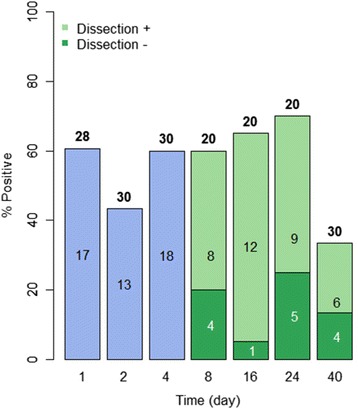
Primers for PCR amplification of the S. mansoni ND5 gene were designed and tested for sensitivity and specificity. We exposed laboratory-reared B. sudanica and field-derived B. pfeifferi to single miracidium infections and at 1, 2, 4, 8, 16 and 24 days post-exposure (dpe), snails were extracted for the PCR assay. Snails were also shed for cercariae and/or dissected prior to extraction. Additionally, B. sudanica and B. pfeifferi were collected from field locations and tested with the PCR assay.
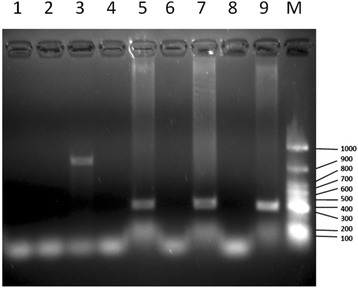
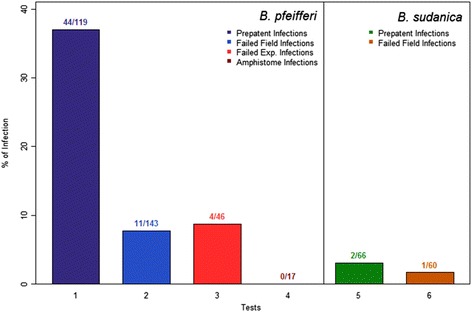
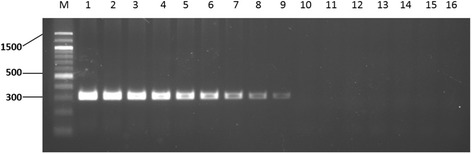
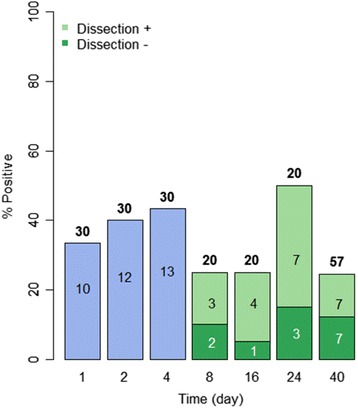
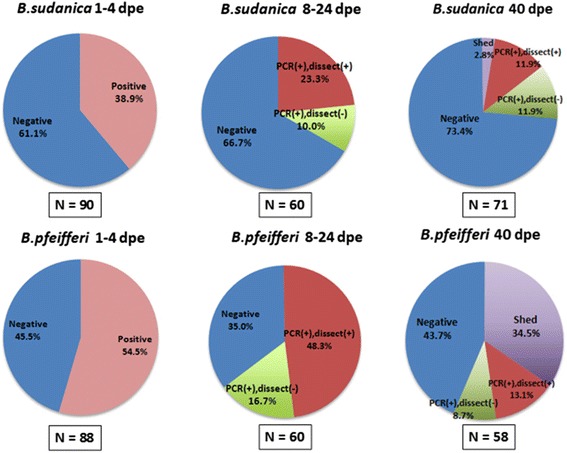
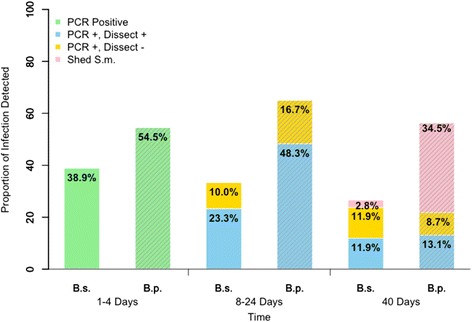
The ND5 PCR assay was sensitive (>0.1 fg S. mansoni genomic DNA) and allowed S. mansoni to be differentiated from other relevant schistosome species or snails. The number of PCR positive snails at 1-4 dpe was higher for B. pfeifferi than for B. sudanica, but not significantly so (P = 0.052). From 8-24 dpe, more B. pfeifferi harbored successfully developing parasites (positive by both dissection and PCR) than did B. sudanica (P = 0.008). At 40 dpe, more B. pfeifferi than B. sudanica shed cercariae or harbored dissection positive/PCR positive infections (P < 0.001). Both immature and failed (dissection negative but PCR positive) S. mansoni infections could also be detected in naturally infected snails of both species.
The PCR assay detected S. mansoni infections in snails exposed to one miracidium for one day. Both B. sudanica and B. pfeifferi supported full development of S. mansoni, but B. pfeifferi was more compatible, with significantly more dissection positive/PCR positive or shedding infections, and significantly fewer failed infections (dissection negative/PCR positive). This highlights the relatively lower compatibility of B. sudanica with S. mansoni, and suggests the factors responsible for incompatibility and how they might affect transmission of S. mansoni in habitats like Lake Victoria deserve additional study.
曼氏血吸虫寄生于非洲的几种双脐螺属蜗牛。我们感兴趣的是确定曼氏血吸虫与维多利亚湖的苏丹双脐螺,或与肯尼亚溪流及较小水体中的费氏双脐螺在兼容性上是否存在差异。这种寄生虫在这两种蜗牛中发育效率是否相同,以及这对不同栖息地类型中的传播有何影响?
设计了用于曼氏血吸虫ND5基因PCR扩增的引物,并对其敏感性和特异性进行了测试。我们将实验室饲养的苏丹双脐螺和野外采集的费氏双脐螺暴露于单个毛蚴感染,在暴露后1、2、4、8、16和24天(dpe),取出蜗牛进行PCR检测。在取出蜗牛前,还让其排出尾蚴和/或进行解剖。此外,从野外地点采集苏丹双脐螺和费氏双脐螺,并用PCR检测。
ND5 PCR检测敏感(>0.1 fg曼氏血吸虫基因组DNA),可将曼氏血吸虫与其他相关血吸虫种类或蜗牛区分开来。在暴露后1 - 4天,费氏双脐螺中PCR阳性蜗牛的数量高于苏丹双脐螺,但差异不显著(P = 0.052)。在暴露后8 - 24天,成功发育出寄生虫(解剖和PCR均为阳性)的费氏双脐螺比苏丹双脐螺更多(P = 0.008)。在暴露后40天,排出尾蚴或解剖阳性/PCR阳性感染的费氏双脐螺比苏丹双脐螺更多(P < 0.001)。在这两种蜗牛的自然感染个体中,还能检测到未成熟和失败(解剖阴性但PCR阳性)的曼氏血吸虫感染。
PCR检测可在暴露于单个毛蚴一天的蜗牛中检测到曼氏血吸虫感染。苏丹双脐螺和费氏双脐螺都能支持曼氏血吸虫的完全发育,但费氏双脐螺的兼容性更强,解剖阳性/PCR阳性或排出尾蚴感染的数量显著更多,失败感染(解剖阴性/PCR阳性)的数量显著更少。这突出了苏丹双脐螺与曼氏血吸虫相对较低的兼容性,并表明导致不兼容性的因素以及它们如何影响曼氏血吸虫在维多利亚湖等栖息地的传播值得进一步研究。