Hartley Ruth A, Barker Bethan L, Newby Chris, Pakkal Mini, Baldi Simonetta, Kajekar Radhika, Kay Richard, Laurencin Marie, Marshall Richard P, Sousa Ana R, Parmar Harsukh, Siddiqui Salman, Gupta Sumit, Brightling Chris E
Department of Infection, Inflammation and Immunity and Health Sciences, Institute for Lung Health, University of Leicester, Leicester, United Kingdom.
Department of experimental Medicine, Hoffmann-La Roche, Nutley, NJ.
J Allergy Clin Immunol. 2016 May;137(5):1413-1422.e12. doi: 10.1016/j.jaci.2016.02.001. Epub 2016 Mar 19.
There is a paucity of studies comparing asthma and chronic obstructive pulmonary disease (COPD) based on thoracic quantitative computed tomographic (QCT) parameters.
We sought to compare QCT parameters of airway remodeling, air trapping, and emphysema between asthmatic patients and patients with COPD and explore their relationship with airflow limitation.
Asthmatic patients (n = 171), patients with COPD (n = 81), and healthy subjects (n = 49) recruited from a single center underwent QCT and clinical characterization.
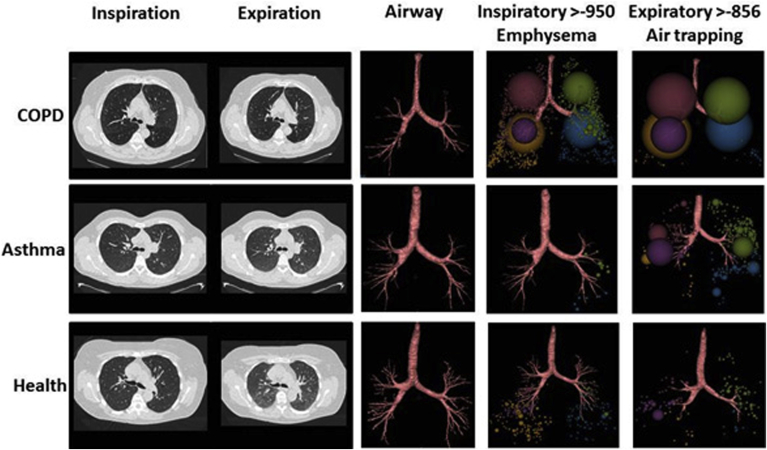
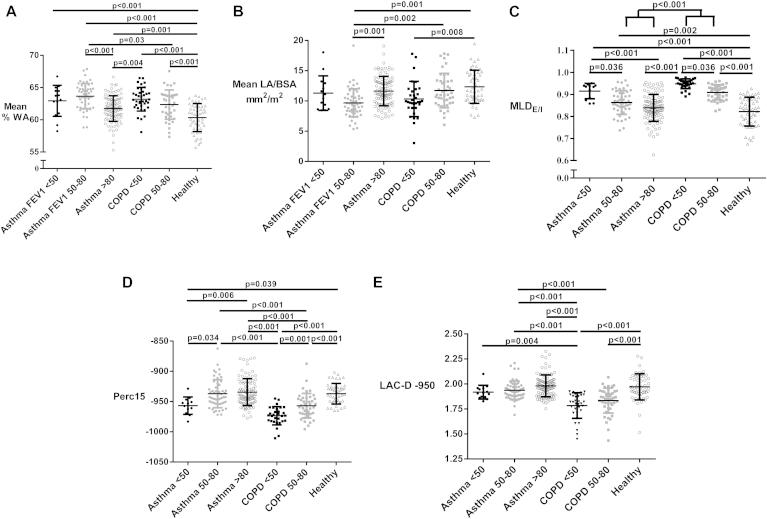
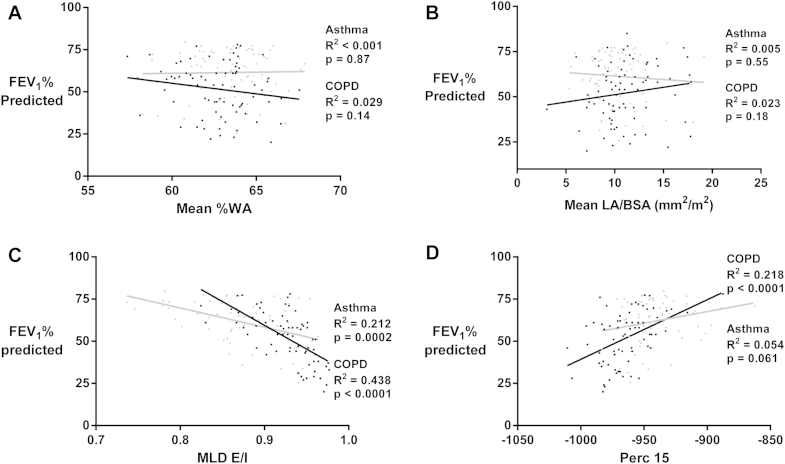
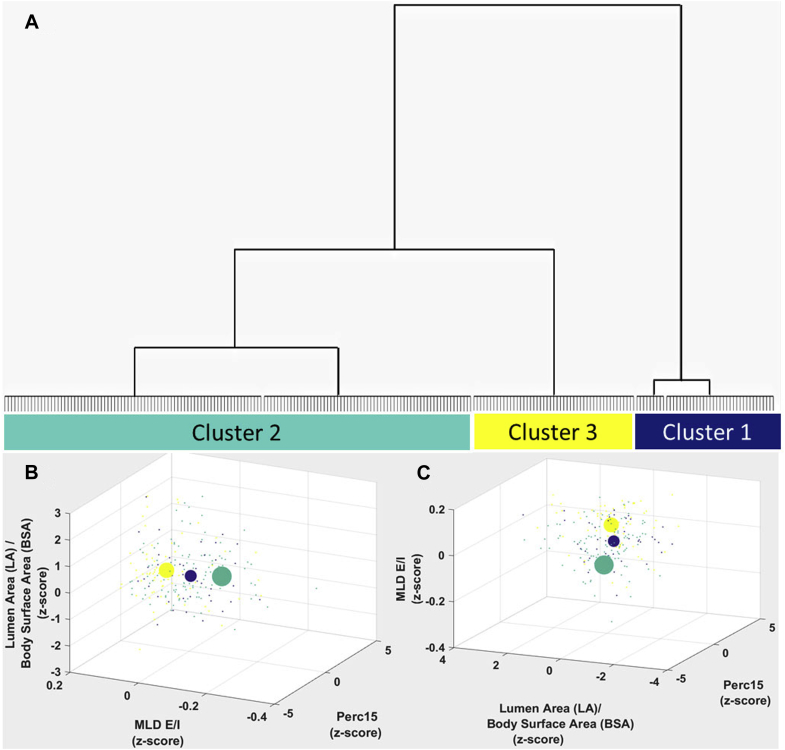
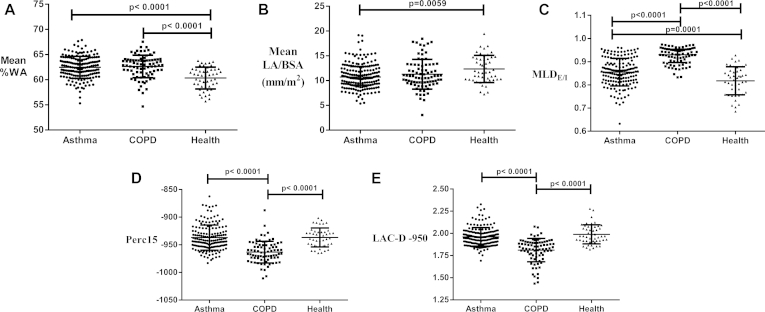
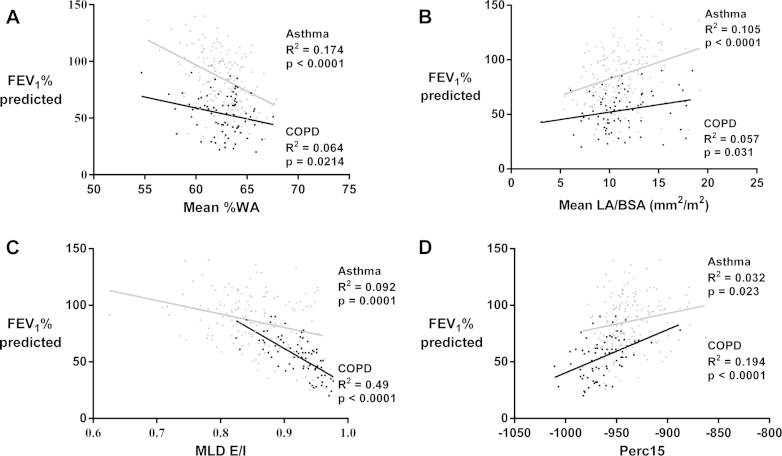
Proximal airway percentage wall area (%WA) was significantly increased in asthmatic patients (62.5% [SD, 2.2]) and patients with COPD (62.7% [SD, 2.3]) compared with that in healthy control subjects (60.3% [SD, 2.2], P < .001). Air trapping measured based on mean lung density expiratory/inspiratory ratio was significantly increased in patients with COPD (mean, 0.922 [SD, 0.037]) and asthmatic patients (mean, 0.852 [SD, 0.061]) compared with that in healthy subjects (mean, 0.816 [SD, 0.066], P < .001). Emphysema assessed based on lung density measured by using Hounsfield units below which 15% of the voxels lie (Perc15) was a feature of COPD only (patients with COPD: mean, -964 [SD, 19.62] vs asthmatic patients: mean, -937 [SD, 22.7] and healthy subjects: mean, -937 [SD, 17.1], P < .001). Multiple regression analyses showed that the strongest predictor of lung function impairment in asthmatic patients was %WA, whereas in the COPD and asthma subgrouped with postbronchodilator FEV1 percent predicted value of less than 80%, it was air trapping. Factor analysis of QCT parameters in asthmatic patients and patients with COPD combined determined 3 components, with %WA, air trapping, and Perc15 values being the highest loading factors. Cluster analysis identified 3 clusters with mild, moderate, or severe lung function impairment with corresponding decreased lung density (Perc15 values) and increased air trapping.
In asthmatic patients and patients with COPD, lung function impairment is strongly associated with air trapping, with a contribution from proximal airway narrowing in asthmatic patients.
基于胸部定量计算机断层扫描(QCT)参数比较哮喘和慢性阻塞性肺疾病(COPD)的研究较少。
我们试图比较哮喘患者和COPD患者气道重塑、气体潴留和肺气肿的QCT参数,并探讨它们与气流受限的关系。
从单一中心招募的哮喘患者(n = 171)、COPD患者(n = 81)和健康受试者(n = 49)接受了QCT检查和临床特征分析。
与健康对照受试者(60.3% [标准差,2.2])相比,哮喘患者(62.5% [标准差,2.2])和COPD患者(62.7% [标准差,2.3])的近端气道壁面积百分比(%WA)显著增加(P <.001)。基于平均肺密度呼气/吸气比测量的气体潴留,在COPD患者(平均值,0.922 [标准差,0.037])和哮喘患者(平均值,0.852 [标准差,0.061])中显著高于健康受试者(平均值,0.816 [标准差,0.066],P <.001)。基于使用Hounsfield单位测量的肺密度评估的肺气肿(低于该密度的体素占15%,即Perc15)仅是COPD的特征(COPD患者:平均值,-964 [标准差,19.62];哮喘患者:平均值,-937 [标准差,22.7];健康受试者:平均值,-937 [标准差,17.1],P <.001)。多元回归分析表明,哮喘患者肺功能损害的最强预测因子是%WA,而在COPD和支气管扩张剂后FEV1预测值百分比小于80%的哮喘亚组中,是气体潴留。对哮喘患者和COPD患者的QCT参数进行因子分析确定了3个成分,其中%WA、气体潴留和Perc15值是最高负荷因子。聚类分析确定了3个具有轻度、中度或重度肺功能损害的聚类,相应地肺密度降低(Perc15值)和气体潴留增加。
在哮喘患者和COPD患者中,肺功能损害与气体潴留密切相关,哮喘患者近端气道狭窄也有一定作用。