Keestra Johan Anton Jochum, Barry Obada, Jong Lianne de, Wahl Gerhard
Ordentall, Rotterdam, Netherlands.
Mund- und Kieferheilkunde, Poliklinik für Chirurgische Zahn-, Universität Bonn, Bonn, Germany.
J Appl Oral Sci. 2016 Jan-Feb;24(1):3-17. doi: 10.1590/1678-775720150357.
Extraction, periodontitis, or trauma can cause a reduction on the alveolar ridge. This could result in an insufficient alveolar bone width and height. Different techniques of vertical bone augmentation are described in literature. However, nowadays there is not enough evidence against lateral augmentation procedures to verify if these techniques are stable over a long period of time.
This review analyses the different techniques that are used to vertically augment the bone and evaluate if these techniques are stable over a long period of time.
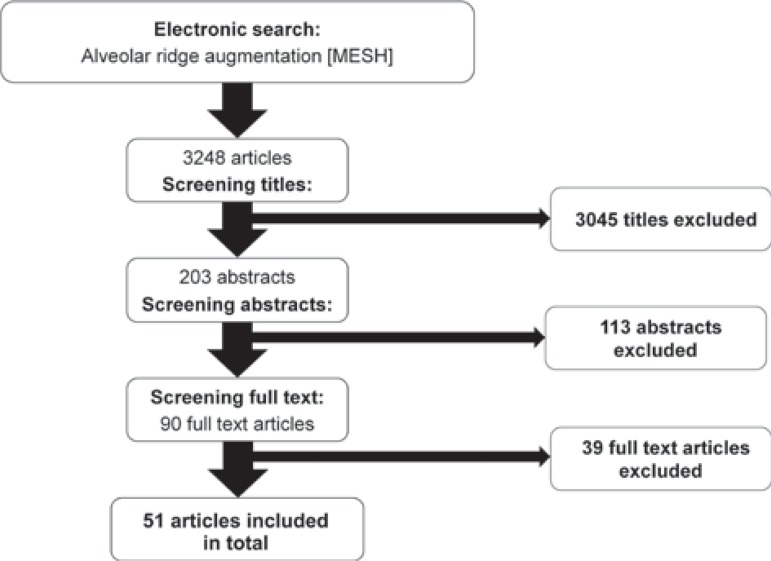
The MEDLINE-PubMed database was searched from its earliest records until December 22, 2014. The following search term was used: Alveolar Ridge augmentation [MESH]. Several journals were hand searched and some authors were contacted for additional information. The primary outcome measure that was analyzed was marginal bone level change around dental implants in the augmented sites, and the secondary outcomes were survival and success rates of dental implants placed in the augmented sites.
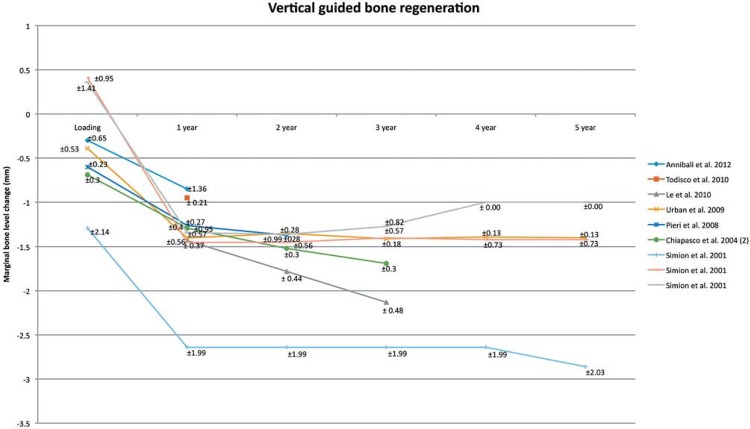
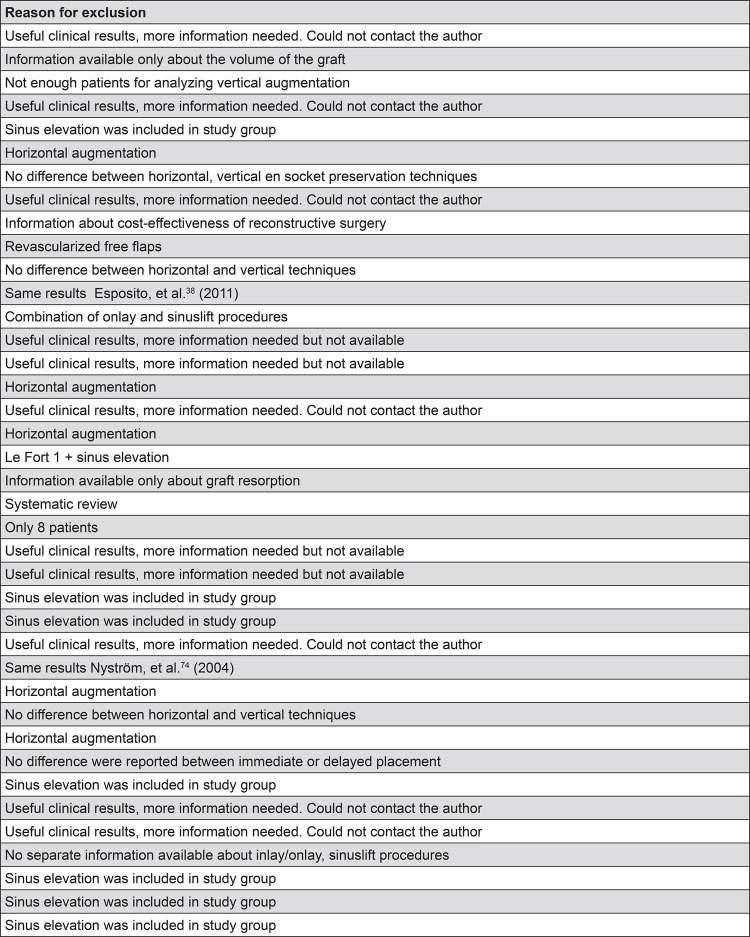
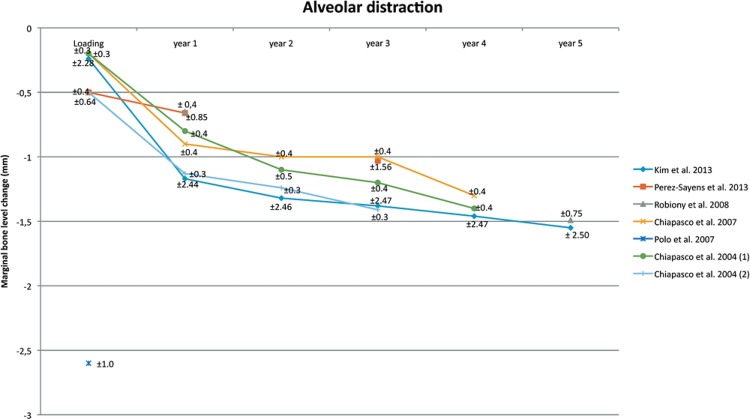
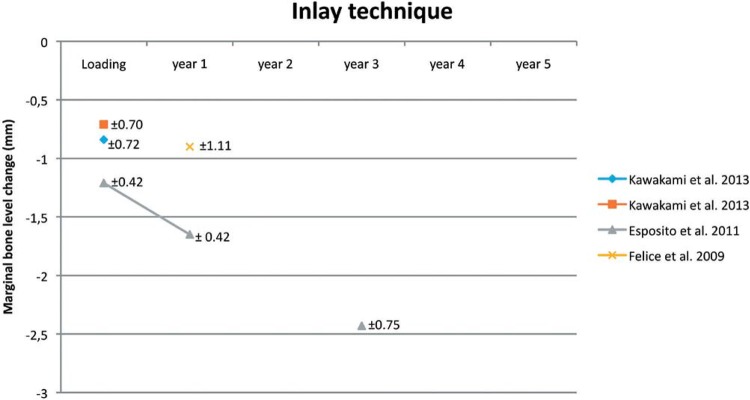
The search yielded 203 abstracts. Ultimately, 90 articles were selected, describing 51 studies meeting the eligibility criteria. The marginal bone level change for the inlay technique and vertical guided bone regeneration are in agreement with the success criteria. Alveolar distraction showed more marginal bone level change after the first year of loading, and for the inlay technique very few studies were available.
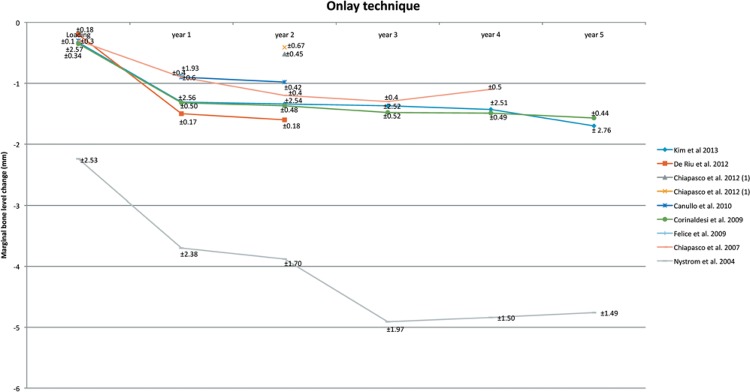
Based on the available data in the current existing studies with a follow-up period of at least 4 to 5 years, one can summarize that there seems to be a trend that the onlay technique, alveolar distraction, and vertical guided bone regeneration are stable for at least 4 to 5 years.
拔牙、牙周炎或外伤可导致牙槽嵴吸收。这可能会导致牙槽骨宽度和高度不足。文献中描述了不同的垂直骨增量技术。然而,目前尚无足够证据反对侧向增量手术,以验证这些技术在长期内是否稳定。
本综述分析用于垂直骨增量的不同技术,并评估这些技术在长期内是否稳定。
检索MEDLINE-PubMed数据库,从其最早记录至2014年12月22日。使用以下检索词:牙槽嵴增量[医学主题词]。对几本期刊进行了手工检索,并联系了一些作者以获取更多信息。分析的主要观察指标是增量部位种植体周围的边缘骨水平变化,次要观察指标是放置在增量部位的种植体的存活率和成功率。
检索得到203篇摘要。最终,选择了90篇文章,描述了51项符合纳入标准的研究。嵌体技术和垂直引导骨再生的边缘骨水平变化符合成功标准。牙槽骨牵张在加载第一年后显示出更多的边缘骨水平变化,而对于嵌体技术,可用的研究很少。
根据现有研究中至少4至5年随访期的可用数据,可以总结出,覆盖技术、牙槽骨牵张和垂直引导骨再生似乎至少在4至5年内是稳定的。