Hinde Elizabeth, Pandžić Elvis, Yang Zhengmin, Ng Ivan H W, Jans David A, Bogoyevitch Marie A, Gratton Enrico, Gaus Katharina
EMBL Australia Node in Single Molecule Science, School of Medical Sciences, University of New South Wales, Sydney, New South Wales 2052, Australia.
ARC Centre of Excellence in Advanced Molecular Imaging, University of New South Wales, Sydney, New South Wales 2052, Australia.
Nat Commun. 2016 Mar 24;7:11047. doi: 10.1038/ncomms11047.
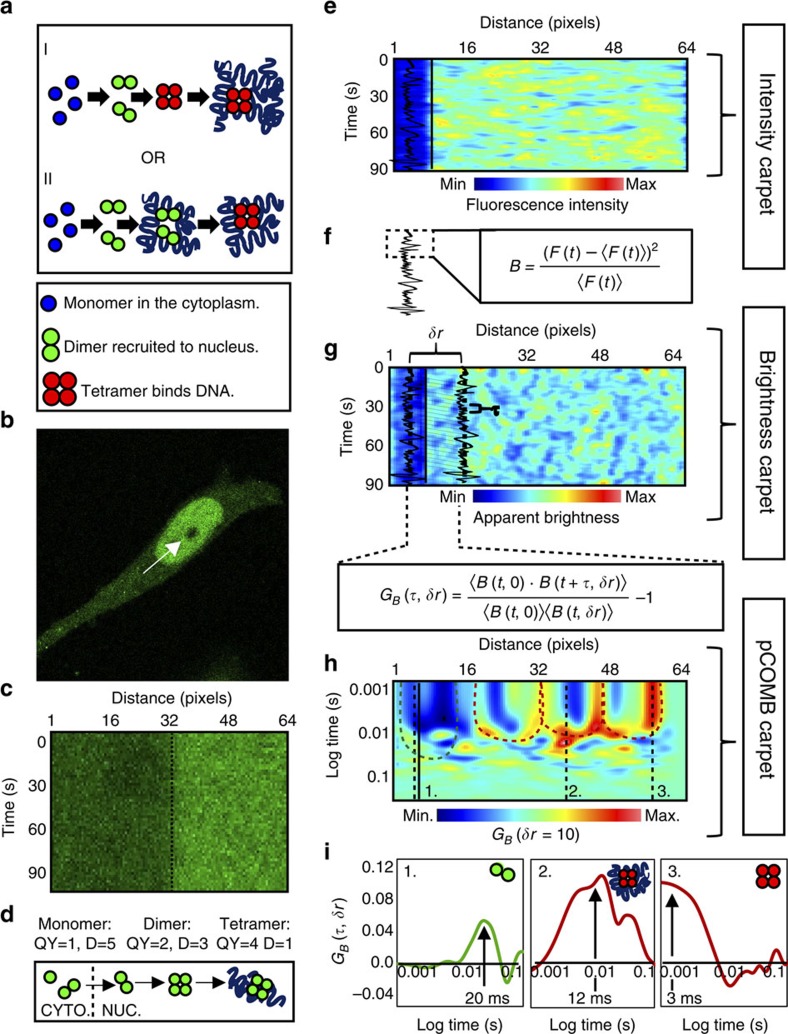
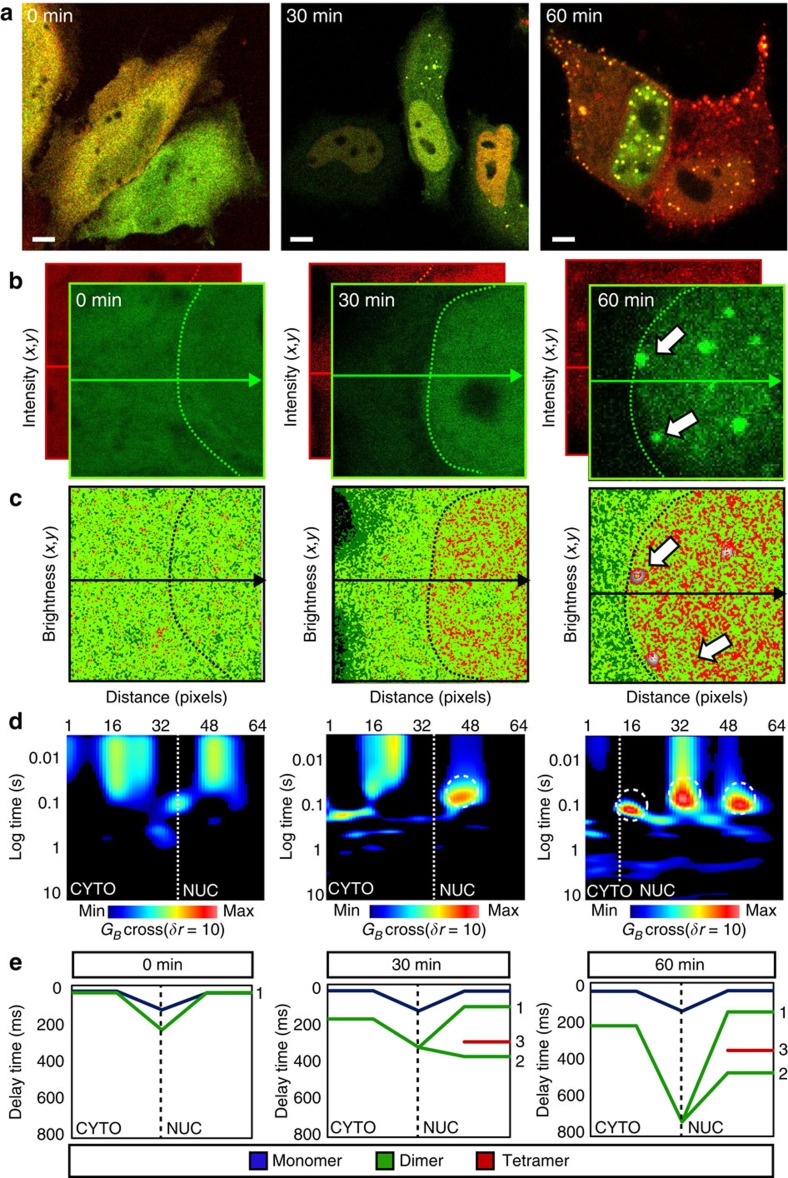
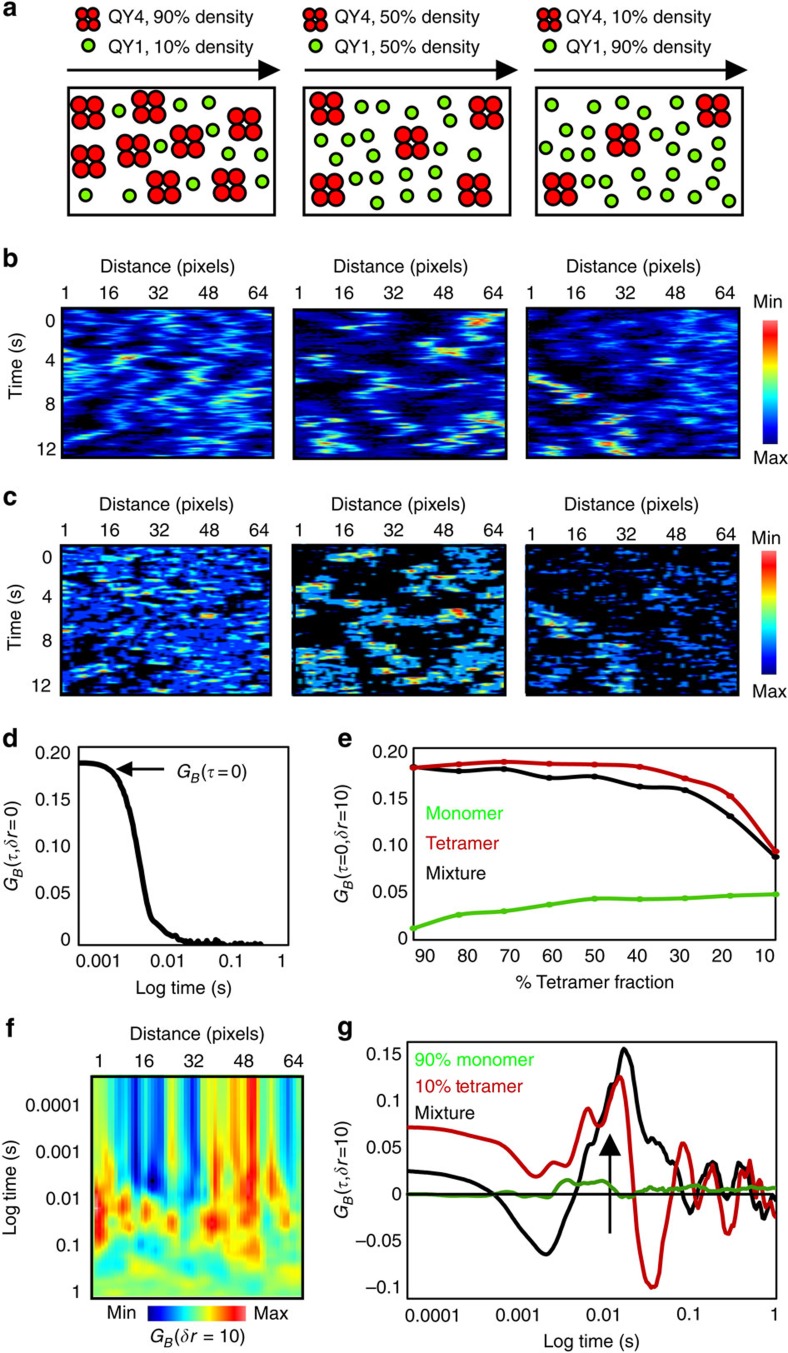
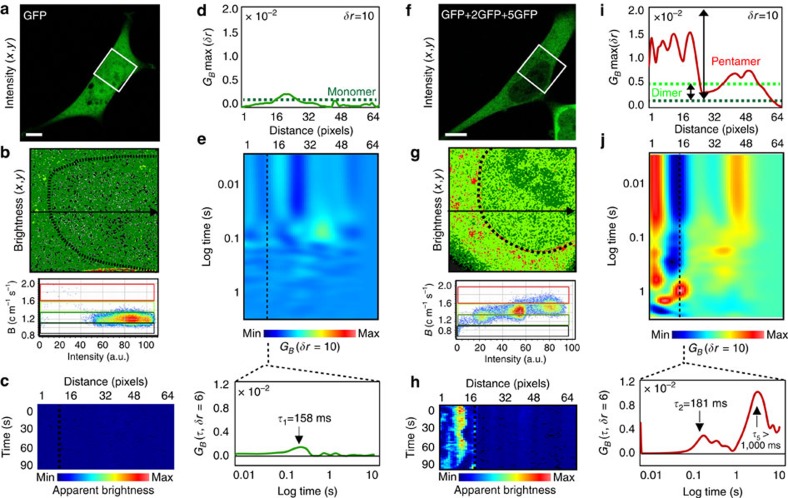
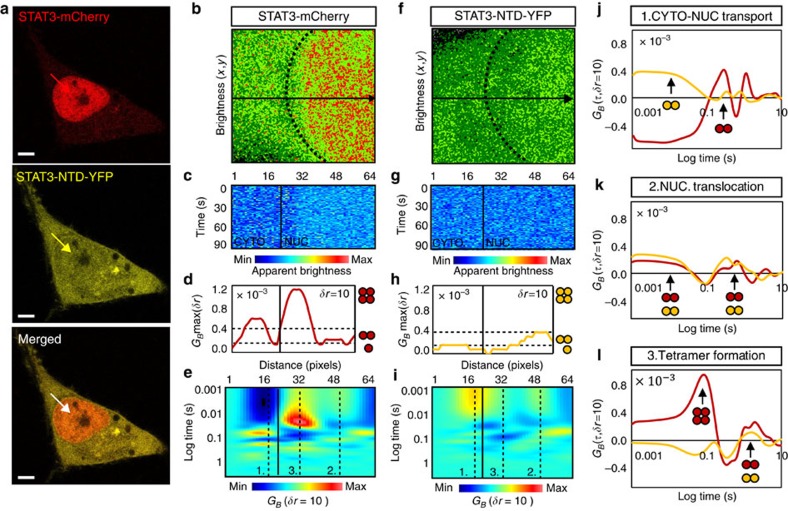
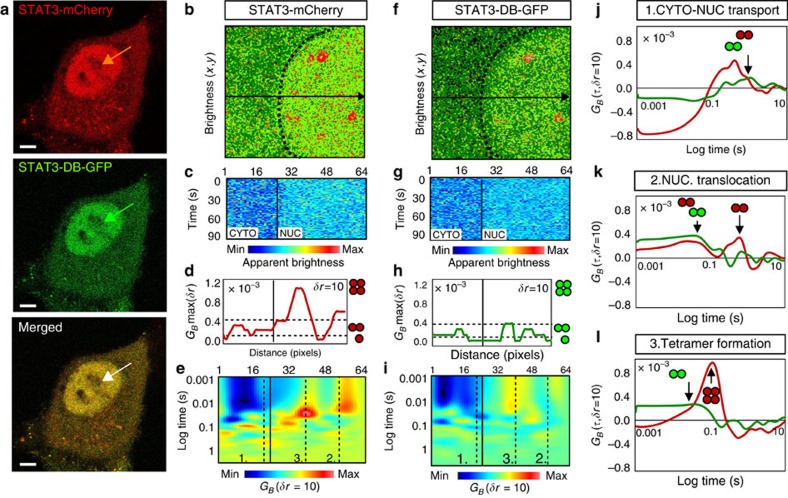
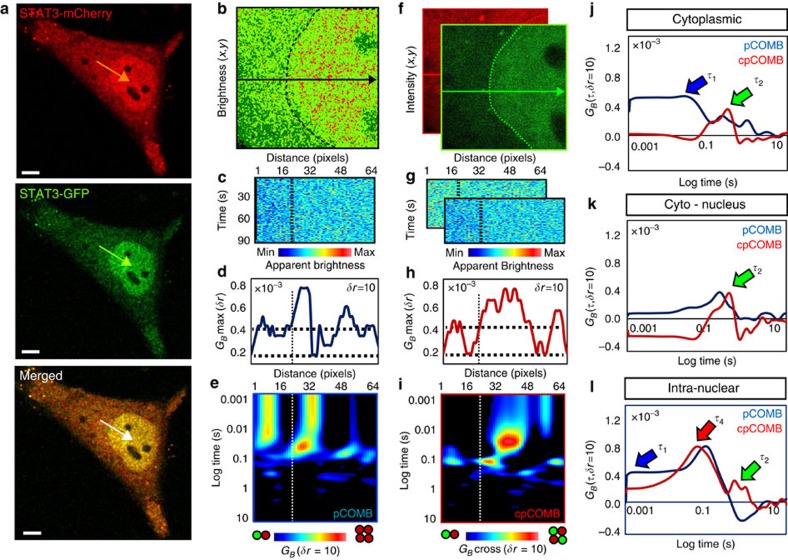
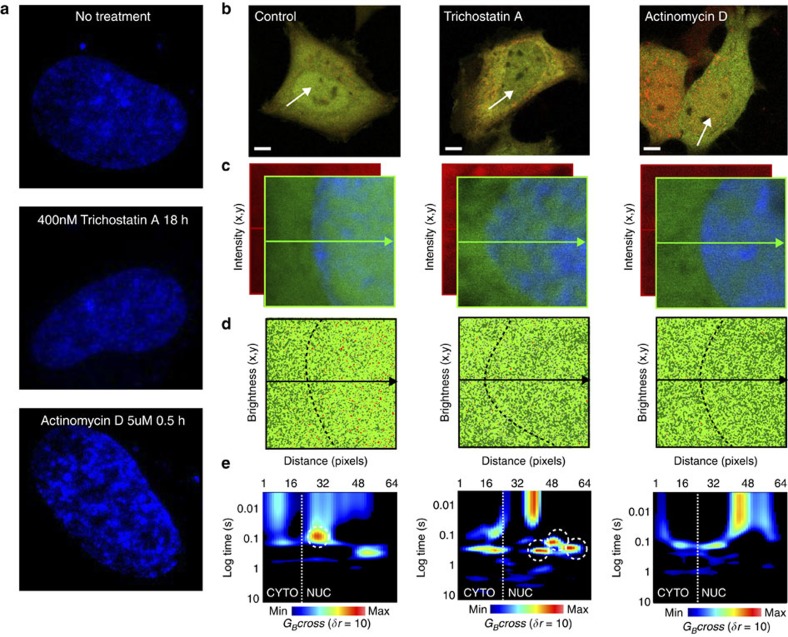
Oligomerization of transcription factors controls their translocation into the nucleus and DNA-binding activity. Here we present a fluorescence microscopy analysis termed pCOMB (pair correlation of molecular brightness) that tracks the mobility of different oligomeric species within live cell nuclear architecture. pCOMB amplifies the signal from the brightest species present and filters the dynamics of the extracted oligomeric population based on arrival time between two locations. We use this method to demonstrate a dependence of signal transducer and activator of transcription 3 (STAT3) mobility on oligomeric state. We find that on entering the nucleus STAT3 dimers must first bind DNA to form STAT3 tetramers, which are also DNA-bound but exhibit a different mobility signature. Examining the dimer-to-tetramer transition by a cross-pair correlation analysis (cpCOMB) reveals that chromatin accessibility modulates STAT3 tetramer formation. Thus, the pCOMB approach is suitable for mapping the impact oligomerization on transcription factor dynamics.
转录因子的寡聚化控制其向细胞核的转运及DNA结合活性。在此,我们展示了一种称为pCOMB(分子亮度对关联)的荧光显微镜分析方法,该方法可追踪活细胞核结构内不同寡聚体种类的移动性。pCOMB放大来自存在的最亮种类的信号,并根据两个位置之间的到达时间过滤提取的寡聚体群体的动态。我们使用此方法来证明转录信号转导子与激活子3(STAT3)的移动性对寡聚状态的依赖性。我们发现,进入细胞核后,STAT3二聚体必须首先结合DNA以形成STAT3四聚体,后者也与DNA结合,但表现出不同的移动性特征。通过交叉对关联分析(cpCOMB)检查二聚体到四聚体的转变表明,染色质可及性调节STAT3四聚体的形成。因此,pCOMB方法适用于描绘寡聚化对转录因子动态的影响。