Sanchez-Bragado Rut, Molero Gemma, Reynolds Matthew P, Araus Jose Luis
Unitat de Fisiologia Vegetal, Facultat de Biologia, Universitat de Barcelona, Diagonal 643, Spain.
International Maize and Wheat Improvement Center (CIMMYT), El Batán, Texcoco CP 56130, Mexico.
J Exp Bot. 2016 Apr;67(9):2787-98. doi: 10.1093/jxb/erw116. Epub 2016 Mar 24.
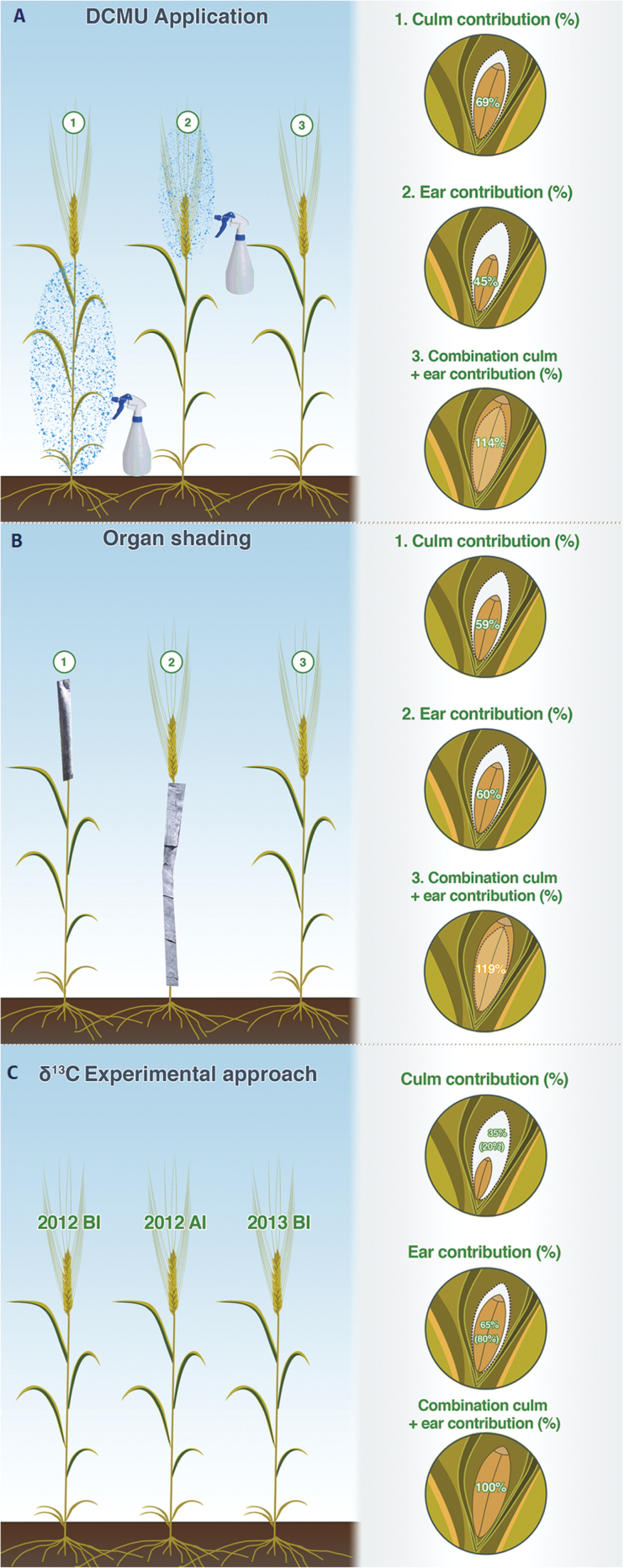
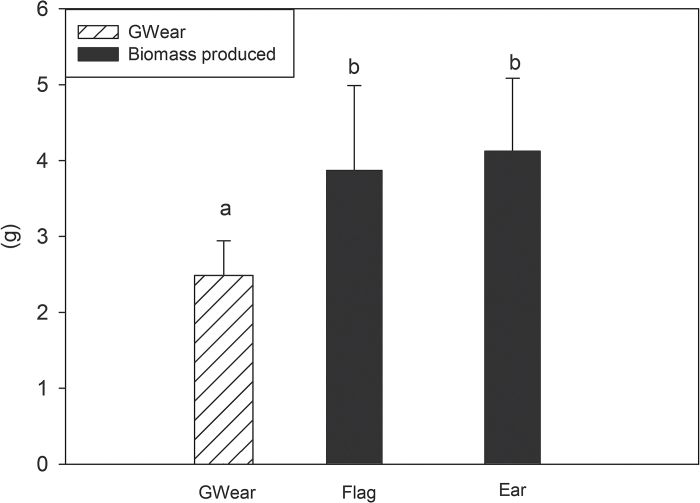
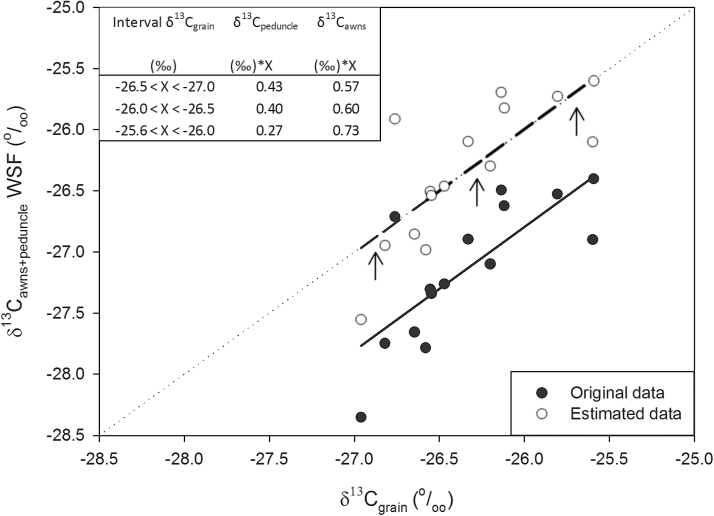
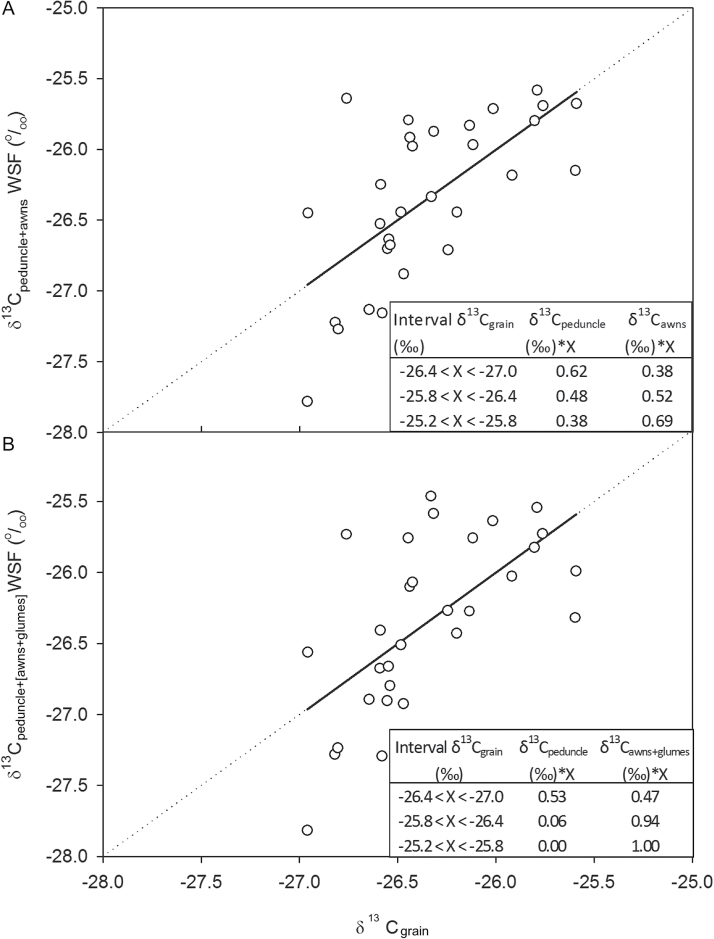
The culm (particularly the flag leaf) and the ear are believed to play a major role in providing assimilates for grain filling in wheat. However, the results obtained in the past varied depending on the methodology applied. Three different methodologies were compared that aimed to assess the relative contribution of the culm (photosynthetic organs below the ear) and the ear to grain filling. The first two consisted of applications of photosynthesis inhibition treatments, including the use of the herbicide DCMU and organ shading. The third was a non-intrusive method that compared the carbon isotope composition (δ(13)C) of mature kernels with the δ(13)C of the water-soluble fraction of the peduncle, awns and glumes. Several advanced CIMMYT lines were tested under good agronomic conditions. The δ(13)C approach assigned a higher photosynthetic contribution to the ear than to the culm. However, some methodological considerations should be taken into account when applying the δ(13)C approach, particularly the sampling method used, in order to prevent post-harvest respiration. The shading approach assigned a similar contribution to the ear as to the culm. The DCMU approach assigned a greater role to the culm but herbicide application to the culm affected the ear, thus biasing the final grain weight. Moreover DCMU and shading approaches may cause compensatory effects which overestimated the contribution of unaffected organs. This study may help to develop precise phenotyping tools to identify physiological traits such as ear photosynthesis that could contribute towards increasing grain yield.
人们认为茎杆(尤其是旗叶)和穗子在为小麦籽粒灌浆提供同化物方面发挥着主要作用。然而,过去获得的结果因所应用的方法而异。比较了三种不同的方法,旨在评估茎杆(穗子以下的光合器官)和穗子对籽粒灌浆的相对贡献。前两种方法包括应用光合作用抑制处理,包括使用除草剂敌草隆和器官遮光。第三种方法是一种非侵入性方法,它比较了成熟籽粒的碳同位素组成(δ(13)C)与穗轴、芒和颖片水溶性部分的δ(13)C。在良好的农艺条件下对几个国际玉米小麦改良中心的先进品系进行了测试。δ(13)C方法确定穗子的光合贡献高于茎杆。然而,在应用δ(13)C方法时,应考虑一些方法学因素,特别是所使用的采样方法,以防止收获后呼吸作用。遮光方法确定穗子和茎杆的贡献相似。敌草隆方法确定茎杆的作用更大,但将除草剂施用于茎杆会影响穗子,从而使最终粒重产生偏差。此外,敌草隆和遮光方法可能会产生补偿效应,高估了未受影响器官的贡献。这项研究可能有助于开发精确的表型分析工具,以识别有助于提高籽粒产量的生理特性,如穗子光合作用。