Tun Hein M, Cai Zhangbin, Khafipour Ehsan
Department of Animal Science, University of Manitoba, Winnipeg MB, Canada.
Department of Animal Science, University of Manitoba, WinnipegMB, Canada; Department of Medical Microbiology, University of Manitoba, WinnipegMB, Canada.
Front Microbiol. 2016 Mar 9;7:265. doi: 10.3389/fmicb.2016.00265. eCollection 2016.
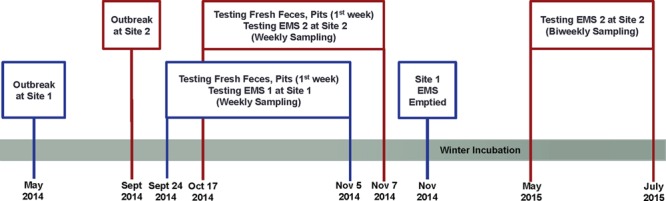
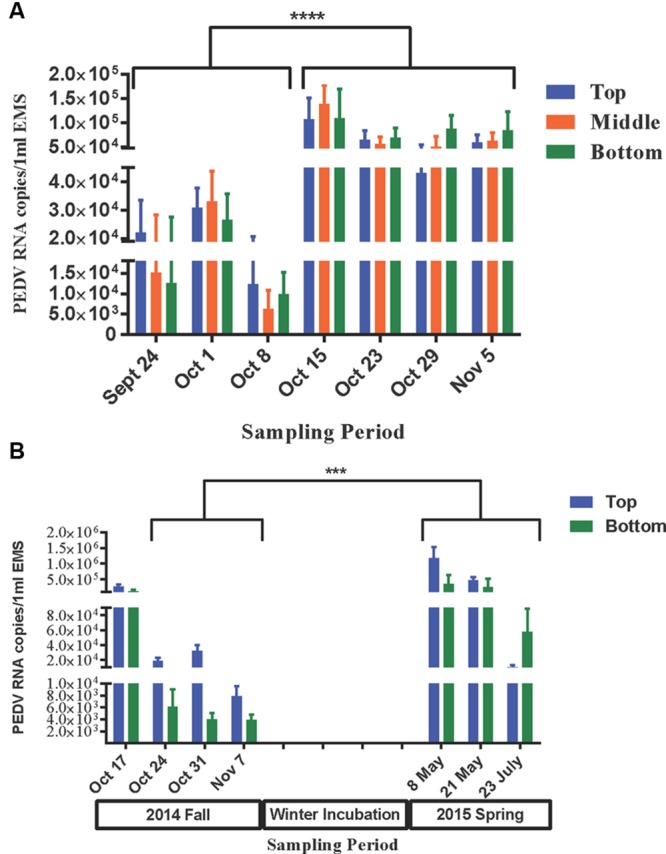
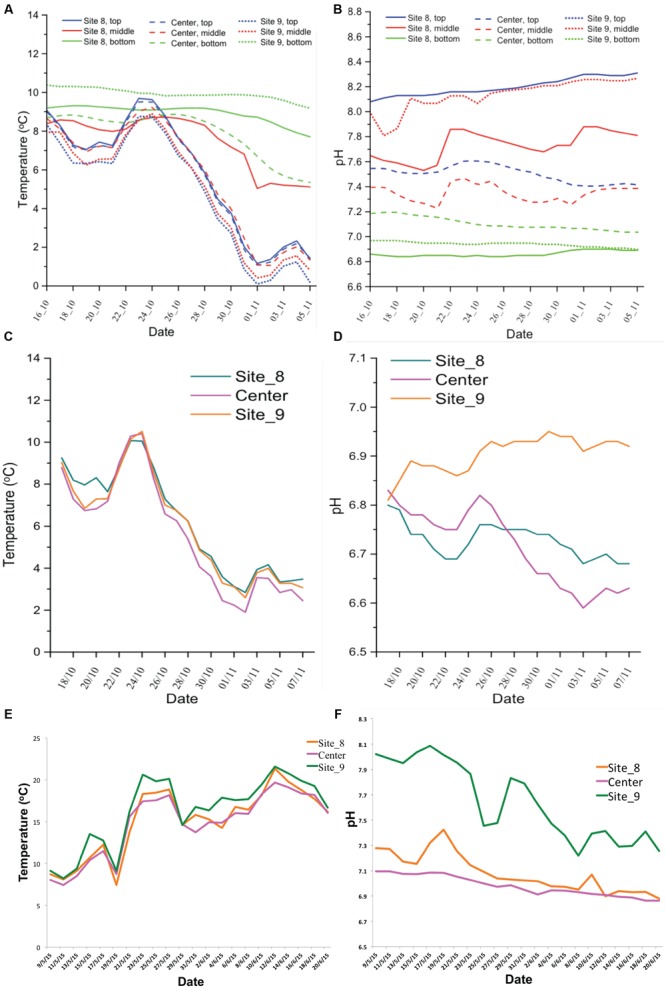
In recent years, porcine epidemic diarrhea virus (PEDv) has caused major epidemics, which has been a burden to North America's swine industry. Low infectious dose and high viability in the environment are major challenges in eradication of this virus. To further understand the viability of PEDv in the infected manure, we longitudinally monitored survivability and infectivity of PEDv in two open earthen manure storages (EMS; previously referred to as lagoon) from two different infected swine farms identified in the province of Manitoba, Canada. Our study revealed that PEDv could survive up to 9 months in the infected EMS after the initial outbreak in the farm. The viral load varied among different layers of the EMS with an average of 1.1 × 10(5) copies/ml of EMS, independent of EMS temperature and pH. In both studied EMS, the evidence of viral replication was observed through increased viral load in the later weeks of the samplings while there was no new influx of infected manure into the EMS, which was suggestive of presence of potential alternative hosts for PEDv within the EMS. Decreasing infectivity of virus over time irrespective of increased viral load suggested the possibility of PEDv evolution within the EMS and perhaps in the new host that negatively impacted virus infectivity. Viral load in the top layer of the EMS was low and mostly non-infective suggesting that environmental factors, such as UV and sunlight, could diminish the replicability and infectivity of the virus. Thus, frequent agitation of the EMS that could expose virus to UV and sunlight might be a potential strategy for reduction of PEDv load and infectivity in the infected EMS.
近年来,猪流行性腹泻病毒(PEDv)引发了重大疫情,给北美的养猪业带来了沉重负担。低感染剂量和在环境中的高生存能力是根除这种病毒的主要挑战。为了进一步了解PEDv在受感染粪便中的生存能力,我们纵向监测了来自加拿大曼尼托巴省两个不同受感染养猪场的两个开放式土粪储存池(EMS,以前称为泻湖)中PEDv的生存能力和感染性。我们的研究表明,在农场首次爆发疫情后,PEDv在受感染的EMS中可存活长达9个月。EMS不同层的病毒载量各不相同,EMS的平均病毒载量为1.1×10⁵拷贝/毫升,与EMS的温度和pH值无关。在两个研究的EMS中,在采样后期观察到病毒载量增加,同时没有新的受感染粪便流入EMS,这表明EMS内存在PEDv的潜在替代宿主。尽管病毒载量增加,但随着时间的推移病毒感染性下降,这表明PEDv可能在EMS内以及可能在新宿主中发生进化,从而对病毒感染性产生负面影响。EMS顶层的病毒载量较低且大多无感染性,这表明紫外线和阳光等环境因素可能会降低病毒的复制能力和感染性。因此,频繁搅动EMS以使病毒暴露于紫外线和阳光下可能是降低受感染EMS中PEDv载量和感染性的一种潜在策略。