Bouskill Nicholas J, Wood Tana E, Baran Richard, Hao Zhao, Ye Zaw, Bowen Ben P, Lim Hsiao Chien, Nico Peter S, Holman Hoi-Ying, Gilbert Benjamin, Silver Whendee L, Northen Trent R, Brodie Eoin L
Climate and Ecosystem Sciences, Earth and Environmental Sciences, Lawrence Berkeley National Laboratory Berkeley, CA, USA.
International Institute of Tropical Forestry, United States Department of Agriculture Forest ServiceRio Piedras, PR, USA; Fundación Puertorriqueña de ConservaciónSan Juan, PR, USA.
Front Microbiol. 2016 Mar 15;7:323. doi: 10.3389/fmicb.2016.00323. eCollection 2016.
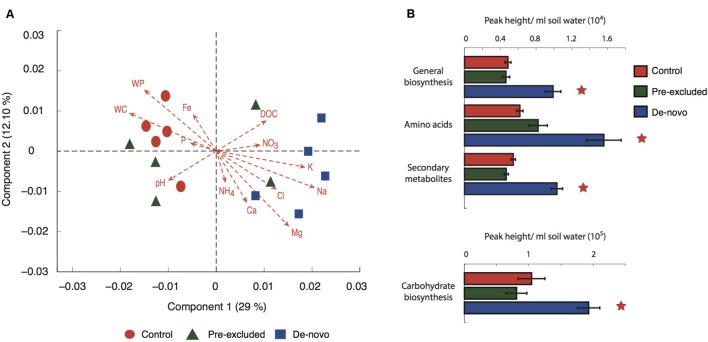
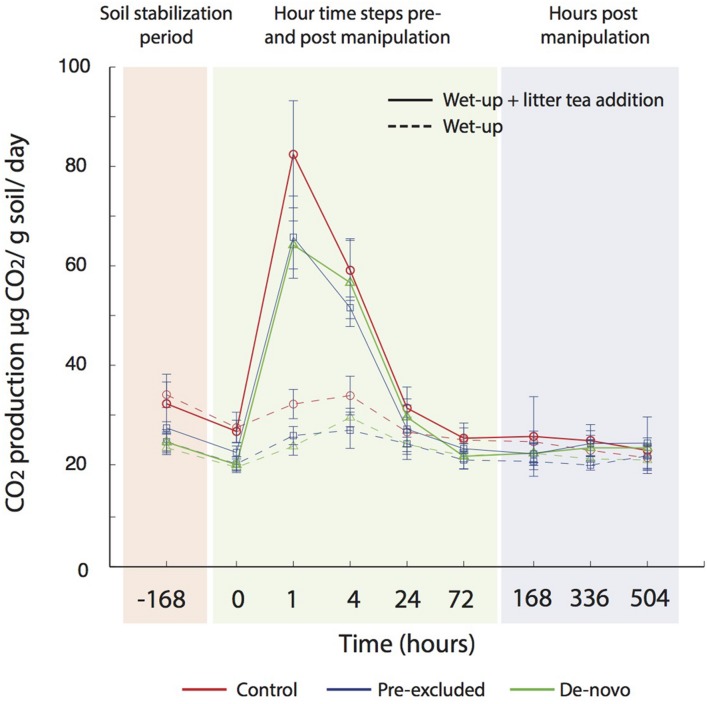
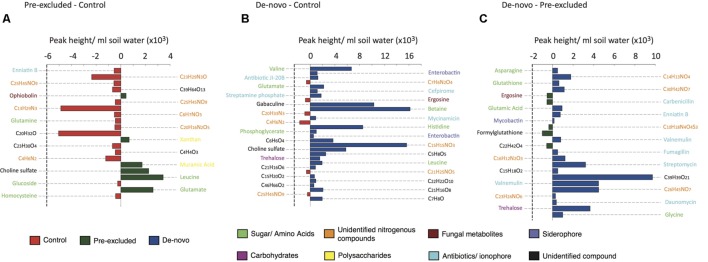
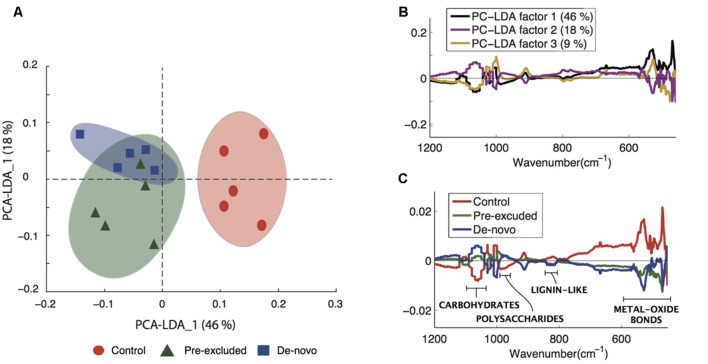
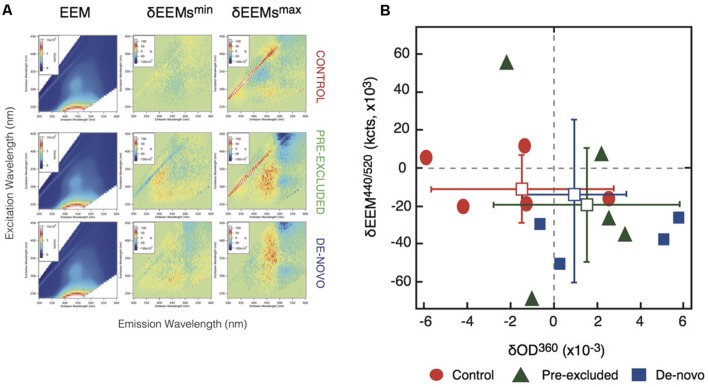
Climate model projections for tropical regions show clear perturbation of precipitation patterns leading to increased frequency and severity of drought in some regions. Previous work has shown declining soil moisture to be a strong driver of changes in microbial trait distribution, however, the feedback of any shift in functional potential on ecosystem properties related to carbon cycling are poorly understood. Here we show that drought-induced changes in microbial functional diversity and activity shape, and are in turn shaped by, the composition of dissolved and soil-associated carbon. We also demonstrate that a shift in microbial functional traits that favor the production of hygroscopic compounds alter the efflux of carbon dioxide following soil rewetting. Under drought the composition of the dissolved organic carbon pool changed in a manner consistent with a microbial metabolic response. We hypothesize that this microbial ecophysiological response to changing soil moisture elevates the intracellular carbon demand stimulating extracellular enzyme production, that prompts the observed decline in more complex carbon compounds (e.g., cellulose and lignin). Furthermore, a metabolic response to drought appeared to condition (biologically and physically) the soil, notably through the production of polysaccharides, particularly in experimental plots that had been pre-exposed to a short-term drought. This hysteretic response, in addition to an observed drought-related decline in phosphorus concentration, may have been responsible for a comparatively modest CO2 efflux following wet-up in drought plots relative to control plots.
热带地区的气候模型预测表明,降水模式出现明显扰动,导致一些地区干旱的频率和严重程度增加。先前的研究表明,土壤湿度下降是微生物性状分布变化的一个重要驱动因素,然而,功能潜力的任何变化对与碳循环相关的生态系统特性的反馈却知之甚少。在这里,我们表明,干旱引起的微生物功能多样性和活性的变化塑造了溶解态和土壤相关碳的组成,反过来也受到其影响。我们还证明,有利于吸湿化合物产生的微生物功能性状的转变会改变土壤重新湿润后二氧化碳的排放。在干旱条件下,溶解有机碳库的组成发生了变化,这与微生物的代谢反应一致。我们推测,这种微生物对土壤湿度变化的生态生理反应提高了细胞内的碳需求,刺激了细胞外酶的产生,从而导致观察到的更复杂碳化合物(如纤维素和木质素)的减少。此外,对干旱的代谢反应似乎对土壤进行了(生物学和物理上的)调节,特别是通过多糖的产生,尤其是在预先经历过短期干旱的试验田中。这种滞后反应,再加上观察到的与干旱相关的磷浓度下降,可能是干旱处理地块相对于对照地块在湿润后二氧化碳排放量相对较低的原因。