Rathore Sudarshan S, Raman Thiagarajan, Ramakrishnan Jayapradha
Centre for Research in Infectious Diseases, School of Chemical and Biotechnology, Shanmugha Arts, Science, Technology & Research Academy University Thanjavur, India.
Front Microbiol. 2016 Mar 15;7:325. doi: 10.3389/fmicb.2016.00325. eCollection 2016.
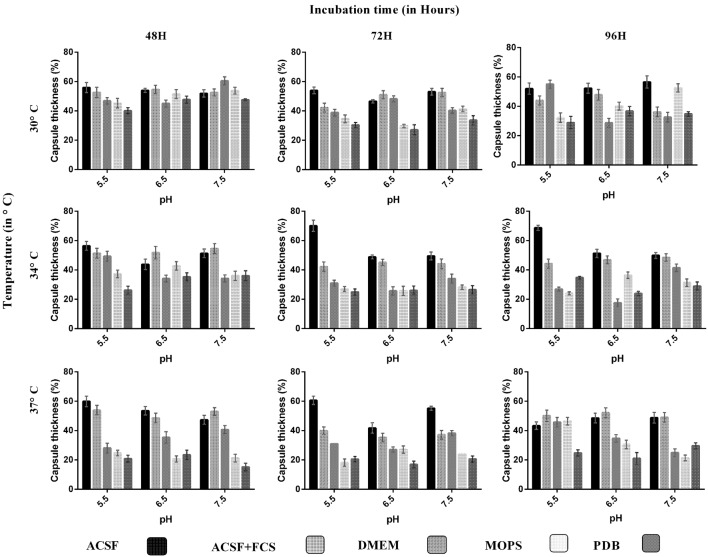
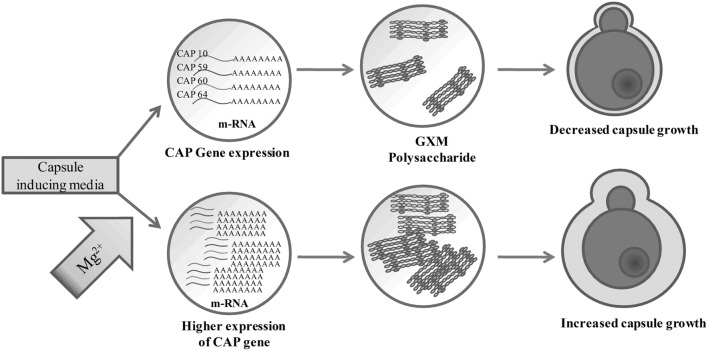
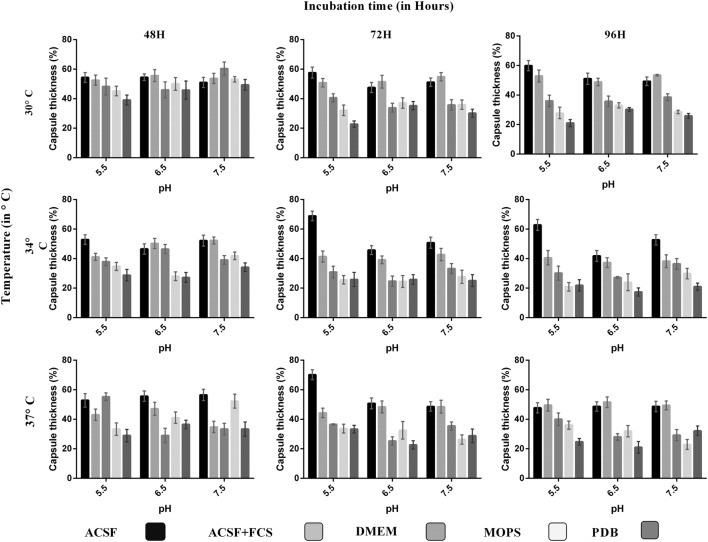
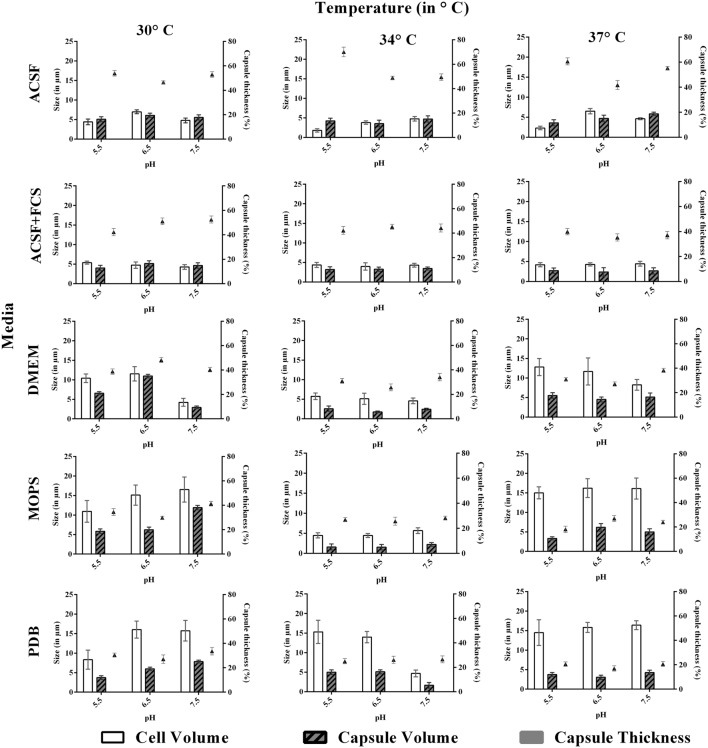
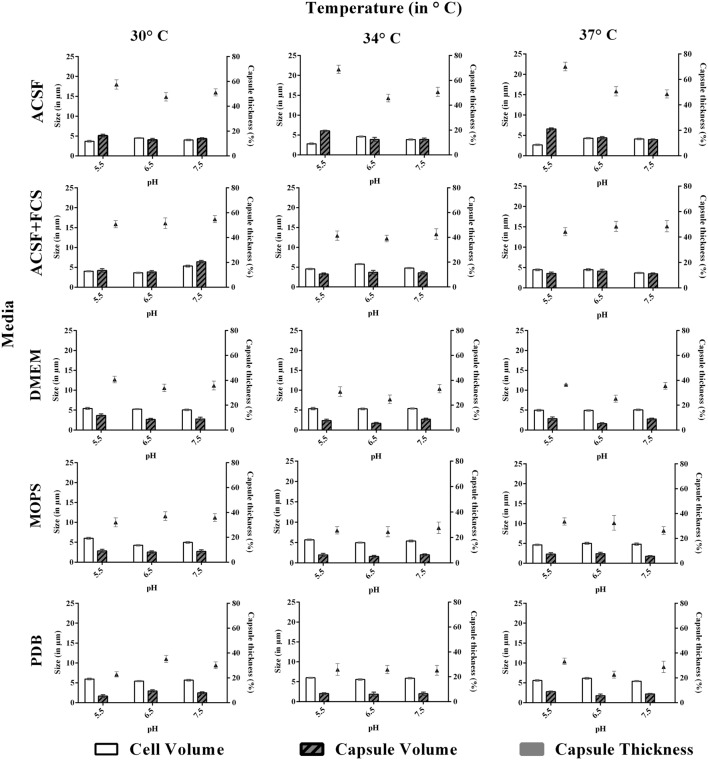
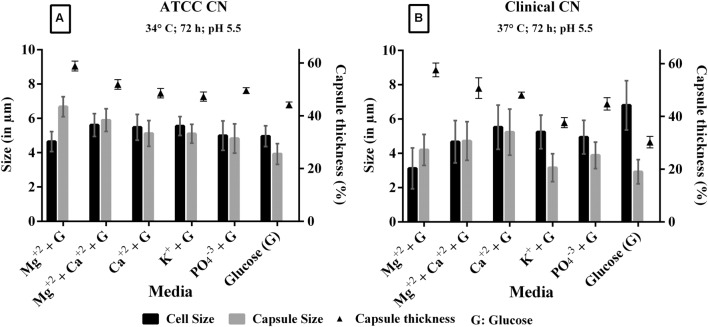
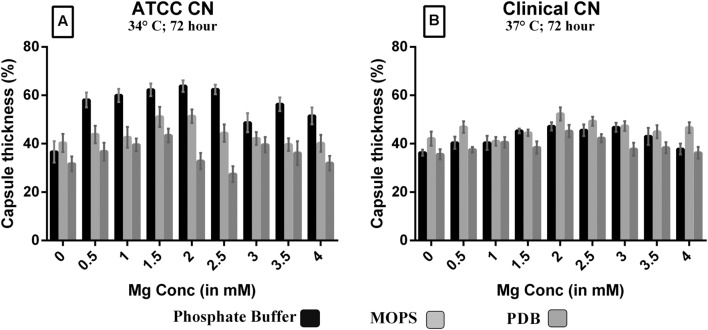
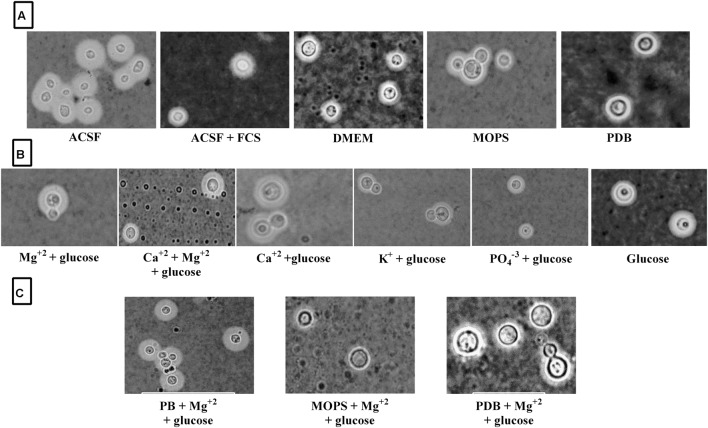
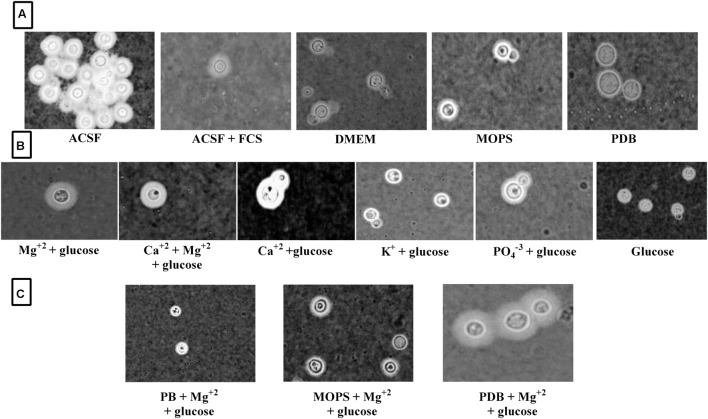
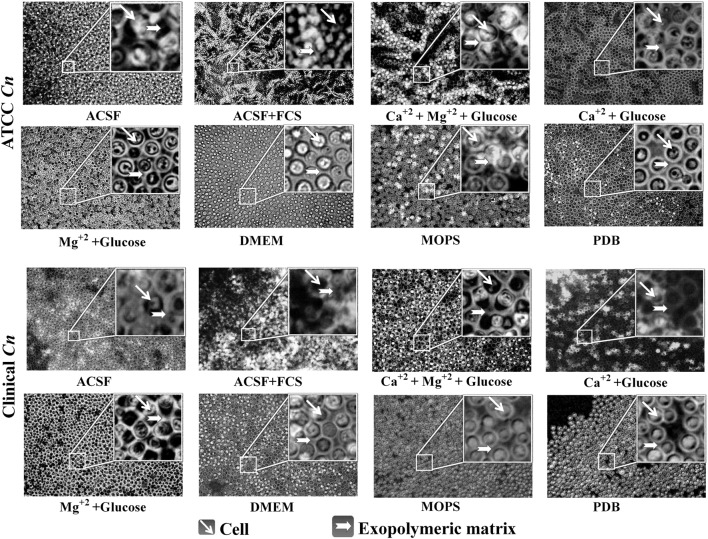
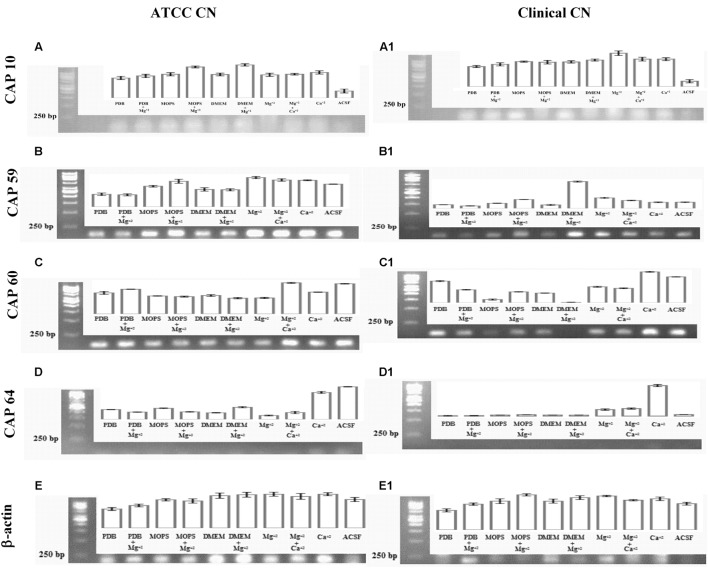
Cryptococcal meningitis caused by Cryptococcus neoformans, is a common opportunistic neural infection in immunocompromised individuals. Cryptococcus meningitis is associated with fungal burden with larger capsule size in cerebrospinal fluid (CSF). To understand the role of CSF constituents in capsule enlargement, we have evaluated the effect of artificial CSF on capsule induction in comparison with various other capsule inducing media. Two different strains of C. neoformans, an environmental and a clinical isolates were used in the present study. While comparing the various capsule inducing media for the two different strains of C. neoformans, it was observed that the capsule growth was significantly increased when grown in artificial CSF at pH 5.5, temperature 34°C for ATCC C. neoformans and 37°C for Clinical C. neoformans and with an incubation period of 72 h. In addition, artificial CSF supports biofilm formation in C. neoformans. While investigating the individual components of artificial CSF, we found that Mg(2+) ions influence the capsule growth in both environmental and clinical strains of C. neoformans. To confirm our results we studied the expression of four major CAP genes namely, CAP10, CAP59, CAP60, and CAP64 in various capsule inducing media and in different concentrations of Mg(2+) and Ca(2+). Our results on gene expression suggest that, Mg(2+) does have an effect on CAP gene expression, which are important for capsule biosynthesis and virulence. Our findings on the role of Mg(2+) ion as a signal for capsule induction will promote a way to elucidate the control mechanisms for capsule biosynthesis in C. neoformans.
新型隐球菌引起的隐球菌性脑膜炎是免疫功能低下个体中常见的机会性神经感染。隐球菌性脑膜炎与脑脊液(CSF)中具有较大荚膜大小的真菌负荷有关。为了了解脑脊液成分在荚膜增大中的作用,我们评估了人工脑脊液与其他各种荚膜诱导培养基相比对荚膜诱导的影响。本研究使用了两种不同的新型隐球菌菌株,一种是环境分离株,一种是临床分离株。在比较两种不同新型隐球菌菌株的各种荚膜诱导培养基时,观察到在pH 5.5、温度34°C(对于ATCC新型隐球菌)和37°C(对于临床新型隐球菌)的人工脑脊液中培养,培养72小时后,荚膜生长显著增加。此外,人工脑脊液支持新型隐球菌生物膜的形成。在研究人工脑脊液的各个成分时,我们发现镁离子(Mg(2+))会影响新型隐球菌环境菌株和临床菌株的荚膜生长。为了证实我们的结果,我们研究了四种主要CAP基因(即CAP10、CAP59、CAP60和CAP64)在各种荚膜诱导培养基以及不同浓度的镁离子(Mg(2+))和钙离子(Ca(2+))中的表达。我们关于基因表达的结果表明,镁离子(Mg(2+))确实对CAP基因表达有影响,而这些基因对于荚膜生物合成和毒力很重要。我们关于镁离子(Mg(2+))作为荚膜诱导信号作用的发现将促进阐明新型隐球菌荚膜生物合成控制机制的方法。