Mu Chunlong, Yang Yuxiang, Zhu Weiyun
Jiangsu Key Laboratory of Gastrointestinal Nutrition and Animal Health, Laboratory of Gastrointestinal Microbiology, College of Animal Science and Technology, Nanjing Agricultural University Nanjing, China.
Front Microbiol. 2016 Mar 17;7:345. doi: 10.3389/fmicb.2016.00345. eCollection 2016.
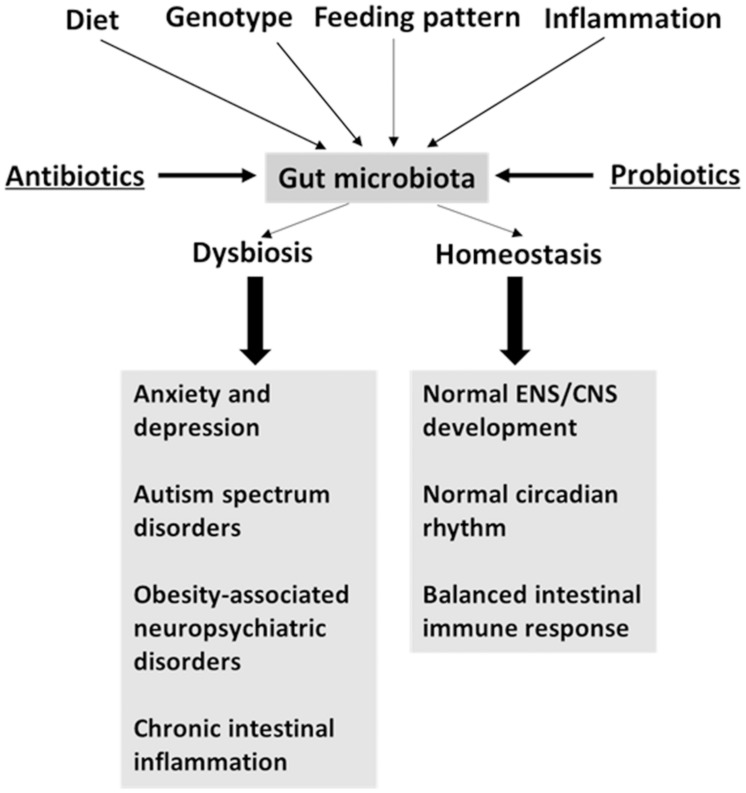
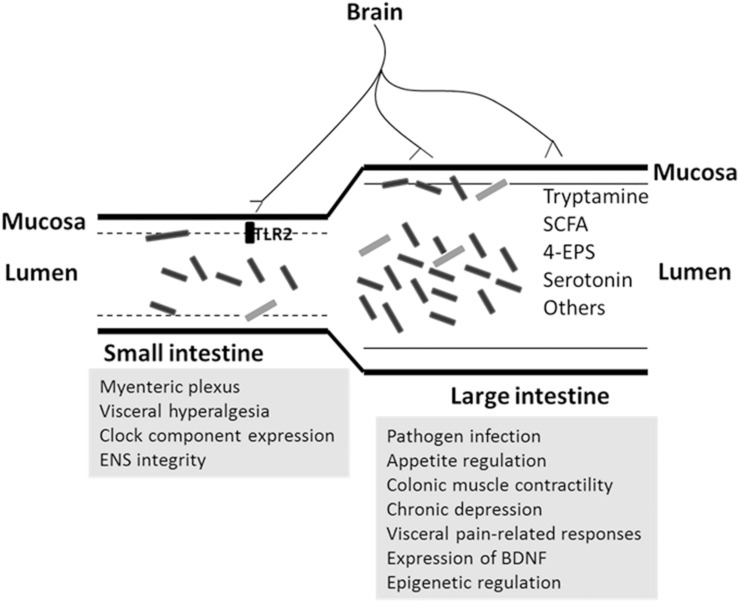
Gut microbiota regulates intestinal and extraintestinal homeostasis. Accumulating evidence suggests that the gut microbiota may also regulate brain function and behavior. Results from animal models indicate that disturbances in the composition and functionality of some microbiota members are associated with neurophysiological disorders, strengthening the idea of a microbiota-gut-brain axis and the role of microbiota as a "peacekeeper" in the brain health. Here, we review recent discoveries on the role of the gut microbiota in central nervous system-related diseases. We also discuss the emerging concept of the bidirectional regulation by the circadian rhythm and gut microbiota, and the potential role of the epigenetic regulation in neuronal cell function. Microbiome studies are also highlighted as crucial in the development of targeted therapies for neurodevelopmental disorders.
肠道微生物群调节肠道和肠道外的内环境稳定。越来越多的证据表明,肠道微生物群也可能调节大脑功能和行为。动物模型的结果表明,一些微生物群成员的组成和功能紊乱与神经生理疾病有关,这强化了微生物群-肠-脑轴的概念以及微生物群作为大脑健康“守护者”的作用。在此,我们综述了肠道微生物群在中枢神经系统相关疾病中作用的最新发现。我们还讨论了昼夜节律和肠道微生物群双向调节这一新兴概念,以及表观遗传调节在神经元细胞功能中的潜在作用。微生物组研究在神经发育障碍靶向治疗的发展中也被视为至关重要。