Ferreira Tatiana Paula Teixeira, Mariano Lívia Lacerda, Ghilosso-Bortolini Roberta, de Arantes Ana Carolina Santos, Fernandes Andrey Junior, Berni Michelle, Cecchinato Valentina, Uguccioni Mariagrazia, Maj Roberto, Barberis Alcide, Silva Patricia Machado Rodrigues E, Martins Marco Aurélio
Laboratory of Inflammation, Oswaldo Cruz Institute, FIOCRUZ , Rio de Janeiro , Brazil.
Institute for Research in Biomedicine, Universitá della Svizzera Italiana , Bellinzona , Switzerland.
Front Immunol. 2016 Mar 11;7:95. doi: 10.3389/fimmu.2016.00095. eCollection 2016.
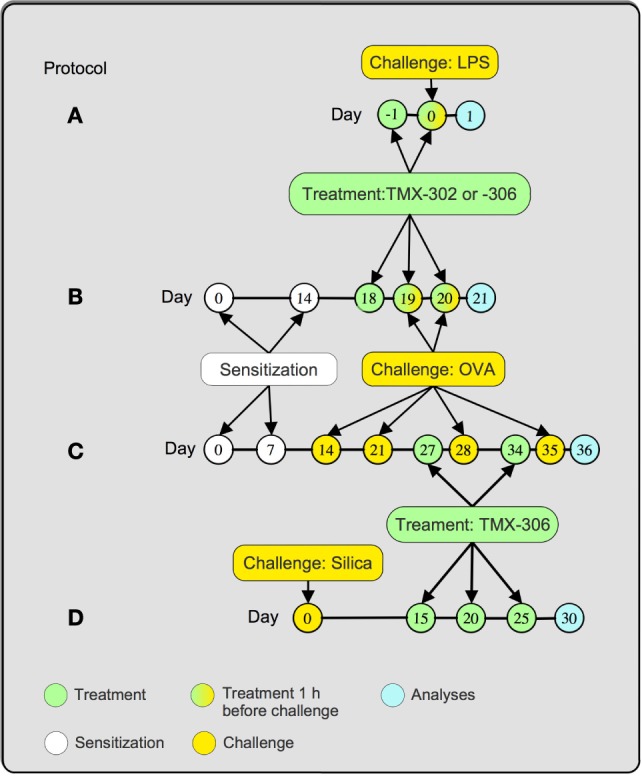
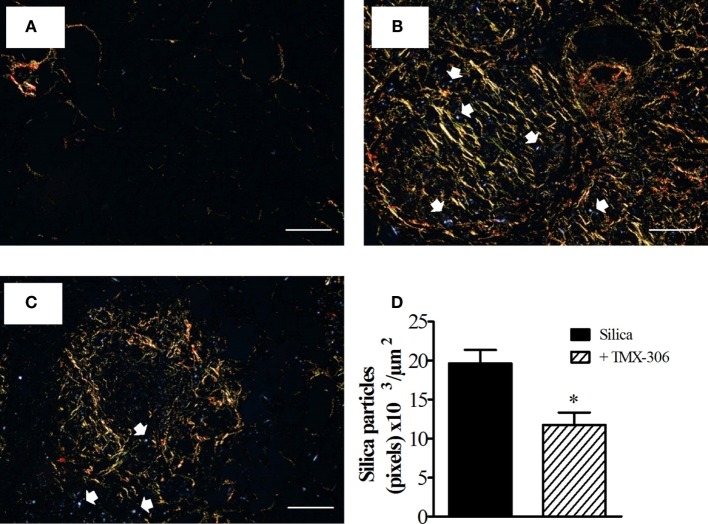
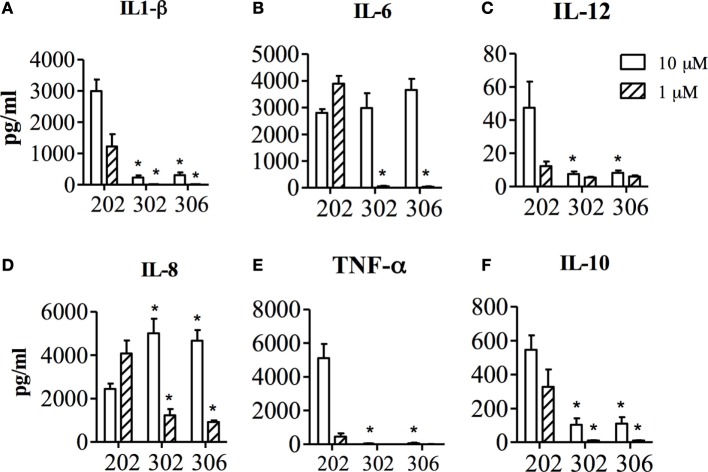
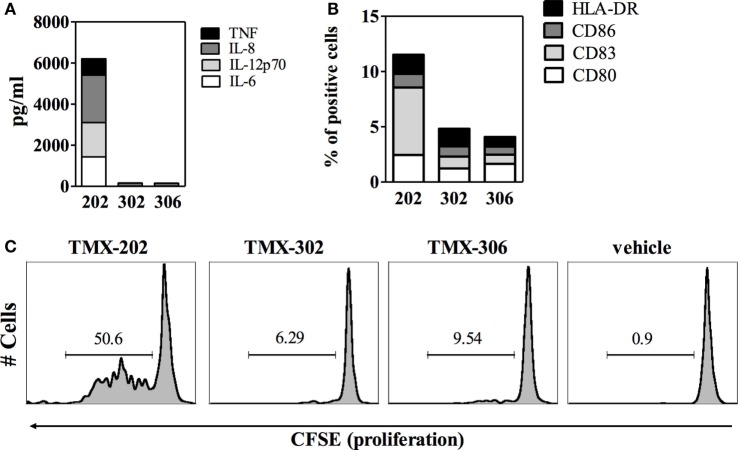
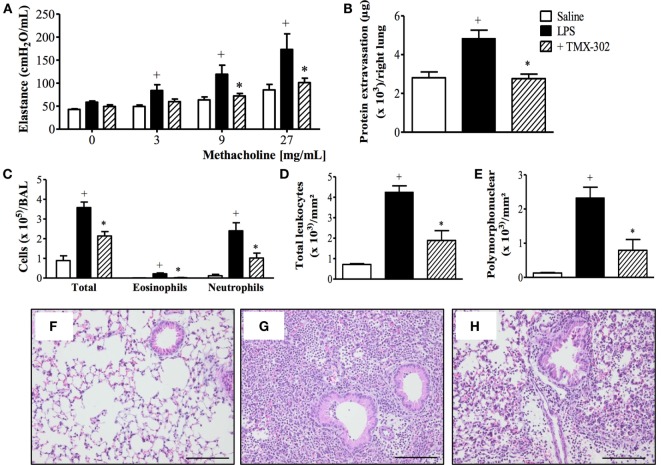
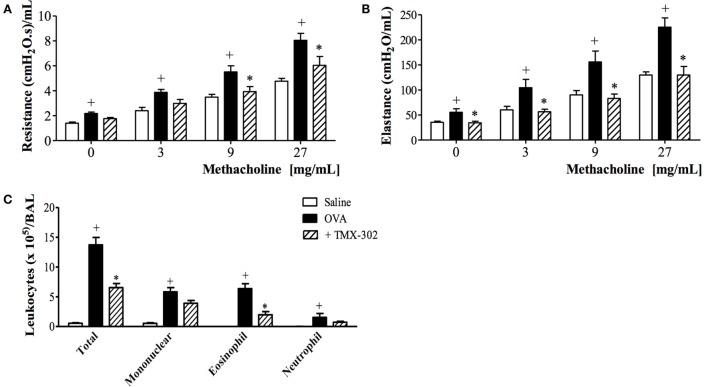
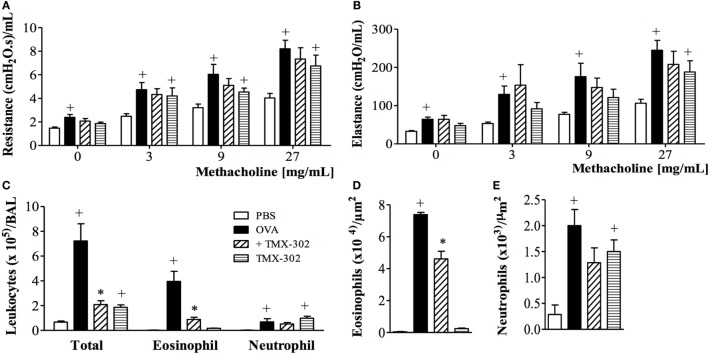
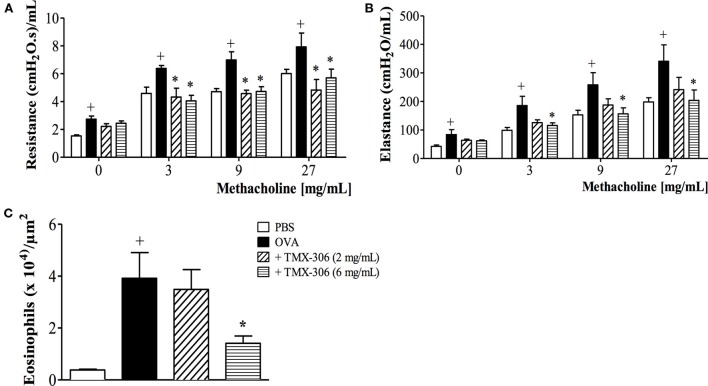
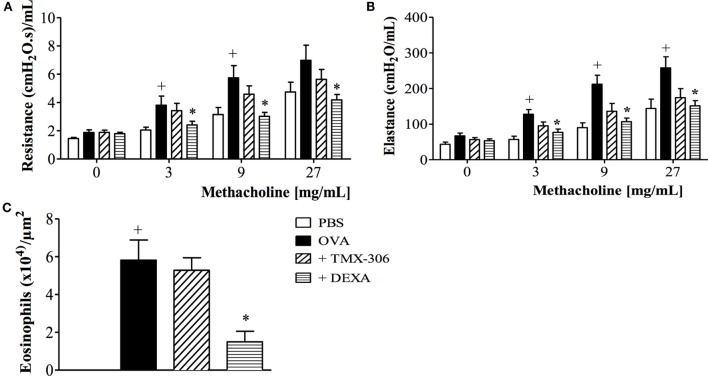
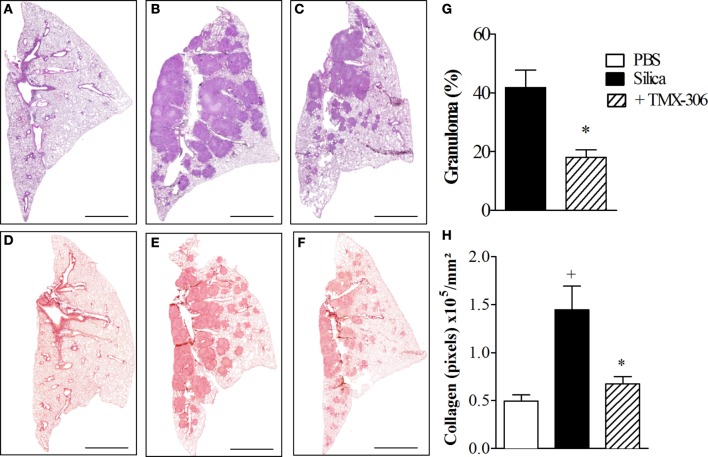
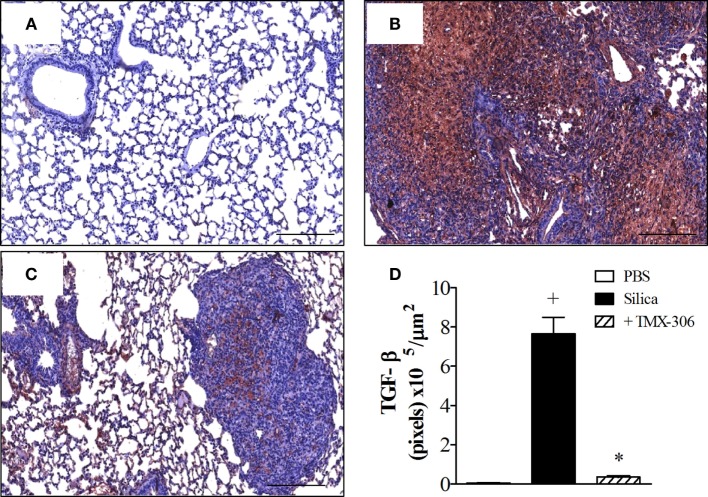
Prior investigations show that signaling activation through pattern recognition receptors can directly impact a number of inflammatory lung diseases. While toll-like receptor (TLR) 7 agonists have raised interest for their ability to inhibit allergen-induced pathological changes in experimental asthma conditions, the putative benefit of this treatment is limited by adverse effects. Our aim was to evaluate the therapeutic potential of two PEGylated purine-like compounds, TMX-302 and TMX-306, characterized by TLR7 partial agonistic activity; therefore, the compounds are expected to induce lower local and systemic adverse reactions. In vitro approaches and translation to murine models of obstructive and restrictive lung diseases were explored. In vitro studies with human PBMCs showed that both TMX-302 and TMX-306 marginally affects cytokine production as compared with equivalent concentrations of the TLR7 full agonist, TMX-202. The PEGylated compounds did not induce monocyte-derived DC maturation or B cell proliferation, differently from what observed after stimulation with TMX-202. Impact of PEGylated ligands on lung function and inflammatory changes was studied in animal models of acute lung injury, asthma, and silicosis following Lipopolysaccharide (LPS), allergen (ovalbumin), and silica inhalation, respectively. Subcutaneous injection of TMX-302 prevented LPS- and allergen-induced airway hyper-reactivity (AHR), leukocyte infiltration, and production of pro-inflammatory cytokines in the lung. However, intranasal instillation of TMX-302 led to neutrophil infiltration and failed to prevent allergen-induced AHR, despite inhibiting leukocyte counts in the BAL. Aerosolized TMX-306 given prophylactically, but not therapeutically, inhibited pivotal asthma features. Interventional treatment with intranasal instillation of TMX-306 significantly reduced the pulmonary fibrogranulomatous response and the number of silica particles in lung interstitial space in silicotic mice. These findings highlight the potential of TMX-306, emphasizing its value in drug development for lung diseases, and particularly silicosis.
先前的研究表明,通过模式识别受体的信号激活可直接影响多种炎症性肺病。虽然 toll 样受体(TLR)7 激动剂因其在实验性哮喘条件下抑制变应原诱导的病理变化的能力而引起了人们的关注,但这种治疗的假定益处受到不良反应的限制。我们的目的是评估两种聚乙二醇化嘌呤样化合物 TMX-302 和 TMX-306 的治疗潜力,其特征在于 TLR7 部分激动活性;因此,预计这些化合物会引起较低的局部和全身不良反应。我们探索了体外方法并将其转化为阻塞性和限制性肺病的小鼠模型。用人外周血单核细胞进行的体外研究表明,与同等浓度的 TLR7 完全激动剂 TMX-202 相比,TMX-302 和 TMX-306 对细胞因子产生的影响微乎其微。与用 TMX-202 刺激后观察到的情况不同,聚乙二醇化化合物不会诱导单核细胞衍生的树突状细胞成熟或 B 细胞增殖。分别在脂多糖(LPS)、变应原(卵清蛋白)和二氧化硅吸入后的急性肺损伤、哮喘和矽肺动物模型中研究了聚乙二醇化配体对肺功能和炎症变化的影响。皮下注射 TMX-302 可预防 LPS 和变应原诱导的气道高反应性(AHR)、白细胞浸润以及肺中促炎细胞因子的产生。然而,尽管抑制了支气管肺泡灌洗中的白细胞计数,但经鼻滴注 TMX-302 会导致中性粒细胞浸润,并且未能预防变应原诱导的 AHR。预防性给予雾化 TMX-306 可抑制关键的哮喘特征,但治疗性给予则无效。经鼻滴注 TMX-306 进行干预治疗可显著降低矽肺小鼠的肺纤维肉芽肿反应和肺间质空间中的二氧化硅颗粒数量。这些发现突出了 TMX-306 的潜力,强调了其在肺病,尤其是矽肺药物开发中的价值。