Kimura Yuko, Hayashida Naomi, Takahashi Jumpei, Rafalsky Ruslan, Saiko Alexsey, Gutevich Alexander, Chorniy Sergiy, Kudo Takashi, Takamura Noboru
Department of Global Health, Medicine and Welfare, Atomic Bomb Disease Institute, Nagasaki University , Nagasaki , Japan.
Division of Strategic Collaborative Research, Atomic Bomb Disease Institute, Nagasaki University , Nagasaki , Japan.
PeerJ. 2016 Mar 15;4:e1774. doi: 10.7717/peerj.1774. eCollection 2016.
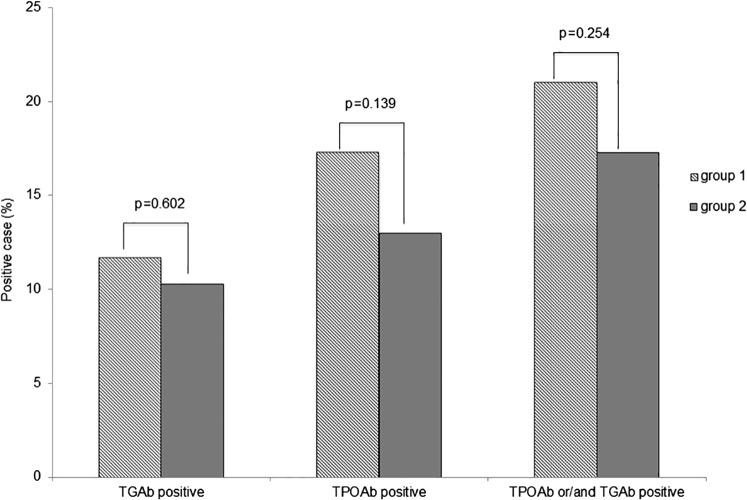
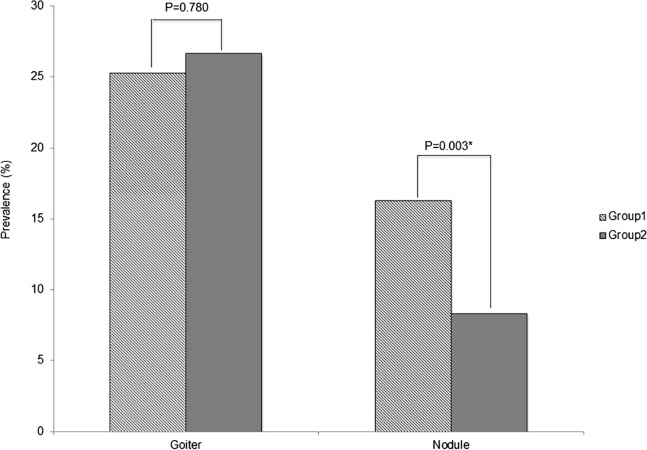
Background. The Chernobyl Nuclear Power Plant (CNPP) accident exposed a large number of inhabitants to internal (131)I radiation. The associations between internal (131)I exposure and thyroid autoimmunity and benign thyroid diseases remain controversial in the population living in the contaminated area around the CNNP. In this study, we evaluate the association of (131)I with benign thyroid diseases. Methods. We compared the prevalence of Anti-Thyroid Autoantibodies (ATAs), thyroid function, and prevalence of thyroid ultrasound finding outcomes in 300 residents of the contaminated area of Ukraine who were 0-5 years of age at the time of the CNPP accident (group 1) and 300 sex-matched residents who were born after the accident (group 2). Results. We did not find any differences of the prevalence of Antithyroglobulin Antibodies (TGAb) positive, Antithyroid Peroxidase Antibodies (TPOAb) positive, and TGAb and/or TPOAb positive between the study groups. (11.7% vs 10.3%; p = 0.602, 17.3% vs 13.0%; p = 0.136, 21.0% vs 17.3%; p = 0.254, respectively); after adjusting for age and sex, the prevalence was not associated with the (131)I exposure status in the study groups. The prevalence of subclinical and overt hypothyroidism cases was not significantly different (p = 0.093 and p = 0.320) in the two groups, nor was the prevalence of goiter (p = 0.482). On the other hand, the prevalence of nodules was significantly higher in group 1 (p = 0.003), though not significantly so after adjustment for age and sex. Discussion. Working 26-27 years after the CNNP accident, we found no increased prevalence of ATAs or benign thyroid diseases in young adults exposed to (131)I fallout during early childhood in the contaminated area of Ukraine. Long-term follow-up is needed to clarify the effects of radiation exposure on autoimmunity reaction in the thyroid.
背景。切尔诺贝利核电站(CNPP)事故致使大量居民受到内源性(131)I辐射。在切尔诺贝利核电站周边污染区域居住的人群中,内源性(131)I暴露与甲状腺自身免疫及良性甲状腺疾病之间的关联仍存在争议。在本研究中,我们评估(131)I与良性甲状腺疾病的关联。方法。我们比较了乌克兰污染区域300名居民的抗甲状腺自身抗体(ATA)患病率、甲状腺功能以及甲状腺超声检查结果的患病率,这些居民在CNPP事故发生时年龄为0至5岁(第1组),以及300名事故后出生的性别匹配居民(第2组)。结果。我们未发现研究组之间抗甲状腺球蛋白抗体(TGAb)阳性、抗甲状腺过氧化物酶抗体(TPOAb)阳性以及TGAb和/或TPOAb阳性的患病率存在差异(分别为11.7%对10.3%;p = 0.602,17.3%对13.0%;p = 0.136,21.0%对17.3%;p = 0.254);在对年龄和性别进行调整后,研究组中的患病率与(131)I暴露状态无关。两组中亚临床和显性甲状腺功能减退病例的患病率无显著差异(p = 0.093和p = 0.320),甲状腺肿的患病率也无显著差异(p = 0.482)。另一方面,第1组中结节的患病率显著更高(p = 0.003),不过在对年龄和性别进行调整后差异不再显著。讨论。在CNPP事故发生26 - 27年后进行研究,我们发现乌克兰污染区域在幼儿期受到(131)I沉降物暴露的年轻成年人中,ATA或良性甲状腺疾病的患病率并未增加。需要进行长期随访以阐明辐射暴露对甲状腺自身免疫反应的影响。