Belangero Paulo Santoro, Tamaoki Marcel Jun Sugawara, Nakama Gilberto Yoshinobu, Shoiti Marcus Vinicius, Gomes Rodrigo Vick Fernandes, Belloti João Carlos
Second-year Resident in the Department of Orthopedics and Traumatology, Federal University of São Paulo.
Orthopedist in the Shoulder and Elbow Sector, Department of Orthopedics and Traumatology, Federal University of São Paulo.
Rev Bras Ortop. 2015 Dec 12;45(5):468-73. doi: 10.1016/S2255-4971(15)30437-7. eCollection 2010 Sep-Oct.
Acute lateral ankle sprain (ALAS) is a common injury, but its treatment has yet to be firmly established. The purpose of this study was to investigate how Brazilian Orthopedists (including residents) manage the diagnosis, classification, treatment and complications of ALAS.
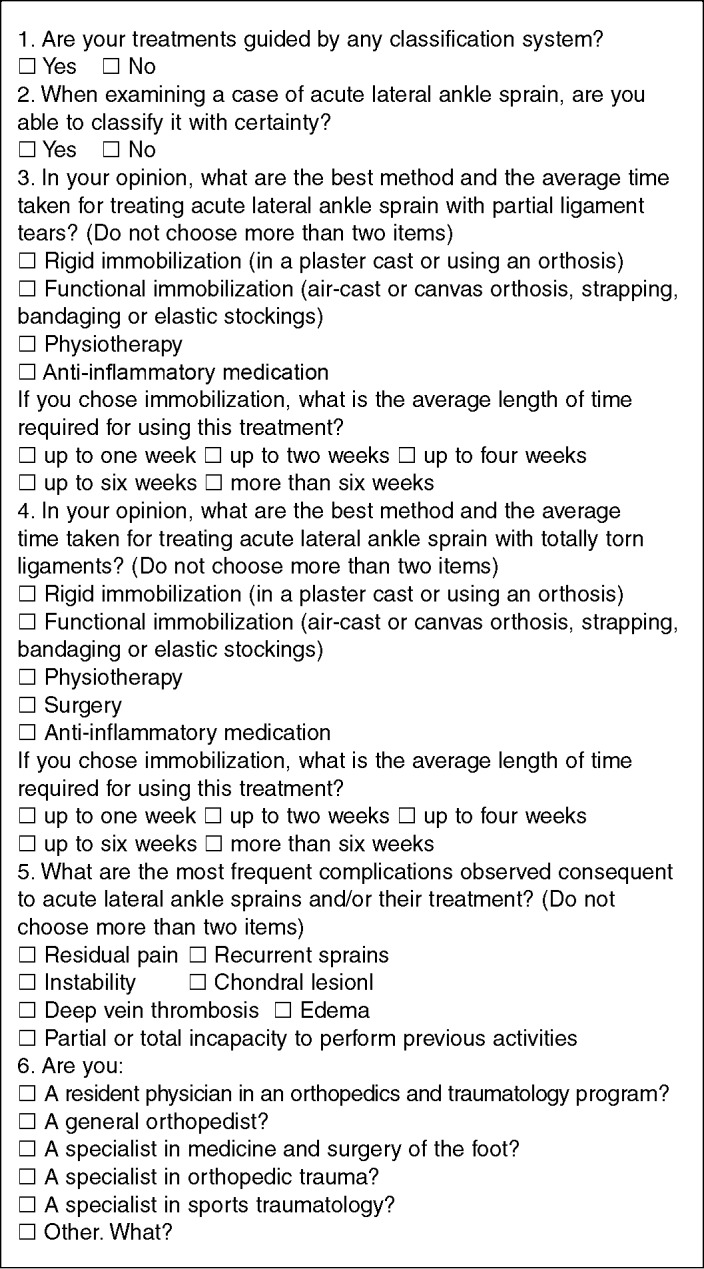
A multiple-choice questionnaire was developed with the aim of addressing the main aspects of the treatment of ALAS. The questionnaire was made available on the official website of the Brazilian Society of Orthopedics and Traumatology between June 15 and August 1, 2004.
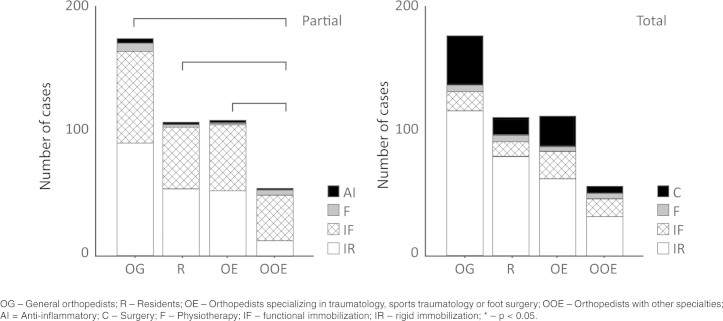
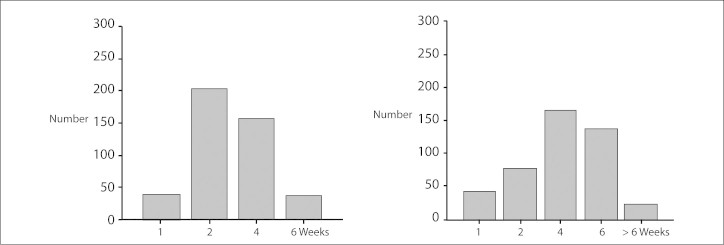
444 questionnaires were included in the analysis. The results showed agreement among most of the interviewees in the following regards: 90.8% used a classification method to guide treatment of the sprain; 59% classified the ankle sprain with certainty; 63.7% used rigid immobilization in cases of totally torn ligaments; 60.6% used anti-inflammatory medication in cases of partial ligament tears; and 75.9% reported that residual pain was the most frequent complication. There was no consensus regarding the immobilization method for partial ALAS, given that immobilization and functional treatment were chosen with the same frequency (47%). There was no significant difference between the responses from residents and from orthopedists (p = 0.81).
Orthopedists and orthopedic residents in Brazil have difficulty classifying ALAS and there is no consensus about the best therapeutic option for partial ALAS.
急性外侧踝关节扭伤(ALAS)是一种常见损伤,但其治疗方法尚未完全确立。本研究旨在调查巴西骨科医生(包括住院医生)如何处理ALAS的诊断、分类、治疗及并发症。
设计了一份多项选择题问卷,旨在探讨ALAS治疗的主要方面。该问卷于2004年6月15日至8月1日在巴西骨科学与创伤学协会的官方网站上发布。
444份问卷纳入分析。结果显示,大多数受访者在以下方面达成共识:90.8%使用分类方法指导扭伤治疗;59%能明确对踝关节扭伤进行分类;63.7%在韧带完全撕裂的情况下采用刚性固定;60.6%在韧带部分撕裂的情况下使用抗炎药物;75.9%报告残留疼痛是最常见的并发症。对于部分ALAS的固定方法没有达成共识,因为固定和功能治疗的选择频率相同(47%)。住院医生和骨科医生的回答之间没有显著差异(p = 0.81)。
巴西的骨科医生和骨科住院医生在对ALAS进行分类方面存在困难,对于部分ALAS的最佳治疗选择也没有达成共识。