de Pádua Vitor Barion Castro, Maldonado Hilário, Vilela Júlio César Rodrigues, Provenza Alexandre Ribeira, Monteiro Cleverson, de Oliveira Neto Heleno Cavalcante
Lecturer in Orthopedics at the School of Medicine, University of Marília (UNIMAR), Marília, SP, Brazil.
Titular Professor of Orthopedics and Traumatology, Marília Medical School (FAMEMA), Marília, SP, Brazil.
Rev Bras Ortop. 2015 Nov 16;47(1):50-6. doi: 10.1016/S2255-4971(15)30345-1. eCollection 2012 Jan-Feb.
To compare ACL reconstruction with anatomical positioning of the tunnels using the hamstring or patellar tendons.
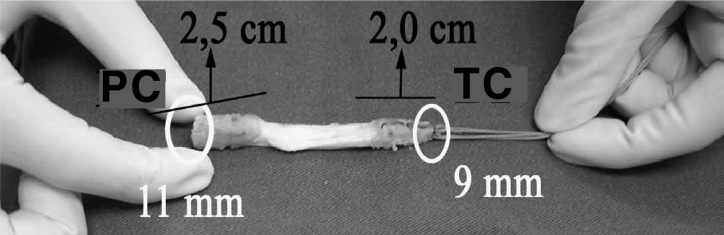
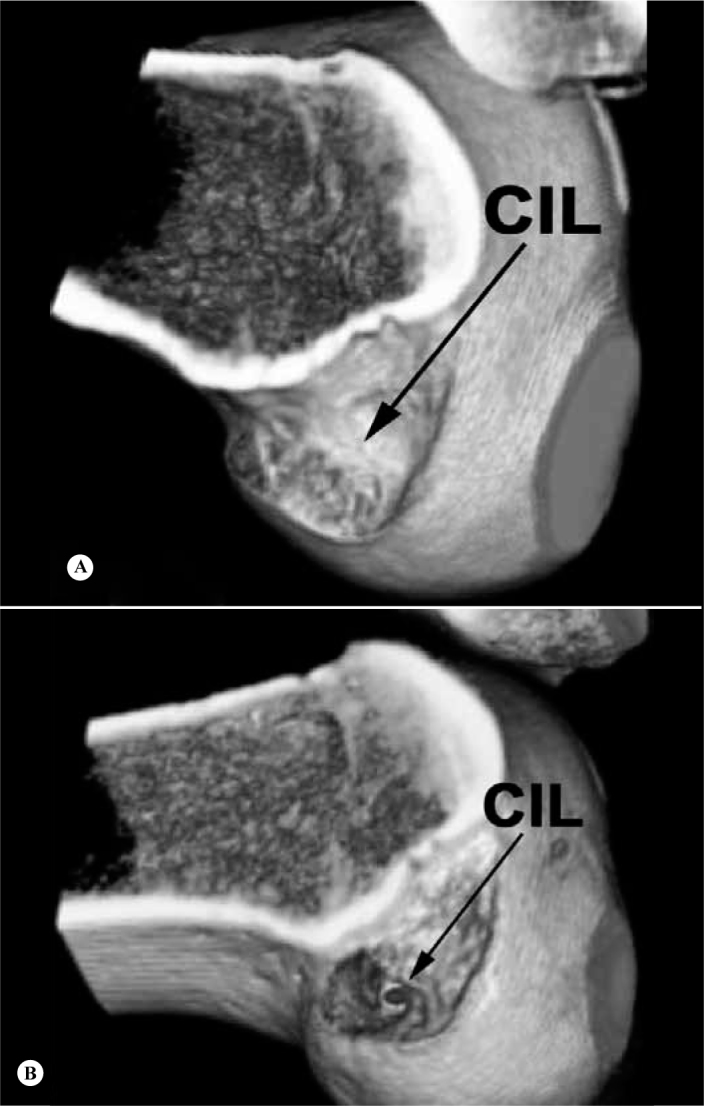
We prospectively evaluated 52 patients who underwent ACL reconstruction using the Chambat's technique, with anatomical positioning of the tunnels drilled outside in. They were divided into group A, with 27 patients, using the patellar tendon as a graft, and group B, with 25 patients, using the hamstring.
In group A 26 patients were very satisfied or satisfied and 1 unhappy, in group B. 25 patients were very satisfied or satisfied with the procedure (p = 0.990). According to the Lysholm scale, group A had a mean score of 96.11 and group B, 95.32 (p=0.594). In relation to preoperative IKDC, 100% of the patients in group A and 92% of those in group B were IKDC C or D (p = 0.221); in the assessment with a minimum of two-year follow-up, 96% of group A and 92% of group B were IKDC A or B (p = 0.256). The Lachman test, pivot shift, return to sports activities, and the comparative difference in anterior translation (Rolimeter(TM)) also showed no statistically significant difference. In group A, 5 patients (18.5%) were unable to kneel on a hard surface, whereas no patient in group B had this complaint.
The anterior cruciate ligament reconstruction presents similar results using the hamstring or patellar tendon with anatomical positioning of the tunnels. Drilling the femoral tunnel outside in is a reproducible and accurate option in the correct placement the femoral tunnel.
比较使用腘绳肌腱或髌腱进行隧道解剖定位的前交叉韧带重建术。
我们前瞻性评估了52例行前交叉韧带重建术的患者,采用Chambat技术,从外向内进行隧道的解剖定位。他们被分为A组,共27例患者,使用髌腱作为移植物;B组,共25例患者,使用腘绳肌腱。
A组中26例患者非常满意或满意,1例不满意;B组中25例患者对手术非常满意或满意(p = 0.990)。根据Lysholm评分,A组平均得分为96.11,B组为95.32(p = 0.594)。关于术前国际膝关节文献委员会(IKDC)评分,A组100%的患者和B组92%的患者为IKDC C或D级(p = 0.221);在至少两年随访的评估中,A组96%的患者和B组92%的患者为IKDC A或B级(p = 0.256)。Lachman试验、轴移试验、恢复体育活动情况以及前向平移的比较差异(Rolimeter™)也均无统计学显著差异。A组中有5例患者(18.5%)无法在硬地面上跪,而B组中无患者有此主诉。
采用腘绳肌腱或髌腱并进行隧道解剖定位的前交叉韧带重建术结果相似。从外向内钻股骨隧道在正确放置股骨隧道方面是一种可重复且准确的选择。