Kim Chang Seong, Choi Joon Seok, Joo Soo Yeon, Bae Eun Hui, Ma Seong Kwon, Lee JongUn, Kim Soo Wan
Department of Internal Medicine, Chonnam National University Medical School, Gwangju, Korea.
Department of Physiology, Chonnam National University Medical School, Gwangju, Korea.
PLoS One. 2016 Mar 30;11(3):e0152591. doi: 10.1371/journal.pone.0152591. eCollection 2016.
Nicotine is, to a large extent, responsible for smoking-mediated renal dysfunction. This study investigated nicotine's effects on renal tubular epithelial cell apoptosis in vitro and it explored the mechanisms underlying its effects.
Human proximal tubular epithelial (HK-2) cells were treated with nicotine. Cell viability was examined by using the WST-1 assay. Intracellular levels of reactive oxygen species (ROS) and the expression of mitogen-activated protein kinase (MAPK) and nuclear factor-κB (NF-κB) proteins were determined. The messenger ribonucleic acid and the protein expression associated with the nicotine acetylcholine receptors (nAChRs) in HK-2 cells was examined, and apoptosis was detected using flow cytometry, cell cycle analysis, and immunoblot analysis.
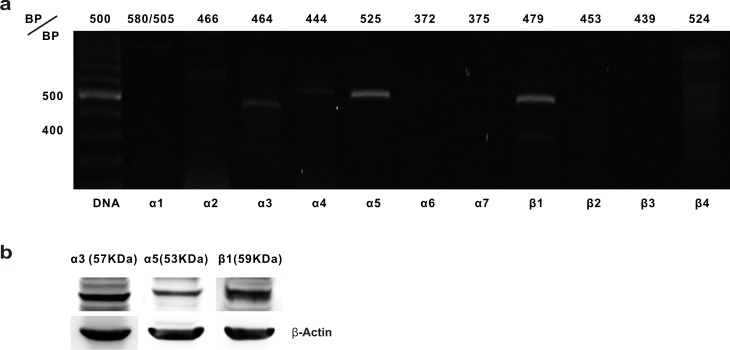
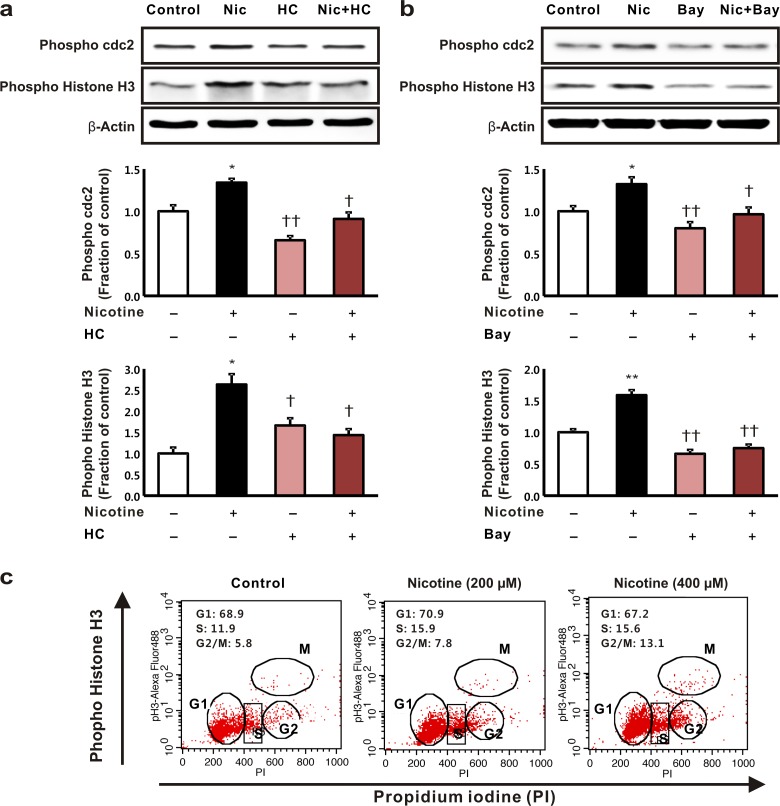
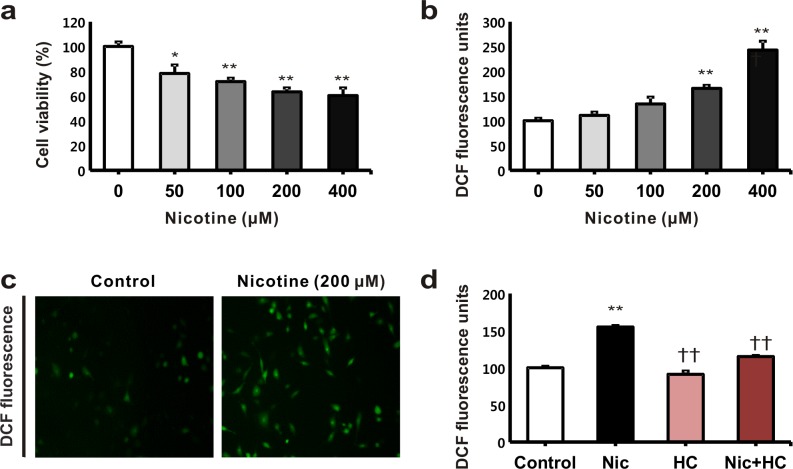
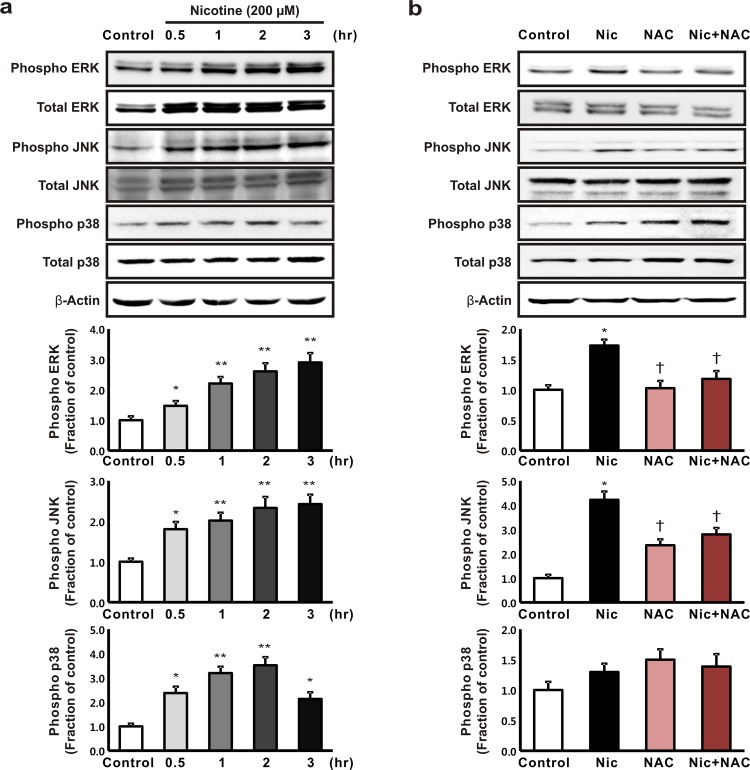
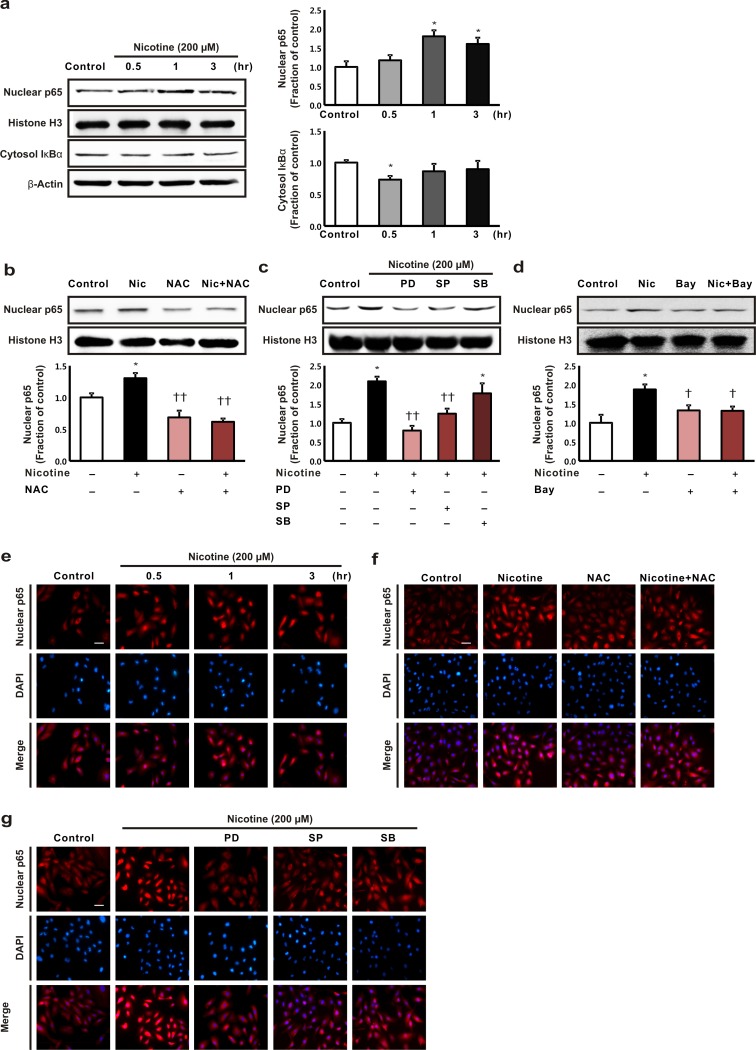
The HK-2 cells were endowed with nAChRs. Nicotine treatment reduced cell viability dose dependently, increased ROS levels, and increased extracellular signal-regulated kinase (ERK), c-Jun N-terminal kinase (JNK), and p38 MAPK expression. Nicotine increased NF-κB activation, which was attenuated by N-acetyl-L-cysteine, and ERK and JNK inhibitors, but was not affected by a p38 MAPK inhibitor. Nicotine increased the Bax/Bcl-2 ratio, which was attenuated by N-acetyl-L-cysteine, the NF-κB inhibitor, Bay 11-7082, and hexamethonium, a non-specific nAChR blocker. Flow cytometry revealed nicotine-induced G2/M phase arrest. While nicotine treatment increased the expression of phosphorylated cdc2 and histone H3, a marker of G2/M phase arrest, hexamethonium and Bay 11-7082 pretreatment reduced their expression.
Nicotine caused apoptosis in HK-2 cells by inducing ROS generation that activated the NF-κB signaling pathway via the MAPK pathway and it arrested the cell cycle at the G2/M phase. Nicotine-induced apoptosis in HK-2 cells involves the nAChRs.
尼古丁在很大程度上导致了吸烟介导的肾功能障碍。本研究调查了尼古丁对肾小管上皮细胞凋亡的体外影响,并探讨了其作用机制。
用尼古丁处理人近端肾小管上皮(HK-2)细胞。使用WST-1法检测细胞活力。测定细胞内活性氧(ROS)水平以及丝裂原活化蛋白激酶(MAPK)和核因子κB(NF-κB)蛋白的表达。检测HK-2细胞中与尼古丁乙酰胆碱受体(nAChRs)相关的信使核糖核酸和蛋白表达,并使用流式细胞术、细胞周期分析和免疫印迹分析检测细胞凋亡。
HK-2细胞表达nAChRs。尼古丁处理剂量依赖性地降低细胞活力,增加ROS水平,并增加细胞外信号调节激酶(ERK)、c-Jun氨基末端激酶(JNK)和p38 MAPK的表达。尼古丁增加NF-κB活化,N-乙酰-L-半胱氨酸、ERK和JNK抑制剂可减弱这种活化,但p38 MAPK抑制剂对其无影响。尼古丁增加Bax/Bcl-2比值,N-乙酰-L-半胱氨酸、NF-κB抑制剂Bay 11-7082和非特异性nAChR阻滞剂六甲铵可减弱这种增加。流式细胞术显示尼古丁诱导G2/M期阻滞。虽然尼古丁处理增加了磷酸化cdc2和组蛋白H3的表达,这是G2/M期阻滞的标志物,但六甲铵和Bay 11-7082预处理可降低它们的表达。
尼古丁通过诱导ROS生成导致HK-2细胞凋亡,ROS通过MAPK途径激活NF-κB信号通路,并使细胞周期停滞在G2/M期。尼古丁诱导HK-2细胞凋亡涉及nAChRs。