Shin Chi Won, Kim Geon A, Park Won Jun, Park Kwan Yong, Jeon Jeong Min, Oh Hyun Ju, Kim Min Jung, Lee Byeong Chun
Department of Veterinary Medicine, College of Veterinary Medicine, Seoul National University, Seoul 08826, Korea.
Department of Theriogenology & Biotechnology, College of Veterinary Medicine, Seoul National University, Seoul 08826, Korea.
J Vet Sci. 2016 Dec 30;17(4):563-567. doi: 10.4142/jvs.2016.17.4.563.
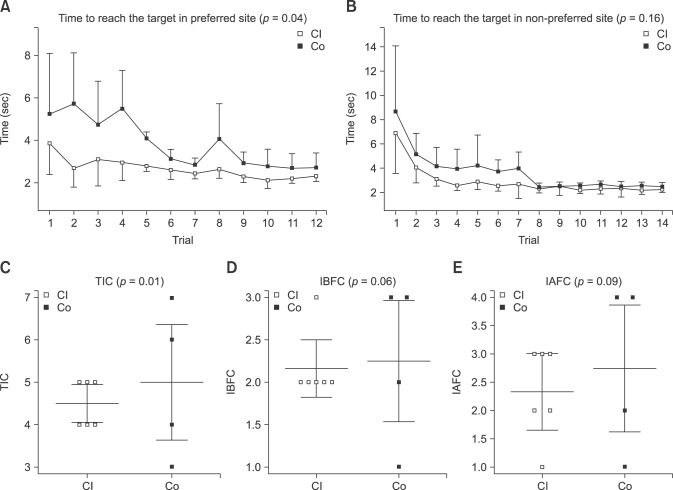
Somatic cell nuclear transfer allows generation of genetically identical animals using donor cells derived from animals with particular traits. To date, few studies have investigated whether or not these cloned dogs will show identical behavior patterns. To address this question, learning, memory and exploratory patterns were examined using six cloned dogs with identical nuclear genomes. The variance of total incorrect choice number in the Y-maze test among cloned dogs was significantly lower than that of the control dogs. There was also a significant decrease in variance in the level of exploratory activity in the open fields test compared to age-matched control dogs. These results indicate that cloned dogs show similar cognitive and exploratory patterns, suggesting that these behavioral phenotypes are related to the genotypes of the individuals.
体细胞核移植技术可利用具有特定性状的动物的供体细胞培育出基因相同的动物。迄今为止,很少有研究调查这些克隆犬是否会表现出相同的行为模式。为了解决这个问题,我们使用六只具有相同核基因组的克隆犬对其学习、记忆和探索模式进行了研究。克隆犬在Y迷宫测试中总错误选择数的方差显著低于对照犬。与年龄匹配的对照犬相比,在旷场测试中探索活动水平的方差也显著降低。这些结果表明克隆犬表现出相似的认知和探索模式,这表明这些行为表型与个体的基因型有关。