Bachleda Amelia R, Pevny Larysa H, Weiss Ellen R
Neuroscience Center, University of North Carolina-Chapel Hill, Chapel Hill, North Carolina, United States 2Curriculum in Neurobiology, University of North Carolina-Chapel Hill, Chapel Hill, North Carolina, United States.
Neuroscience Center, University of North Carolina-Chapel Hill, Chapel Hill, North Carolina, United States 3Department of Genetics, University of North Carolina-Chapel Hill, Chapel Hill, North Carolina, United States.
Invest Ophthalmol Vis Sci. 2016 Mar;57(3):1488-99. doi: 10.1167/iovs.15-17994.
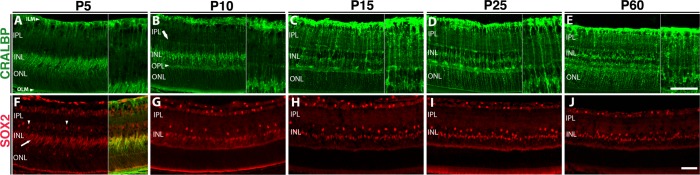
Müller glia (MG), the principal glial cells of the vertebrate retina, display quiescent progenitor cell characteristics. They express key progenitor markers, including the high mobility group box transcription factor SOX2 and maintain a progenitor-like morphology. In the embryonic and mature central nervous system, SOX2 maintains neural stem cell identity. However, its function in committed Müller glia has yet to be determined.
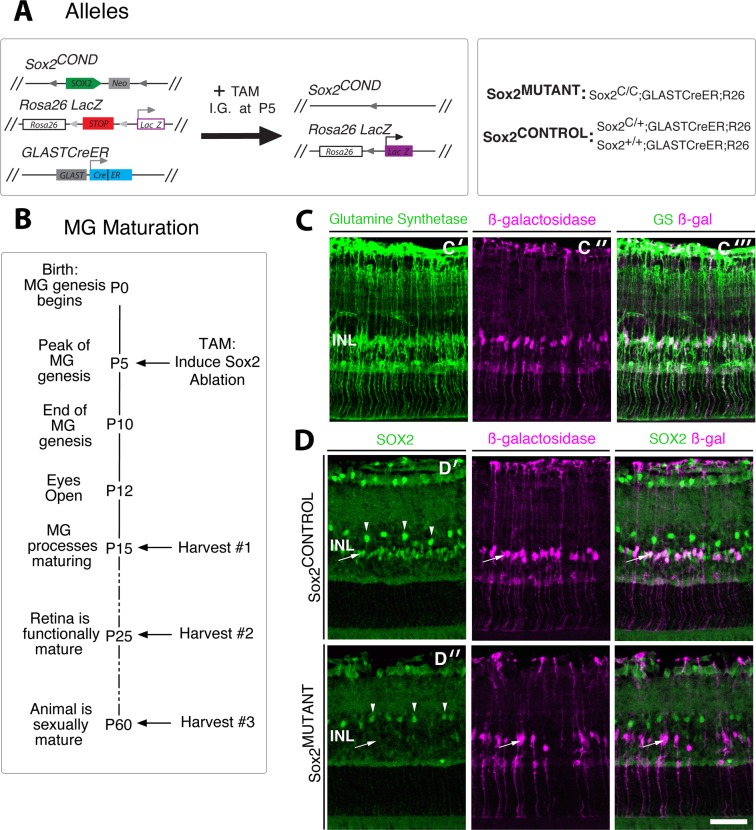
We use inducible, MG-specific genetic ablation of Sox2 in vivo at the peak of MG genesis to analyze its function in the maturation of murine MG and effects on other cells in the retina. Histologic and functional analysis of the Sox2-deficient retinas is conducted at key points in postnatal development.
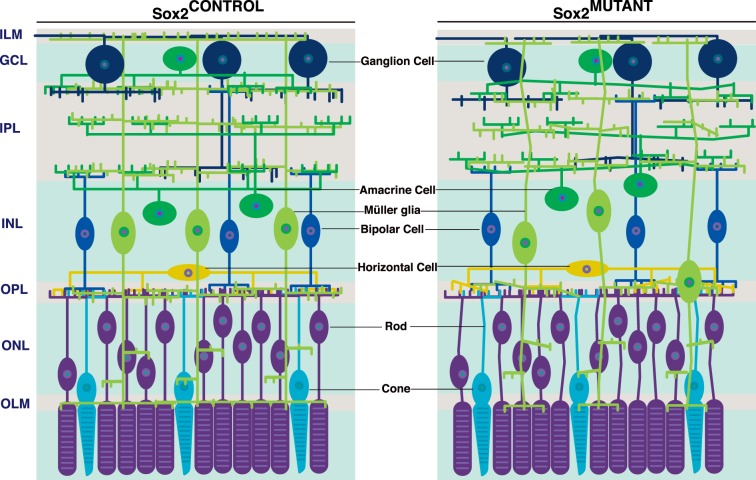
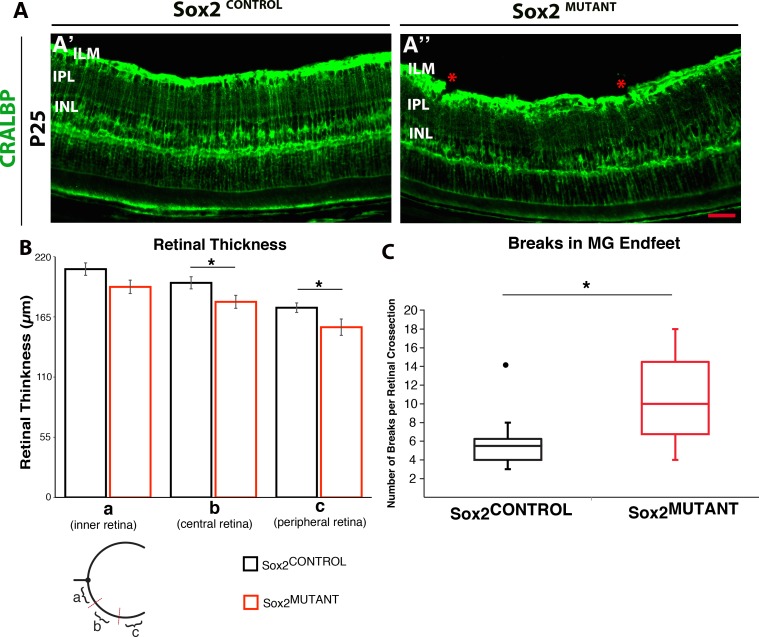
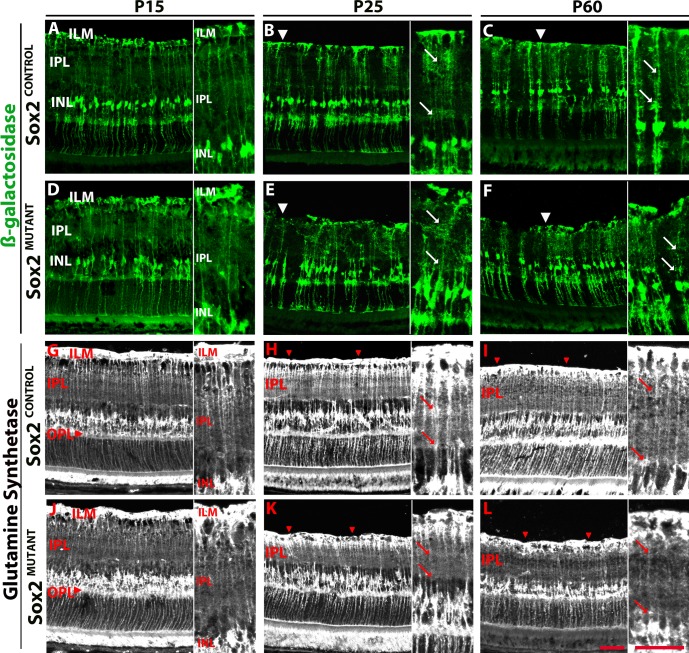
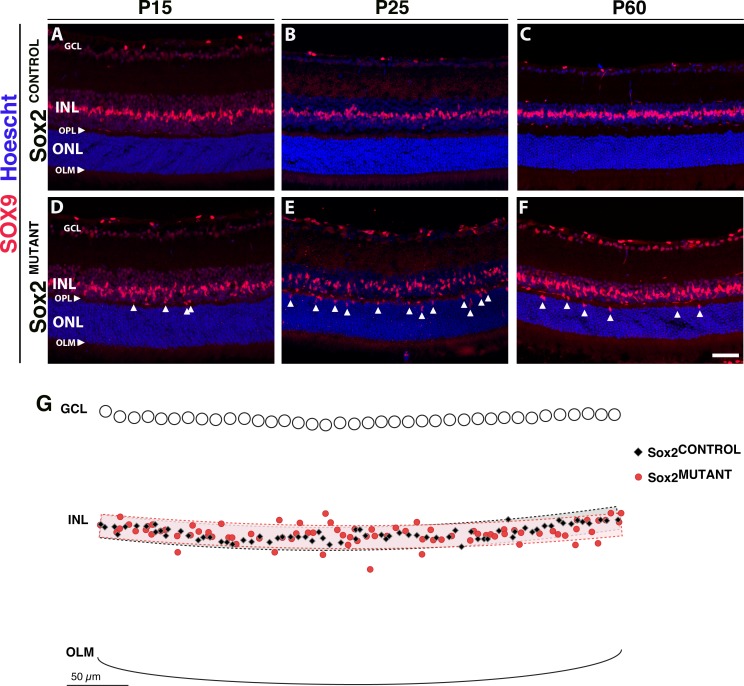
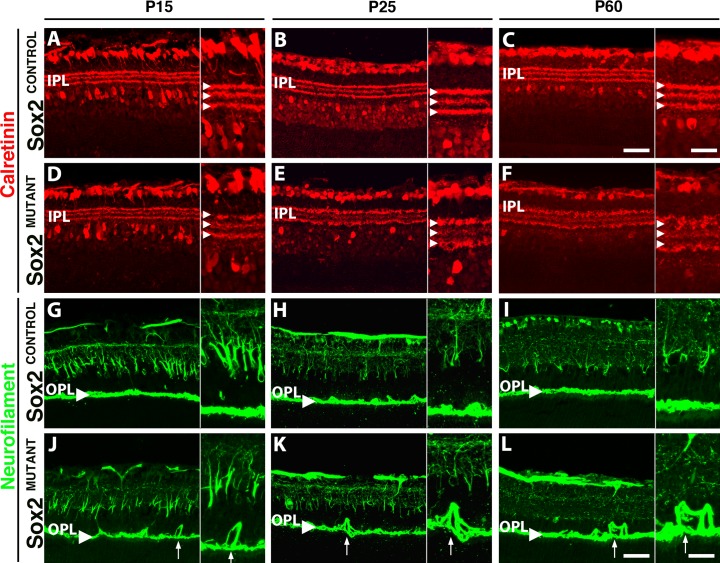
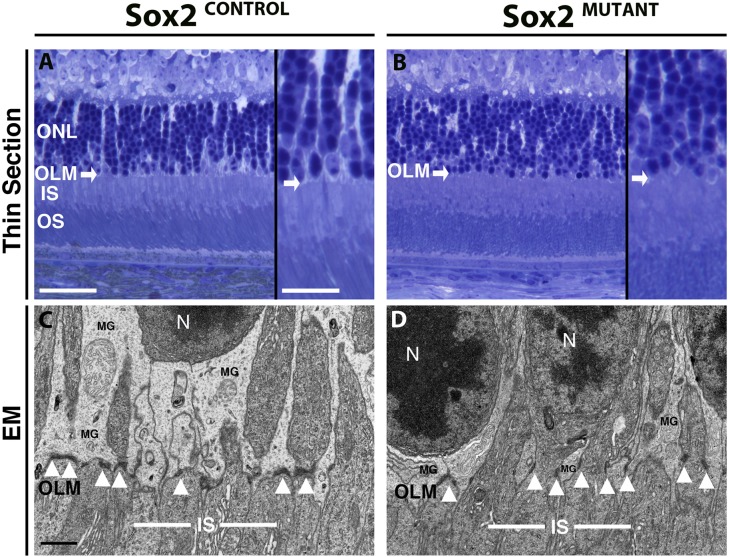
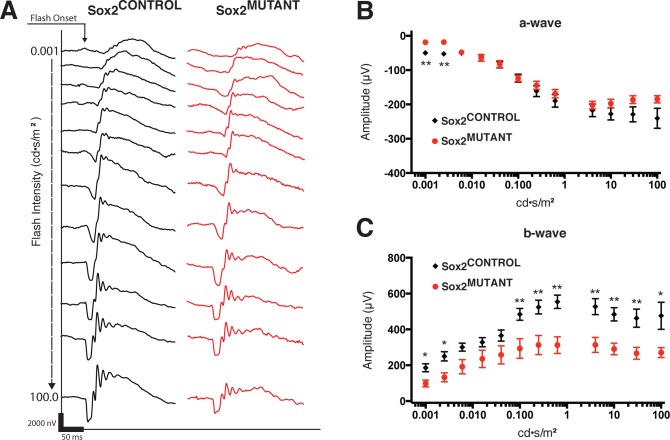
Ablation of Sox2 in the postnatal retina results in disorganization of MG processes in the inner plexiform layer and mislocalized cell bodies in the nuclear layers. This disorganization is concurrent with a thinning of the neural retina and disruption of neuronal processes in the inner and outer plexiform layers. Functional analysis by electroretinography reveals a decrease in the b-wave amplitude. Disruption of MG maturation due to Sox2 ablation therefore negatively affected the function of the retina.
These results demonstrate a novel role for SOX2 in glial process outgrowth and adhesion, and provide new insights into the essential role Müller glia play in the development of retinal cytoarchitecture. Prior to this work, SOX2 was known to have a primary role in determining cell fate. Our experiments bypass cell fate conversion to establish a new role for SOX2 in a committed cell lineage.
缪勒胶质细胞(MG)是脊椎动物视网膜的主要胶质细胞,具有静止祖细胞的特征。它们表达关键的祖细胞标志物,包括高迁移率族盒转录因子SOX2,并保持祖细胞样形态。在胚胎和成熟的中枢神经系统中,SOX2维持神经干细胞的特性。然而,其在已分化的缪勒胶质细胞中的功能尚未确定。
我们在缪勒胶质细胞生成高峰期,在体内对Sox2进行诱导性、缪勒胶质细胞特异性基因敲除,以分析其在小鼠缪勒胶质细胞成熟过程中的功能以及对视网膜其他细胞的影响。在出生后发育的关键时间点对Sox2缺陷型视网膜进行组织学和功能分析。
出生后视网膜中Sox2的缺失导致内网状层缪勒胶质细胞突起紊乱,核层细胞体定位错误。这种紊乱与神经视网膜变薄以及内、外网状层神经元突起的破坏同时发生。视网膜电图功能分析显示b波振幅降低。因此,由于Sox2缺失导致的缪勒胶质细胞成熟破坏对视网膜功能产生了负面影响。
这些结果证明了SOX2在胶质细胞突起生长和黏附中的新作用,并为缪勒胶质细胞在视网膜细胞结构发育中所起的重要作用提供了新的见解。在这项工作之前,已知SOX2在决定细胞命运方面起主要作用。我们通过绕过细胞命运转换的实验,确定了SOX2在已分化细胞谱系中的新作用。