De Luca Francesca, Rotunno Giada, Salvianti Francesca, Galardi Francesca, Pestrin Marta, Gabellini Stefano, Simi Lisa, Mancini Irene, Vannucchi Alessandro Maria, Pazzagli Mario, Di Leo Angelo, Pinzani Pamela
Sandro Pitigliani Medical Oncology Department, Hospital of Prato, Istituto Toscano Tumori, 59100, Prato, Italy.
Department of Experimental and Clinical Medicine, University of Florence, 50139, Florence, Italy.
Oncotarget. 2016 May 3;7(18):26107-19. doi: 10.18632/oncotarget.8431.
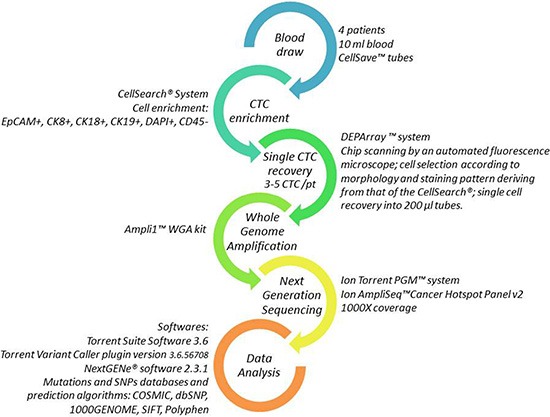
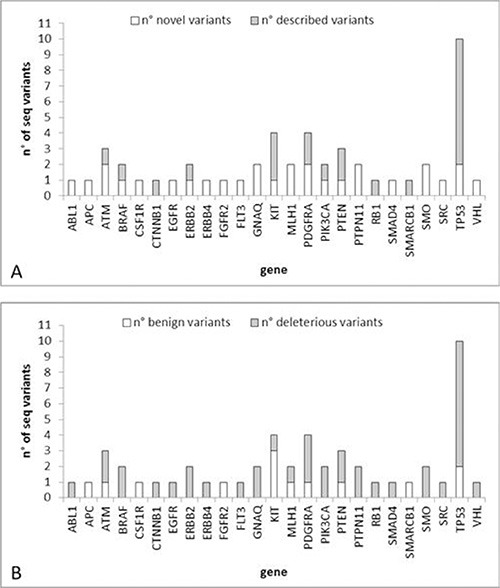
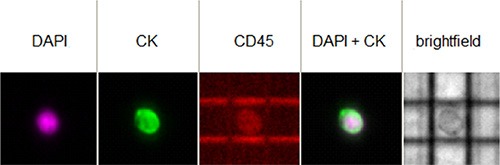
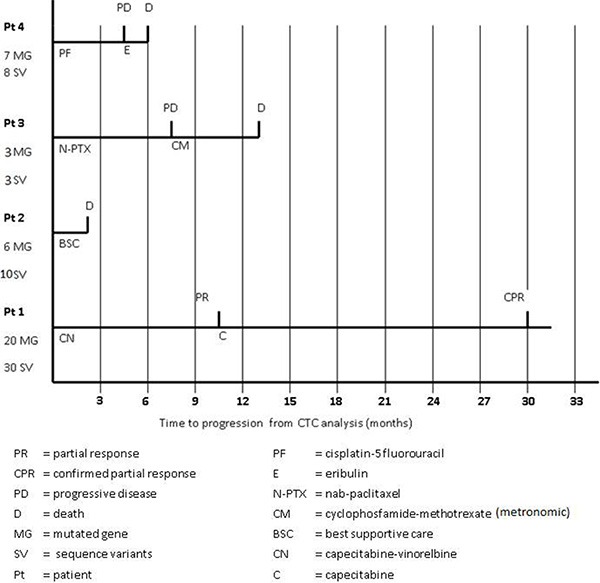
Circulating Tumor Cells (CTCs) represent a "liquid biopsy" of the tumor potentially allowing real-time monitoring of cancer biology and therapies in individual patients.The purpose of the study was to explore the applicability of a protocol for the molecular characterization of single CTCs by Next Generation Sequencing (NGS) in order to investigate cell heterogeneity and provide a tool for a personalized medicine approach.CTCs were enriched and enumerated by CellSearch in blood from four metastatic breast cancer patients and singularly isolated by DEPArray. Upon whole genome amplification 3-5 single CTCs per patient were analyzed by NGS for 50 cancer-related genes.We found 51 sequence variants in 25 genes. We observed inter- and intra-patient heterogeneity in the mutational status of CTCs.The highest number of somatic deleterious mutations was found in the gene TP53, whose mutation is associated with adverse prognosis in breast cancer.The discordance between the mutational status of the primary tumor and CTCs observed in 3 patients suggests that, in advanced stages of cancer, CTC characteristics are more closely linked to the dynamic modifications of the disease status.In one patient the mutational profiles of CTCs before and during treatment shared only few sequence variants.This study supports the applicability of a non-invasive approach based on the liquid biopsy in metastatic breast cancer patients which, in perspective, should allow investigating the clonal evolution of the tumor for the development of new therapeutic strategies in precision medicine.
循环肿瘤细胞(CTCs)代表了肿瘤的一种“液体活检”,有可能实现对个体患者癌症生物学特性和治疗情况的实时监测。本研究的目的是探索一种通过新一代测序(NGS)对单个循环肿瘤细胞进行分子特征分析的方案的适用性,以研究细胞异质性,并为个性化医疗方法提供一种工具。通过CellSearch对4例转移性乳腺癌患者血液中的循环肿瘤细胞进行富集和计数,并通过DEPArray进行单个分离。在全基因组扩增后,对每位患者3 - 5个单个循环肿瘤细胞进行NGS分析,检测50个与癌症相关的基因。我们在25个基因中发现了51个序列变异。我们观察到循环肿瘤细胞的突变状态在患者之间和患者内部均存在异质性。在TP53基因中发现的体细胞有害突变数量最多,该基因的突变与乳腺癌的不良预后相关。在3例患者中观察到的原发肿瘤和循环肿瘤细胞突变状态之间的不一致表明,在癌症晚期,循环肿瘤细胞的特征与疾病状态的动态变化更为密切相关。在1例患者中,治疗前和治疗期间循环肿瘤细胞的突变谱仅共享少数序列变异。本研究支持了基于液体活检的非侵入性方法在转移性乳腺癌患者中的适用性,从长远来看,这应该能够研究肿瘤的克隆进化,以制定精准医学中的新治疗策略。