Coughlin Steven S, Whitehead Mary, Sheats Joyce Q, Mastromonico Jeff, Smith Selina
Department of Community Health and Sustainability, Division of Public Health, University of Massachusetts, Lowell, MA.
SISTAAH Talk Breast Cancer Support Group, Miami, FL.
Jacobs J Community Med. 2016;2(1). Epub 2016 Feb 11.
Rapid developments in technology have encouraged the use of smartphones in health promotion research and practice. Although many applications (apps) relating to physical activity are available from major smartphone platforms, relatively few have been tested in research studies to determine their effectiveness in promoting health.
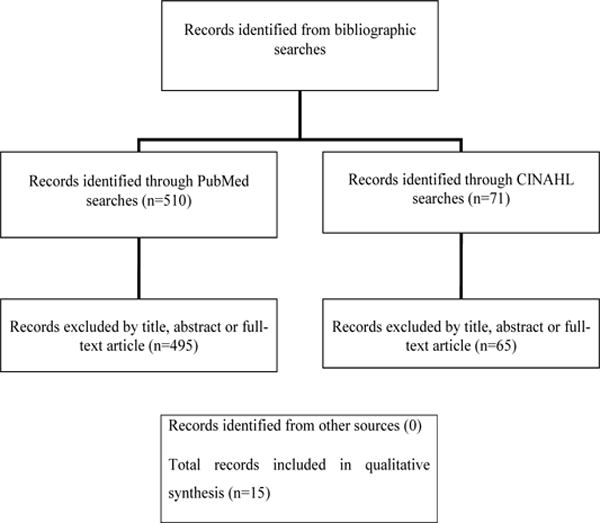
In this article, we summarize data on use of smartphone apps for promoting physical activity based upon bibliographic searches with relevant search terms in PubMed and CINAHL.
After screening the abstracts or full texts of articles, 15 eligible studies of the acceptability or efficacy of smartphone apps for increasing physical activity were identified. Of the 15 included studies, 6 were qualitative research studies, 8 were randomized control trials, and one was a nonrandomized study with a pre-post design. The results indicate that smartphone apps can be efficacious in promoting physical activity although the magnitude of the intervention effect is modest. Participants of various ages and genders respond favorably to apps that automatically track physical activity (e.g., steps taken), track progress toward physical activity goals, and are user-friendly and flexible enough for use with several types of physical activity.
Future studies should utilize randomized controlled trial research designs, larger sample sizes, and longer study periods to establish the physical activity measurement and intervention capabilities of smartphones. There is a need for culturally appropriate, tailored health messages to increase knowledge and awareness of health behaviors such as physical activity.
技术的快速发展促使智能手机在健康促进研究和实践中得到应用。尽管各大智能手机平台上有许多与体育活动相关的应用程序(应用),但在研究中对其促进健康效果进行测试的相对较少。
在本文中,我们基于在PubMed和CINAHL中使用相关搜索词进行的文献检索,总结了关于使用智能手机应用促进体育活动的数据。
在筛选文章摘要或全文后,确定了15项关于智能手机应用增加体育活动的可接受性或有效性的合格研究。在纳入的15项研究中,6项为定性研究,8项为随机对照试验,1项为前后设计的非随机研究。结果表明,智能手机应用在促进体育活动方面可能有效,尽管干预效果的程度适中。不同年龄和性别的参与者对能够自动跟踪体育活动(如步数)、跟踪体育活动目标进展情况且用户友好、足够灵活适用于多种体育活动类型的应用反应良好。
未来的研究应采用随机对照试验研究设计、更大的样本量和更长的研究周期,以确定智能手机在体育活动测量和干预方面的能力。需要有适合不同文化背景、量身定制的健康信息,以增加对体育活动等健康行为的知识和认识。