Zhao Hui, Huang Xiu-Feng, Zheng Zhi-Li, Deng Wen-Li, Lei Xin-Lan, Xing Dong-Jun, Ye Liang, Xu Su-Zhong, Chen Jie, Zhang Fang, Yu Xin-Ping, Jin Zi-Bing
Wenzhou People's Hospital, The Third Clinical Institute Affiliated to Wenzhou Medical University, Wenzhou Medical University, Wenzhou, China.
The Eye Hospital of Wenzhou Medical University, The State Key Laboratory Cultivation Base and Key Laboratory of Vision Science, Ministry of Health, Wenzhou, China.
BMJ Open. 2016 Apr 1;6(4):e010649. doi: 10.1136/bmjopen-2015-010649.
Infantile nystagmus (IN) is a genetically heterogeneous condition characterised by involuntary rhythmic oscillations of the eyes accompanied by different degrees of vision impairment. Two genes have been identified as mainly causing IN: FRMD7 and GPR143. The aim of our study was to identify the genetic basis of both sporadic IN and X-linked IN.
Prospective analysis.
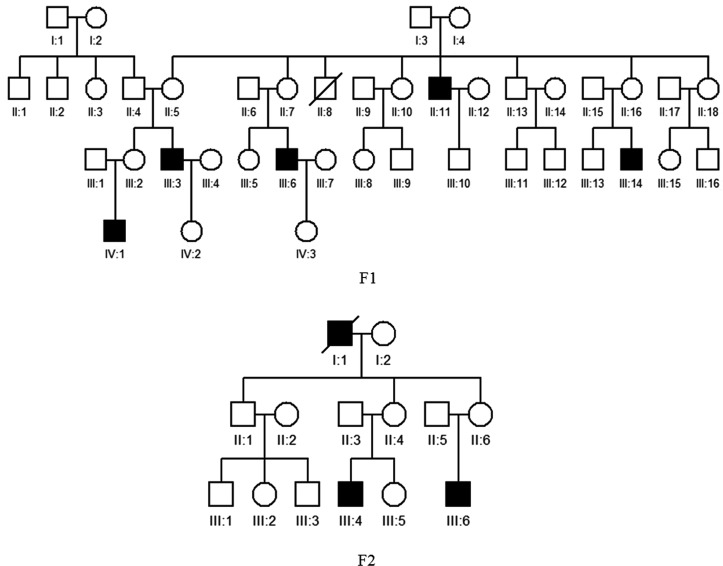
Twenty Chinese patients, including 15 sporadic IN cases and 5 from X-linked IN families, were recruited and underwent molecular genetic analysis. We first performed PCR-based DNA sequencing of the entire coding region and the splice junctions of the FRMD7 and GPR143 genes in participants. Mutational analysis and co-segregation confirmation were then performed.
All clinical examinations and genetic experiments were performed in the Eye Hospital of Wenzhou Medical University.
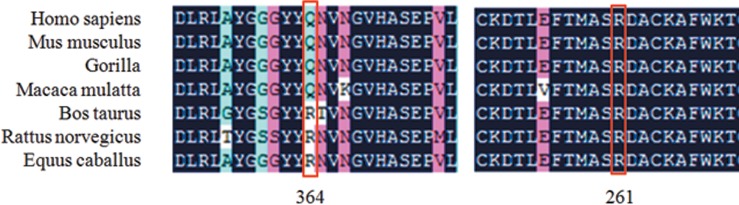
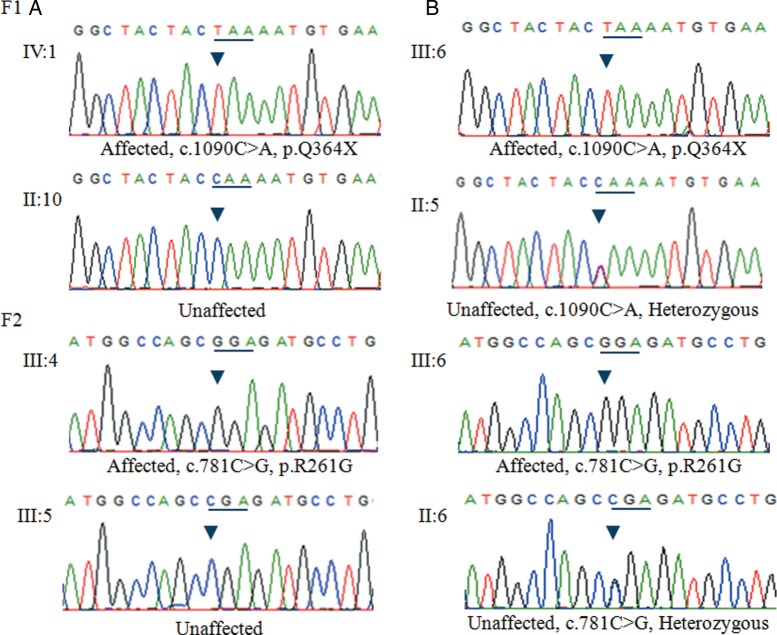
Two mutations in the FRMD7 gene, including one novel nonsense mutation (c.1090C>T, p.Q364X) and one reported missense mutation (c.781C>G, p.R261G), were identified in two of the five (40%) X-linked IN families. However, none of putative mutations were identified in FRMD7 or GPR143 in any of the sporadic cases.
The results suggest that mutations in FRMD7 appeared to be the major genetic cause of X-linked IN, but not of sporadic IN. Our findings provide further insights into FRMD7 mutations, which could be helpful for future genetic diagnosis and genetic counselling of Chinese patients with nystagmus.
婴儿型眼球震颤(IN)是一种具有遗传异质性的疾病,其特征为眼睛不自主的节律性摆动,并伴有不同程度的视力损害。已确定有两个基因是导致IN的主要原因:FRMD7和GPR143。我们研究的目的是确定散发性IN和X连锁IN的遗传基础。
前瞻性分析。
招募了20名中国患者,包括15例散发性IN病例和5例来自X连锁IN家族的患者,并对其进行分子遗传学分析。我们首先对参与者的FRMD7和GPR143基因的整个编码区和剪接位点进行基于PCR的DNA测序。然后进行突变分析和共分离确认。
所有临床检查和基因实验均在温州医科大学眼视光医院进行。
在5个X连锁IN家族中的2个家族(40%)中,在FRMD7基因中鉴定出2个突变,其中包括1个新的无义突变(c.1090C>T,p.Q364X)和1个已报道的错义突变(c.781C>G,p.R261G)。然而,在任何散发性病例中,均未在FRMD7或GPR143中鉴定出假定的突变。
结果表明,FRMD7突变似乎是X连锁IN的主要遗传原因,但不是散发性IN的主要遗传原因。我们的研究结果为FRMD7突变提供了进一步的见解,这可能有助于未来对中国眼球震颤患者进行遗传诊断和遗传咨询。