Jongen Peter Joseph, Sinnige Ludovicus G, van Geel Björn M, Verheul Freek, Verhagen Wim I, van der Kruijk Ruud A, Haverkamp Reinoud, Schrijver Hans M, Baart Jacoba C, Visser Leo H, Arnoldus Edo P, Gilhuis Herman Jacobus, Pop Paul, Booy Monique, Heerings Marco, Kool Anton, van Noort Esther
Department of Community and Occupational Medicine, University Medical Center Groningen, University of Groningen, Groningen, the Netherlands; MS4 Research Institute, Nijmegen, the Netherlands.
Multiple Sclerosis Centre Leeuwarden, Medical Centre Leeuwarden, Leeuwarden, the Netherlands.
Patient Prefer Adherence. 2016 Mar 3;10:243-50. doi: 10.2147/PPA.S93786. eCollection 2016.
MSmonitor is an interactive web-based program for self-management and integrated, multidisciplinary care in multiple sclerosis.
To assess the utilization and valuation by persons with multiple sclerosis, we held an online survey among those who had used the program for at least 1 year. We evaluated the utilization and meaningfulness of the program's elements, perceived use of data by neurologists and nurses, and appreciation of care, self-management, and satisfaction.
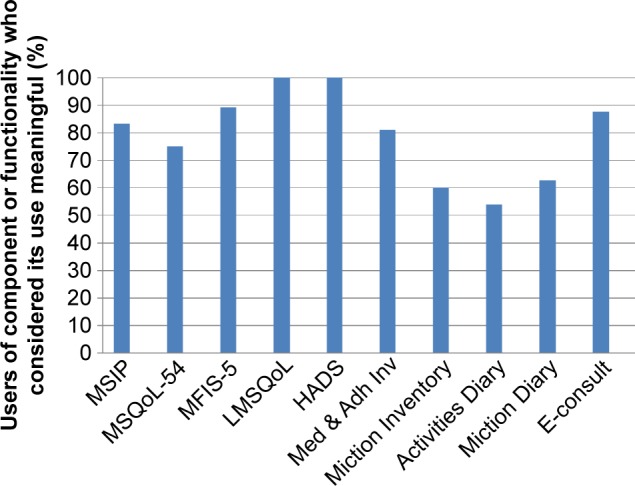
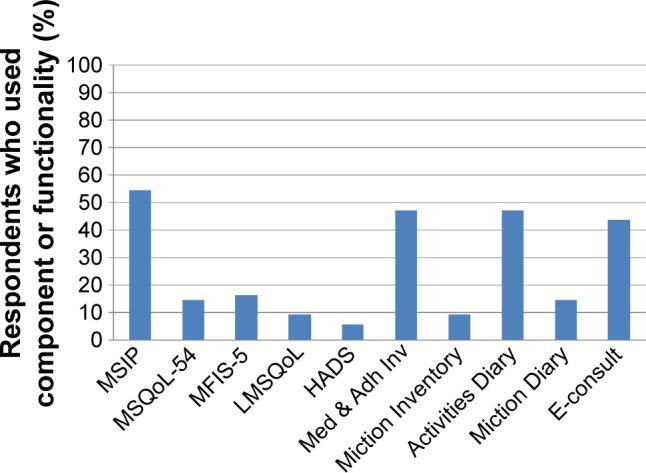
Fifty-five persons completed the questionnaire (estimated response rate 40%). The Multiple Sclerosis Impact Profile (MSIP), Medication and Adherence Inventory, Activities Diary, and electronic consultation (e-consult) were used by 40%, 55%, 47%, and 44% of respondents and were considered meaningful by 83%, 81%, 54%, and 88%, respectively. During out-patient consultations, nurses reportedly used the MSmonitor data three to six times more frequently than neurologists. As to nursing care, more symptoms were dealt with (according to 54% of respondents), symptoms were better discussed (69%), and the overall quality of care had improved (60%) since the use of the program. As to neurological care, these figures were 24%, 31%, and 27%, respectively. In 46% of the respondents, the insight into their symptoms and disabilities had increased since the use of the program; the MSIP, Activities Diary, and e-consult had contributed most to this improvement. The overall satisfaction with the program was 3.5 out of 5, and 73% of the respondents would recommend the program to other persons with multiple sclerosis.
A survey among persons with multiple sclerosis using the MSmonitor program showed that the MSIP, Medication and Adherence Inventory, Activities Diary, and e-consult were frequently used and that the MSIP, Medication and Adherence Inventory, and e-consult were appreciated the most. Moreover, the quality of nursing care, but not so neurological care, had improved, which may relate to nurses making more frequent use of the MSmonitor data than neurologists.
MSmonitor是一款基于网络的交互式程序,用于多发性硬化症的自我管理以及综合、多学科护理。
为评估多发性硬化症患者对该程序的使用情况和评价,我们对使用该程序至少1年的患者进行了在线调查。我们评估了程序各要素的使用情况和意义、神经科医生和护士对数据的感知使用情况,以及对护理、自我管理和满意度的评价。
55人完成了问卷(估计回复率为40%)。40%的受访者使用了多发性硬化症影响量表(MSIP)、药物与依从性量表、活动日记和电子咨询(e-consult),分别有83%、81%、54%和88%的受访者认为这些工具很有意义。据报告,在门诊咨询期间,护士使用MSmonitor数据的频率比神经科医生高三到六倍。关于护理,自使用该程序以来,更多症状得到处理(54%的受访者表示)、症状得到更好讨论(69%)、护理总体质量有所提高(60%)。关于神经科护理,这些数字分别为24%、31%和27%。46%的受访者表示,自使用该程序以来,他们对自身症状和残疾的了解有所增加;MSIP、活动日记和电子咨询对此改善贡献最大。对该程序的总体满意度为5分中的3.5分,73%的受访者会向其他多发性硬化症患者推荐该程序。
对使用MSmonitor程序的多发性硬化症患者进行的一项调查显示,MSIP、药物与依从性量表、活动日记和电子咨询被频繁使用,且MSIP、药物与依从性量表和电子咨询最受好评。此外,护理质量有所提高,但神经科护理质量未明显改善,这可能与护士比神经科医生更频繁地使用MSmonitor数据有关。