Liu Xiaonan, Zhang Wenchao, Guo Hua, Yue Jiuling, Zhuo Shanshan
Department of Otorhinolaryngology and Maxillofacial Oncology, Tianjin Medical University Cancer Institute and Hospital, Tianjin, People's Republic of China.
Laboratory of Cancer Cell Biology, National Clinical Research Center of Cancer, Key Laboratory of Cancer Prevention and Therapy, Tianjin Cancer Institute, Tianjin Medical University Cancer Institute and Hospital, Tianjin, People's Republic of China.
Onco Targets Ther. 2016 Mar 23;9:1777-86. doi: 10.2147/OTT.S98534. eCollection 2016.
miR-98, a member of the let-7 family of microRNAs, is downregulated in many malignant tumors and has been correlated with tumor progression. However, the roles of miR-98 in salivary adenoid cystic carcinomas (SACCs) are still unclear. Thus, we explored the role of miR-98 in the pathogenesis of SACCs.
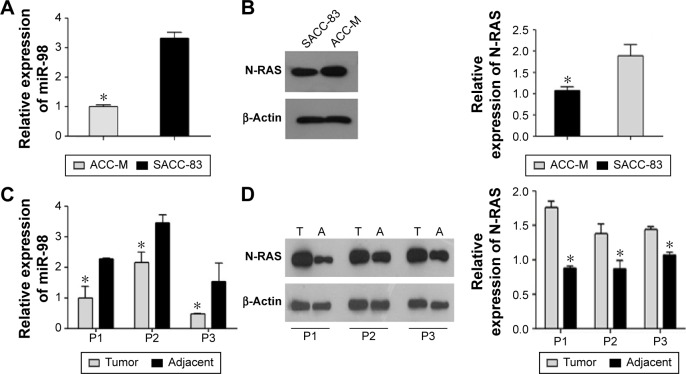
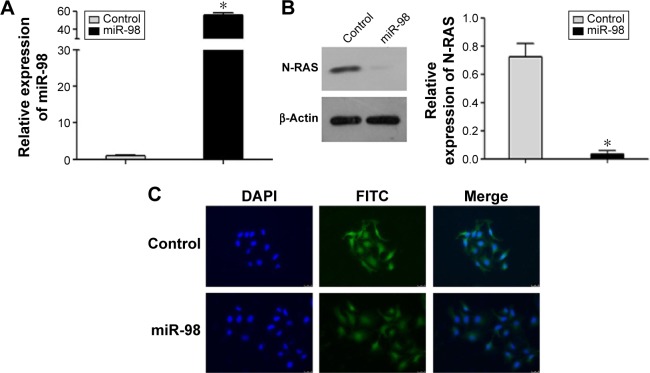
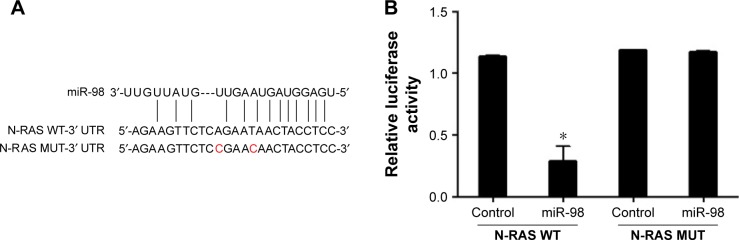
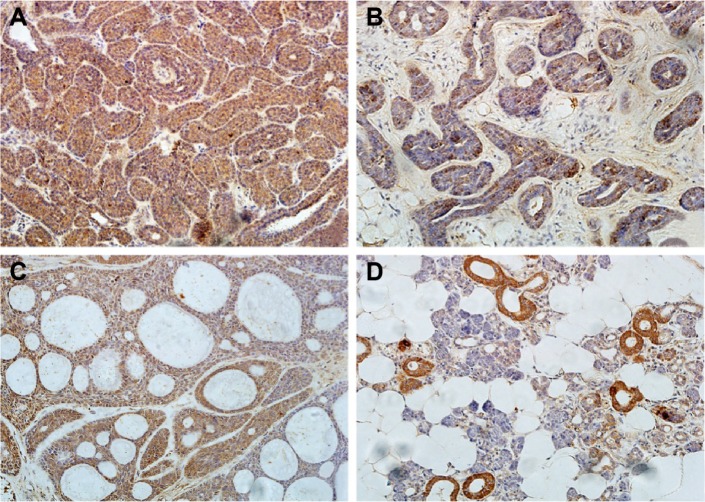
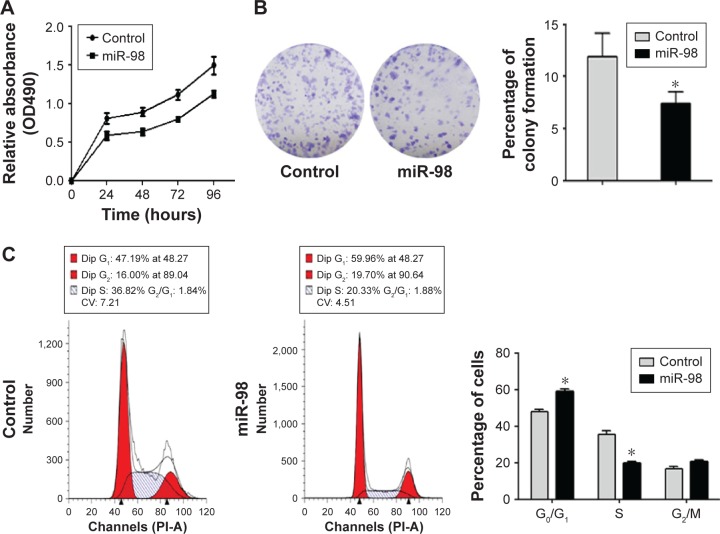
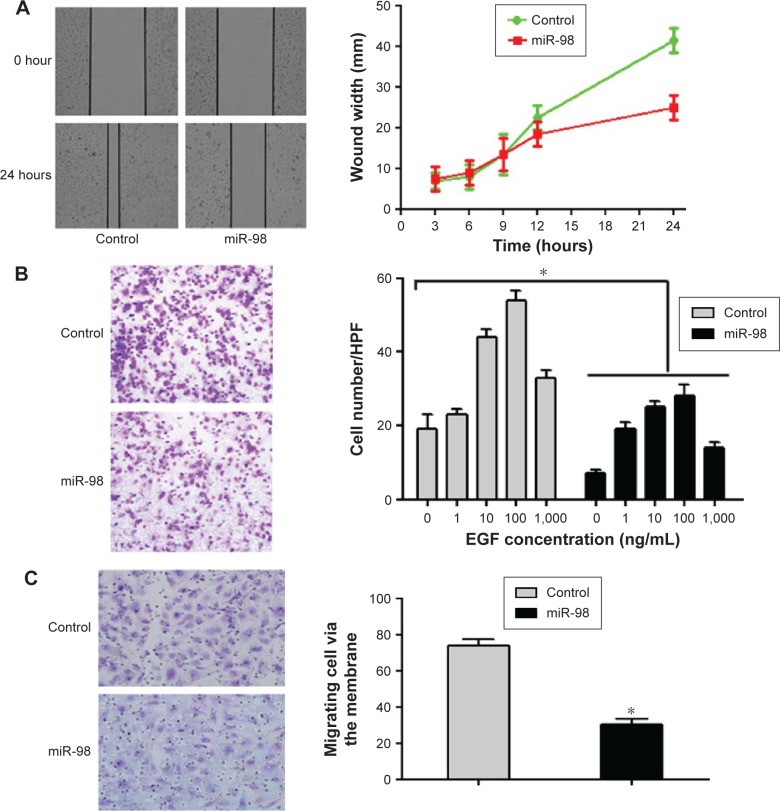
Reverse transcription-polymerase chain reaction was used to quantify miR-98 expression in SACC cell lines as well as in the primary tumors and adjacent tissues. Target gene prediction was carried out using softwares such as miRanda, PicTar, and TargetScan, and the neuroblastoma RAS viral oncogene homologue (N-RAS) was chosen as a potential target gene. Subsequently, the regulatory role of miR-98 on N-RAS expression was examined by Western blotting and immunofluorescence assays. N-RAS expression was detected in SACC tissues and SACC cell lines using immunohistochemistry and Western blot, respectively. Furthermore, the associations between N-RAS expression and clinicopathological features were analyzed. Finally, the effects of miR-98 on the proliferation and metastasis of SACC cell lines were determined.
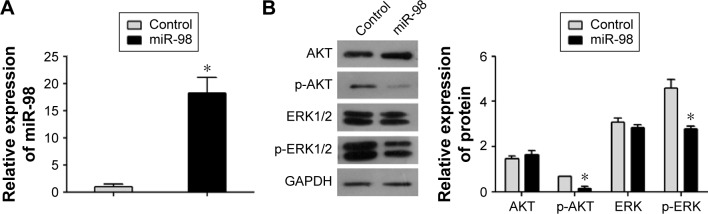
miR-98 was downregulated in primary tissues and ACC-M cells. Meanwhile, N-RAS expression was significantly higher in SACC tissues than that in the adjacent tissues, and its overexpression was significantly associated with the clinical stage and tumor size. In addition, the overexpression of miR-98 in ACC-M cells inhibited cell proliferation, invasion, and migration in vitro. It also significantly decreased the expression of N-RAS and inhibited signaling through the PI3K/AKT and MAPK/ERK pathways.
These results indicate that miR-98 possibly acts as a tumor suppressor in SACC by negatively regulating the oncogene N-RAS.
miR-98是微小RNA的let-7家族成员,在许多恶性肿瘤中表达下调,并与肿瘤进展相关。然而,miR-98在涎腺腺样囊性癌(SACC)中的作用仍不清楚。因此,我们探讨了miR-98在SACC发病机制中的作用。
采用逆转录-聚合酶链反应定量SACC细胞系以及原发性肿瘤和癌旁组织中miR-98的表达。使用miRanda、PicTar和TargetScan等软件进行靶基因预测,并选择神经母细胞瘤RAS病毒癌基因同源物(N-RAS)作为潜在靶基因。随后,通过蛋白质免疫印迹法和免疫荧光试验检测miR-98对N-RAS表达的调控作用。分别采用免疫组织化学和蛋白质免疫印迹法检测SACC组织和SACC细胞系中N-RAS的表达。此外,分析N-RAS表达与临床病理特征之间的相关性。最后,确定miR-98对SACC细胞系增殖和转移的影响。
miR-98在原发性组织和ACC-M细胞中表达下调。同时,SACC组织中N-RAS的表达明显高于癌旁组织,其过表达与临床分期和肿瘤大小显著相关。此外,ACC-M细胞中miR-98的过表达在体外抑制细胞增殖、侵袭和迁移。它还显著降低N-RAS的表达,并抑制PI3K/AKT和MAPK/ERK信号通路。
这些结果表明,miR-98可能通过负调控癌基因N-RAS在SACC中发挥肿瘤抑制作用。