Tongtawee Taweesak, Kaewpitoon Soraya, Kaewpitoon Natthawut, Dechsukhum Chavaboon, Leeanansaksiri Wilairat, Loyd Ryan A, Matrakool Likit, Panpimanmas Sukij
Department of Surgery, Institute of Medicine, Suranaree University of Technology, Nakhon Ratchasima 30000, Thailand; Suranaree University of Technology Hospital, Nakhon Ratchasima 30000, Thailand.
Suranaree University of Technology Hospital, Nakhon Ratchasima 30000, Thailand; Family Medicine and Community Medicine, Suranaree University of Technology, Nakhon Ratchasima 30000, Thailand.
Gastroenterol Res Pract. 2016;2016:9130602. doi: 10.1155/2016/9130602. Epub 2016 Mar 2.
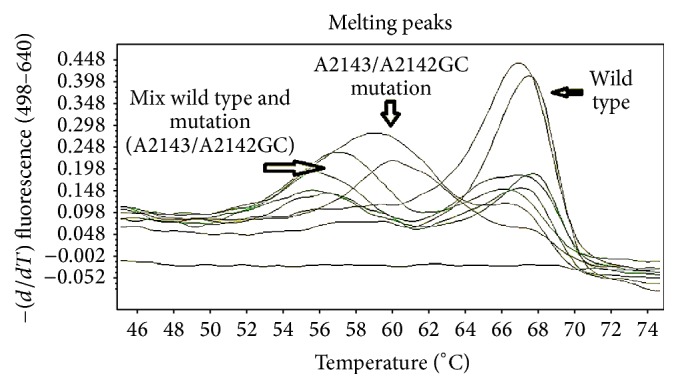
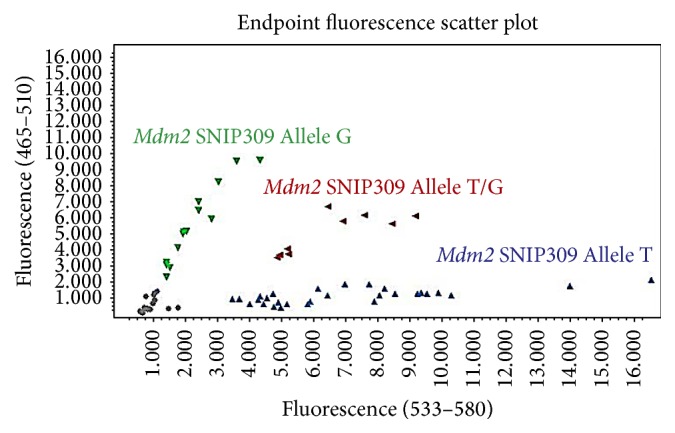
Background and Aim. Risk factors for Helicobacter pylori infection are genetic susceptibility and poor living conditions. This study aimed to investigate the Mdm2 gene, clarithromycin resistance, and possible risk factors for Helicobacter pylori infection. Methods. Risk factors and clinical characteristics were analyzed, including patient demographic data, patient income, personal history, possible source of transmission, patient symptoms, endoscopic findings, patterns of clarithromycin resistance, and patterns of Mdm2 SNIP309. Results. Ingestion of pickled fish (OR = 11.27, 95% CI = 4.31-29.45, p < 0.0001), salt crab (OR = 8.83, 95% CI = 1.99-39.14, p < 0.001), and Papaya salad (OR = 8.73, 95% CI = 4.54-16.79, p < 0.01). The prevalence of clarithromycin resistance was 56% (wild type, A2143/2142A, is 23.8%; mutation, A2143/2142CG, is 35.7%; wild type + mutation is 40.5%). The genetic polymorphisms of Mdm2 SNIP309 were SNIP309 T/T homozygous in 78%, SNIP309 G/T heterozygous in 19%, and SNIP309 G/G homozygous in 3%. Conclusion. Pickled fish, salt crab, and Papaya salad are positive risk factors. There was high prevalence of clarithromycin resistance. The Mdm2 SNIP309 G/G homozygous genotype might be a risk factor for gastric cancer and the fact that it is infrequent in Thailand.
背景与目的。幽门螺杆菌感染的风险因素包括遗传易感性和生活条件差。本研究旨在调查Mdm2基因、克拉霉素耐药性以及幽门螺杆菌感染的可能风险因素。方法。分析了风险因素和临床特征,包括患者人口统计学数据、患者收入、个人病史、可能的传播源、患者症状、内镜检查结果、克拉霉素耐药模式以及Mdm2 SNIP309模式。结果。食用腌鱼(比值比=11.27,95%置信区间=4.31-29.45,p<0.0001)、腌蟹(比值比=8.83,95%置信区间=1.99-39.14,p<0.001)和木瓜沙拉(比值比=8.73,95%置信区间=4.54-16.79,p<0.01)。克拉霉素耐药率为56%(野生型,A2143/2142A,为23.8%;突变型,A2143/2142CG,为35.7%;野生型+突变型为40.5%)。Mdm2 SNIP309的基因多态性为SNIP309 T/T纯合子占78%,SNIP309 G/T杂合子占19%,SNIP309 G/G纯合子占3%。结论。腌鱼、腌蟹和木瓜沙拉是阳性风险因素。克拉霉素耐药率较高。Mdm2 SNIP309 G/G纯合子基因型可能是胃癌的一个风险因素,且在泰国并不常见。