Marks Katherine R, Lile Joshua A, Stoops William W, Glaser Paul E A, Hays Lon R, Rush Craig R
From the *Department of Psychology, University of Kentucky College of Arts and Sciences; †Department of Behavioral Science, ‡Department of Psychiatry, §Department of Anatomy and Neurobiology, ∥Department of Pediatrics, and ¶Department of Internal Medicine, University of Kentucky College of Medicine, Lexington, KY.
J Clin Psychopharmacol. 2016 Jun;36(3):213-21. doi: 10.1097/JCP.0000000000000488.
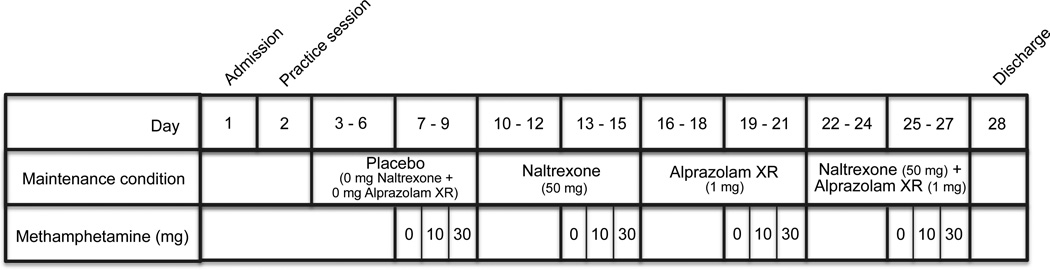
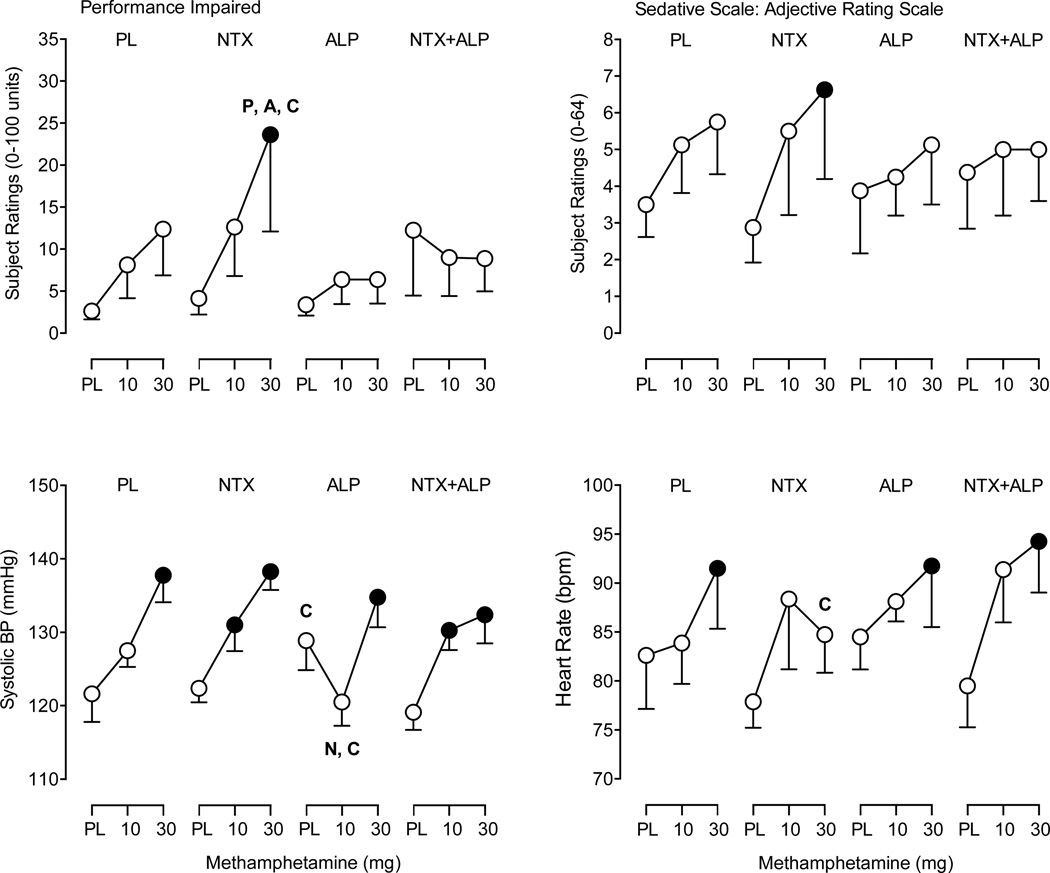
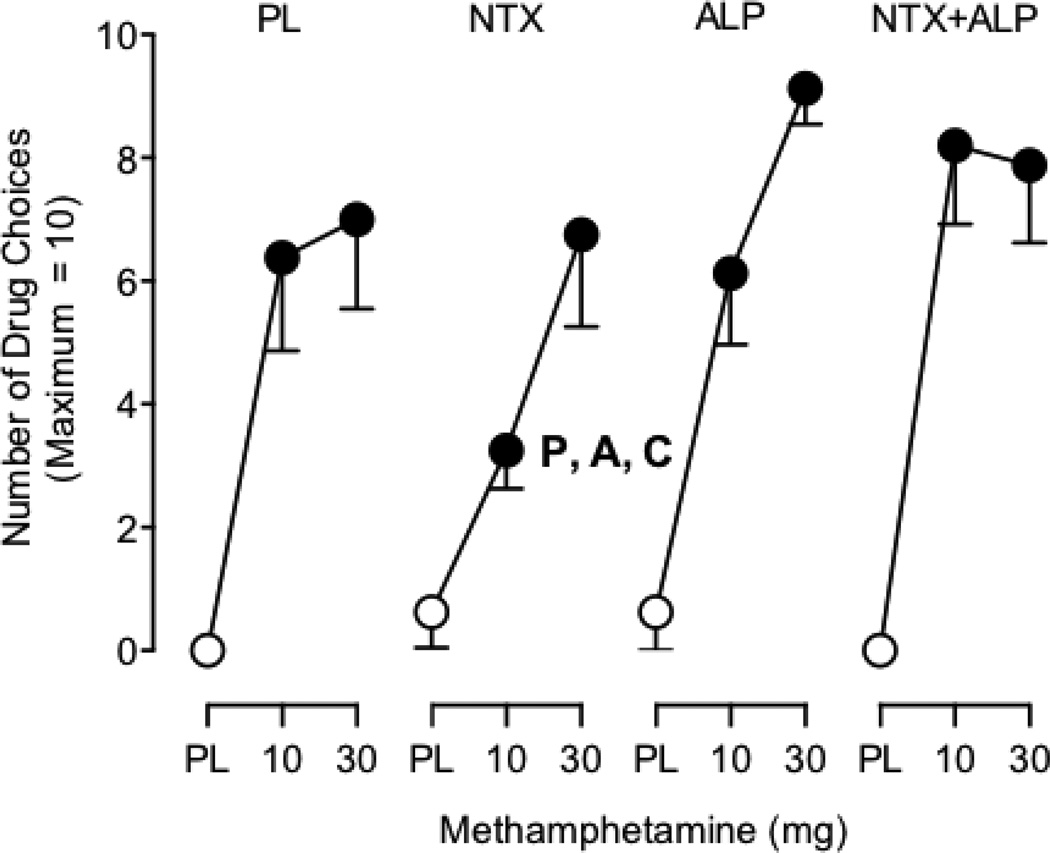
Opioid antagonists (eg, naltrexone) and positive modulators of γ-aminobutyric acid type A receptors (eg, alprazolam) each modestly attenuate the abuse-related effects of stimulants. A previous study demonstrated that acute pretreatment with the combination of naltrexone and alprazolam attenuated a greater number of the subject-rated effects of D-amphetamine than the constituent drugs alone. This study tested the hypothesis that maintenance on the combination of naltrexone and alprazolam XR would attenuate the reinforcing and "positive" subject-rated effects of methamphetamine to a greater extent than the constituent drugs alone.Eight non-treatment-seeking, stimulant-using individuals completed a placebo-controlled, crossover, double-blind inpatient protocol. Participants were maintained on naltrexone (0 and 50 mg), alprazolam XR (0 and 1 mg), and the combination of naltrexone and alprazolam XR (50 mg and 1 mg, respectively) for 6 to 7 days. Under each maintenance condition, participants sampled intranasal doses of methamphetamine (0, 10, and 30 mg), and were then offered the opportunity to work for the sampled dose on a modified progressive-ratio procedure. Subject-rated drug effect questionnaires, psychomotor, and physiology assessments were collected.Intranasal methamphetamine functioned as a reinforcer and produced prototypical stimulant-like "positive" subject-rated and physiological effects. Maintenance on naltrexone significantly decreased the reinforcing, but not subject-rated drug effects of 10-mg methamphetamine. Alprazolam XR and the combination of naltrexone and alprazolam XR did not impact methamphetamine self-administration or subject-rated drug effects. The results support the continued evaluation of naltrexone for methamphetamine dependence, as well as the identification of other drugs that enhance its ability to reduce drug-taking behavior.
阿片类拮抗剂(如纳曲酮)和γ-氨基丁酸A型受体的正向调节剂(如阿普唑仑)各自都能适度减弱兴奋剂的滥用相关效应。先前的一项研究表明,与单独使用各成分药物相比,纳曲酮和阿普唑仑联合进行急性预处理能减弱更多由受试者评定的右旋苯丙胺效应。本研究检验了这样一个假设:与单独使用各成分药物相比,维持服用纳曲酮和长效阿普唑仑联合制剂能在更大程度上减弱甲基苯丙胺的强化作用以及由受试者评定其产生的“正向”效应。8名未寻求治疗的兴奋剂使用者完成了一项安慰剂对照、交叉、双盲住院方案。参与者分别服用纳曲酮(0和50毫克)、长效阿普唑仑(0和1毫克)以及纳曲酮和长效阿普唑仑联合制剂(分别为50毫克和1毫克),持续6至7天。在每种维持用药条件下,参与者鼻内给予不同剂量的甲基苯丙胺(0、10和30毫克),然后有机会通过改良的累进比率程序来获取所给予剂量的药物。收集了由受试者评定的药物效应问卷、精神运动和生理学评估结果。鼻内给予甲基苯丙胺起到了强化物的作用,并产生了典型的类似兴奋剂的“正向”受试者评定效应和生理效应。服用纳曲酮能显著降低10毫克甲基苯丙胺的强化作用,但并未降低由受试者评定的药物效应。长效阿普唑仑以及纳曲酮和长效阿普唑仑联合制剂对甲基苯丙胺的自我给药行为或由受试者评定的药物效应均无影响。这些结果支持继续评估纳曲酮用于治疗甲基苯丙胺成瘾,以及鉴定其他能增强其减少用药行为能力的药物。