Department of Pharmaceutical Sciences, University of Kentucky College of Pharmacy, 789 South Limestone, Lexington, KY 40536-0596, USA.
Department of Psychology, University of Kentucky Arts and Sciences, 110 Kastle Hall Lexington, KY 40506-0044, USA.
Drug Alcohol Depend. 2017 Dec 1;181:25-29. doi: 10.1016/j.drugalcdep.2017.08.038. Epub 2017 Sep 22.
Medications development efforts for methamphetamine-use disorder have targeted central monoamines because these systems are directly involved in the effects of methamphetamine. Buspirone is a dopamine autoreceptor and D3 receptor antagonist and partial agonist at serotonin 1A receptors, making it a logical candidate medication for methamphetamine-use disorder. Buspirone effects on abuse-related behaviors of methamphetamine have been mixed in clinical and preclinical studies. Experimental research using maintenance dosing, which models therapeutic use, is limited. This study evaluated the influence of buspirone maintenance on the reinforcing effects of methamphetamine using a self-administration procedure, which has predictive validity for clinical efficacy. The impact of buspirone maintenance on the subjective and cardiovascular response to methamphetamine was also determined.
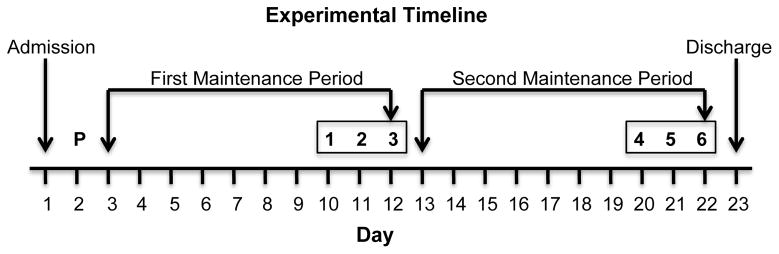
Eight research participants (1 female) reporting recent illicit stimulant use completed a placebo-controlled, crossover, double-blind protocol in which the pharmacodynamic effects of intranasal methamphetamine (0, 15, and 30mg) were assessed after at least 6days of buspirone (0 and 45mg/day) maintenance.
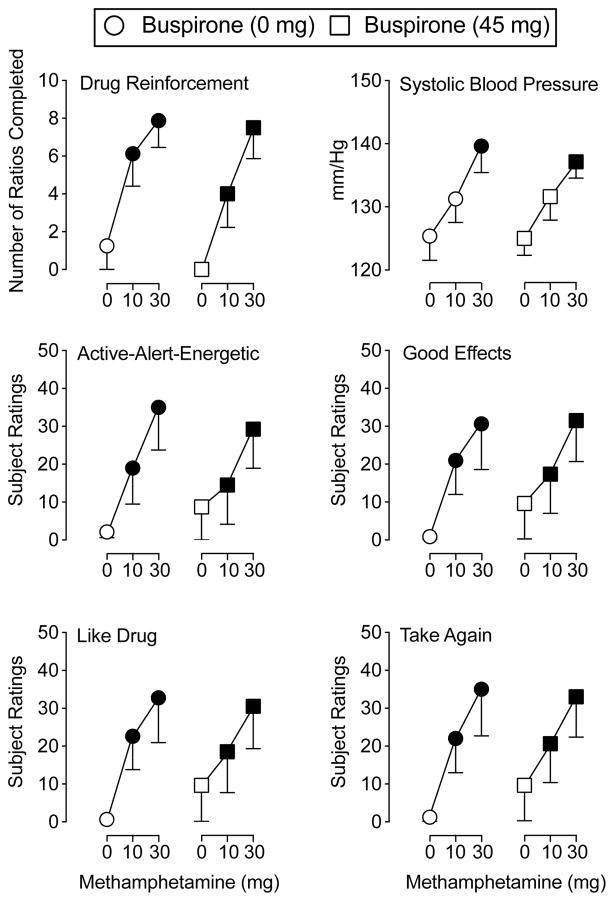
Intranasal methamphetamine functioned as a reinforcer and produced prototypical stimulant-like subjective (e.g., increased ratings of Good Effects and Like Drug) and cardiovascular (e.g., elevated blood pressure) effects. These effects of methamphetamine were similar under buspirone and placebo maintenance conditions. Maintenance on buspirone was well tolerated and devoid of effects when administered alone.
These data suggest that buspirone is unlikely to be an effective pharmacotherapy for methamphetamine-use disorder. Given the central role of monoamines in methamphetamine-use disorder, it is reasonable for future studies to continue to target these systems.
针对甲基苯丙胺使用障碍的药物开发工作针对中枢单胺类物质,因为这些系统直接参与了甲基苯丙胺的作用。丁螺环酮是多巴胺自身受体和 D3 受体拮抗剂,也是 5-羟色胺 1A 受体的部分激动剂,使其成为治疗甲基苯丙胺使用障碍的合理候选药物。丁螺环酮对临床和临床前研究中与滥用相关的行为的影响喜忧参半。使用维持剂量的实验研究,模拟治疗用途,是有限的。本研究使用自我给药程序评估了丁螺环酮维持对甲基苯丙胺强化作用的影响,该程序对临床疗效具有预测性。还确定了丁螺环酮维持对甲基苯丙胺主观和心血管反应的影响。
8 名研究参与者(1 名女性)报告最近非法使用兴奋剂,完成了一项安慰剂对照、交叉、双盲方案,其中在至少 6 天的丁螺环酮(0 和 45mg/天)维持后,评估了鼻内甲基苯丙胺(0、15 和 30mg)的药效学效应。
鼻内甲基苯丙胺作为一种强化物,产生了典型的兴奋剂样主观(例如,增加的“良好效果”和“喜欢药物”评分)和心血管(例如,血压升高)效应。在丁螺环酮和安慰剂维持条件下,这些甲基苯丙胺的作用相似。丁螺环酮维持耐受良好,单独给药时无作用。
这些数据表明,丁螺环酮不太可能成为治疗甲基苯丙胺使用障碍的有效药物治疗方法。鉴于单胺类物质在甲基苯丙胺使用障碍中的核心作用,未来的研究继续针对这些系统是合理的。