Vandenplas Sam, Willems Maxime, Witten P Eckhard, Hansen Tom, Fjelldal Per Gunnar, Huysseune Ann
Evolutionary Developmental Biology, Ghent University, Ghent, Belgium.
Pharmaceutical technology, Ghent University, Ghent, Belgium.
PLoS One. 2016 Apr 6;11(4):e0152870. doi: 10.1371/journal.pone.0152870. eCollection 2016.
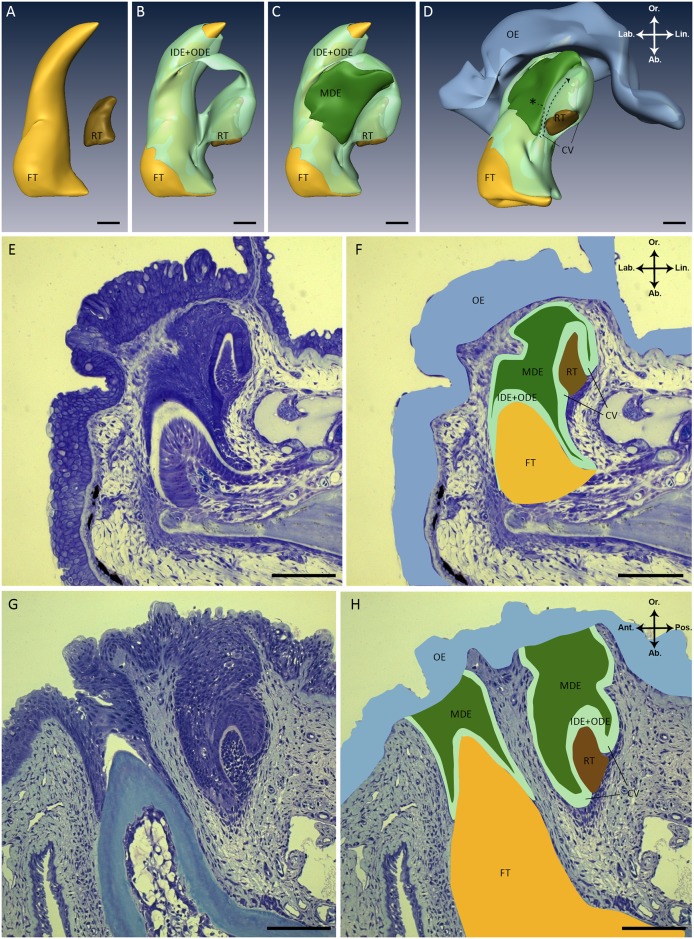
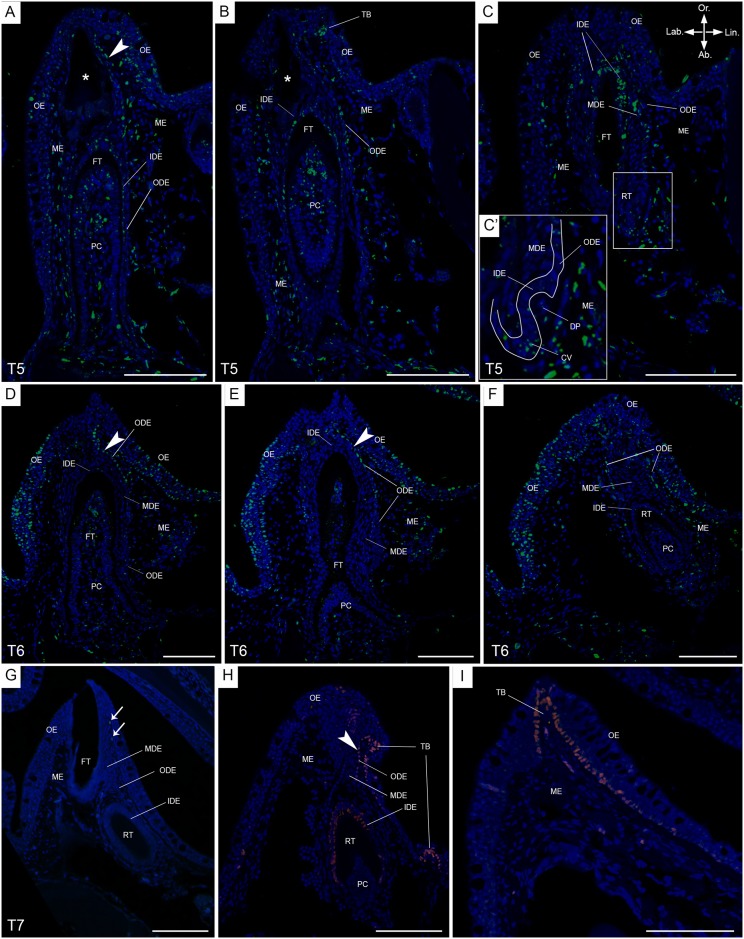
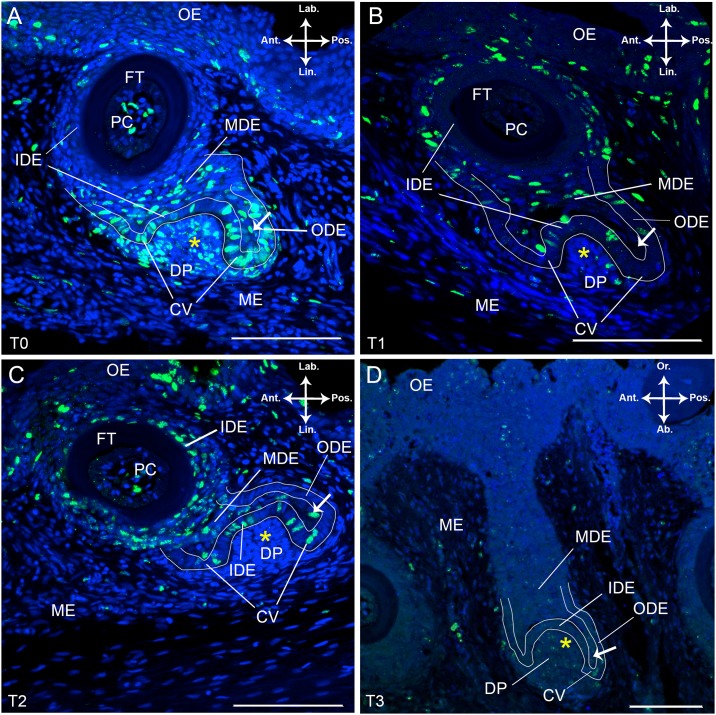
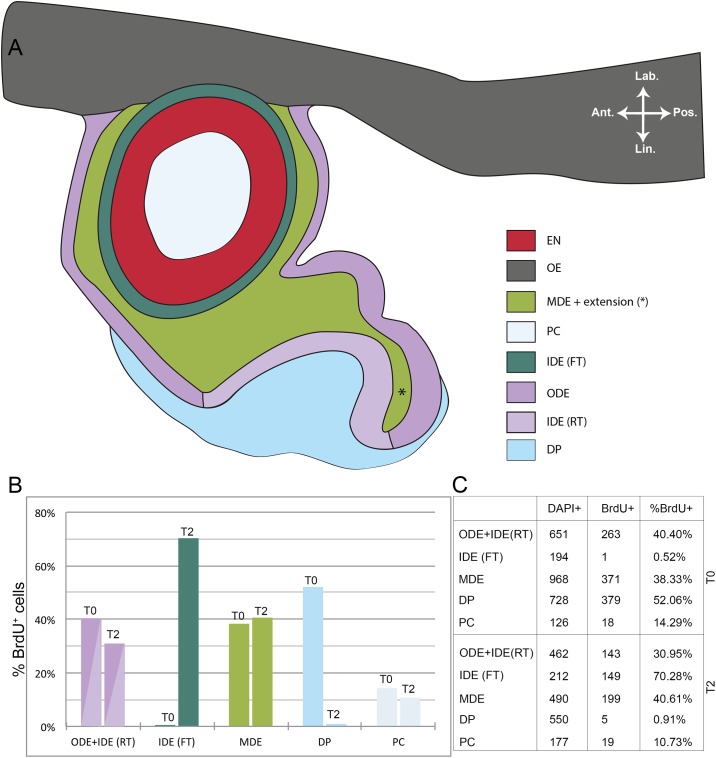
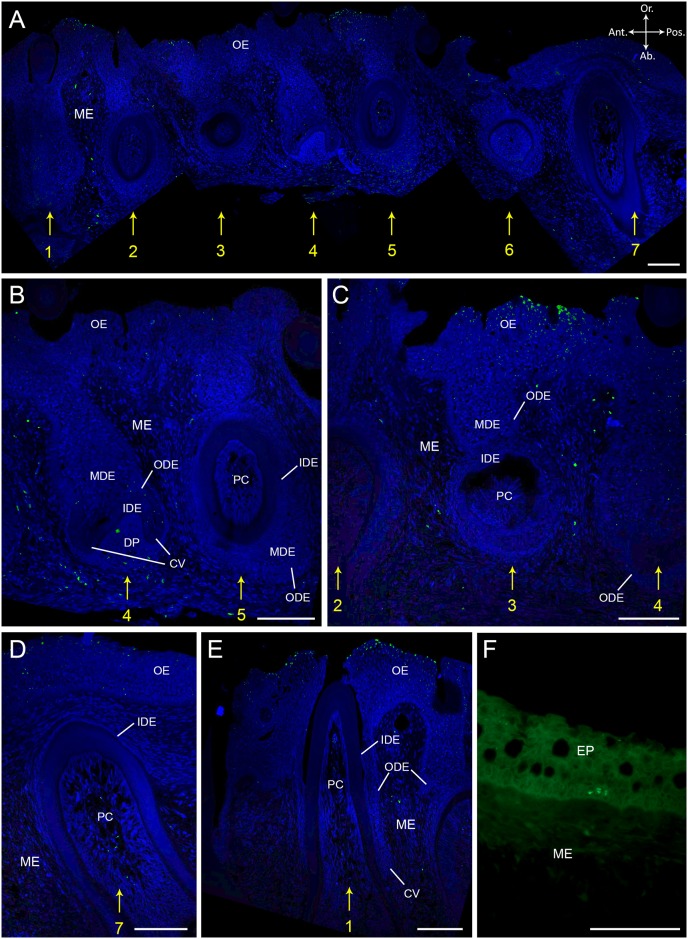
The Atlantic salmon (Salmo salar) and African bichir (Polypterus senegalus) are both actinopterygian fish species that continuously replace their teeth without the involvement of a successional dental lamina. Instead, they share the presence of a middle dental epithelium: an epithelial tier enclosed by inner and outer dental epithelium. It has been hypothesized that this tier could functionally substitute for a successional dental lamina and might be a potential niche to house epithelial stem cells involved in tooth cycling. Therefore, in this study we performed a BrdU pulse chase experiment on both species to (1) determine the localization and extent of proliferating cells in the dental epithelial layers, (2) describe cell dynamics and (3) investigate if label-retaining cells are present, suggestive for the putative presence of stem cells. Cells proliferate in the middle dental epithelium, outer dental epithelium and cervical loop at the lingual side of the dental organ to form a new tooth germ. Using long chase times, both in S. salar (eight weeks) and P. senegalus (eight weeks and twelve weeks), we could not reveal the presence of label-retaining cells in the dental organ. Immunostaining of P. senegalus dental organs for the transcription factor Sox2, often used as a stem cell marker, labelled cells in the zone of outer dental epithelium which grades into the oral epithelium (ODE transition zone) and the inner dental epithelium of a successor only. The location of Sox2 distribution does not provide evidence for epithelial stem cells in the dental organ and, more specifically, in the middle dental epithelium. Comparison of S. salar and P. senegalus reveals shared traits in tooth cycling and thus advances our understanding of the developmental mechanism that ensures lifelong replacement.
大西洋鲑(Salmo salar)和非洲多鳍鱼(Polypterus senegalus)都是辐鳍鱼类,它们在没有连续牙板参与的情况下不断替换牙齿。相反,它们都有一个中间牙上皮:一个被内、外牙上皮包围的上皮层。据推测,这一层可能在功能上替代连续牙板,并且可能是容纳参与牙齿循环的上皮干细胞的潜在微环境。因此,在本研究中,我们对这两个物种都进行了BrdU脉冲追踪实验,以(1)确定牙上皮层中增殖细胞的定位和范围,(2)描述细胞动态,以及(3)研究是否存在标记保留细胞,这表明可能存在干细胞。细胞在牙器官舌侧的中间牙上皮、外牙上皮和颈环中增殖,形成新的牙胚。使用较长的追踪时间,在大西洋鲑(8周)和非洲多鳍鱼(8周和12周)中,我们都未能在牙器官中发现标记保留细胞。对非洲多鳍鱼牙器官进行转录因子Sox2的免疫染色,Sox2常被用作干细胞标记物,标记了外牙上皮区(该区域逐渐过渡到口腔上皮,即外牙上皮过渡区)以及仅后继牙的内牙上皮中的细胞。Sox2分布的位置并未为牙器官中,更具体地说是中间牙上皮中的上皮干细胞提供证据。大西洋鲑和非洲多鳍鱼的比较揭示了牙齿循环中的共同特征,从而增进了我们对确保终身替换的发育机制的理解。