Deshmukh Vaishali, Lahariya Chandrakant, Krishnamurthy Sriram, Das Manoj K, Pandey Ravindra M, Arora Narendra K
The INCLEN Trust International, New Delhi, India.
Formerly, The INCLEN Trust International, New Delhi, India; Formerly, Department of Community Medicine, GR Medical College, Gwalior, India.
Indian J Community Med. 2016 Apr-Jun;41(2):108-19. doi: 10.4103/0970-0218.177527.
Under-five children in India continue to die from causes that can either be treated or prevented. The data regarding causes of death, community care-seeking practices, and events prior to death are needed to guide and refine health policies for achieving national goals and targets.
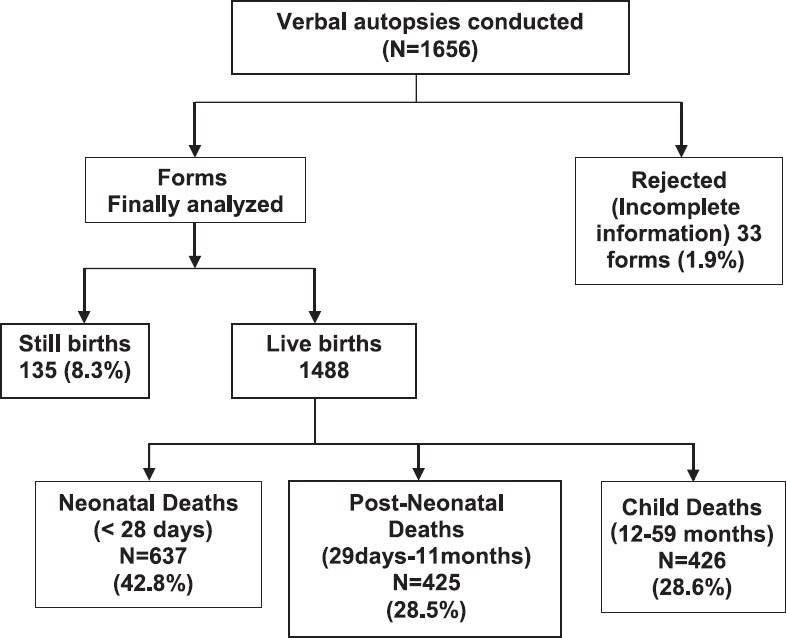
A cross-sectional survey covering rural areas of 16 districts from eight states across India was conducted to understand the causes of deaths and the health-seeking patterns of caregivers prior to the death of such children. Mothers of the deceased children were interviewed. The physician review process was used to assign cause of death. The qualitative data were analyzed as per standard methods, while STATA version 10 was used for analysis of quantitative data.
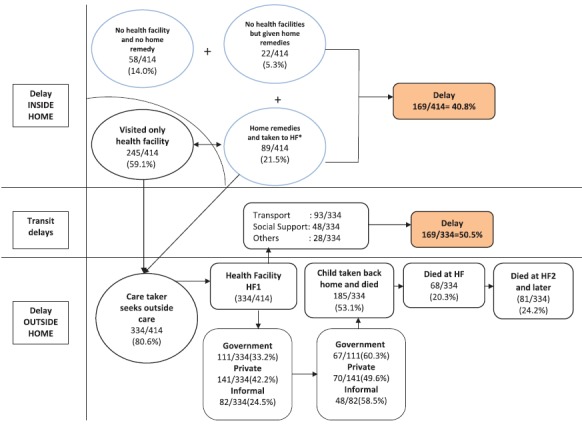
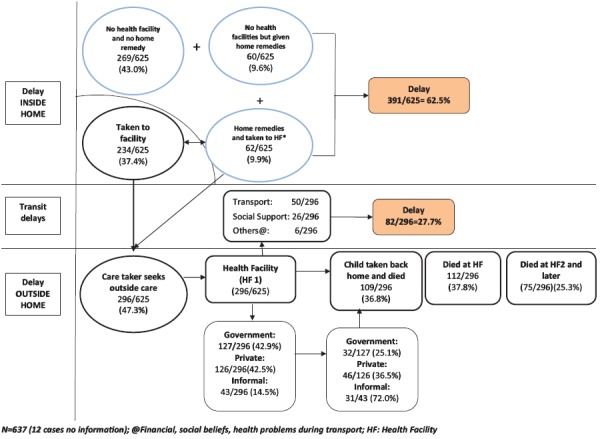
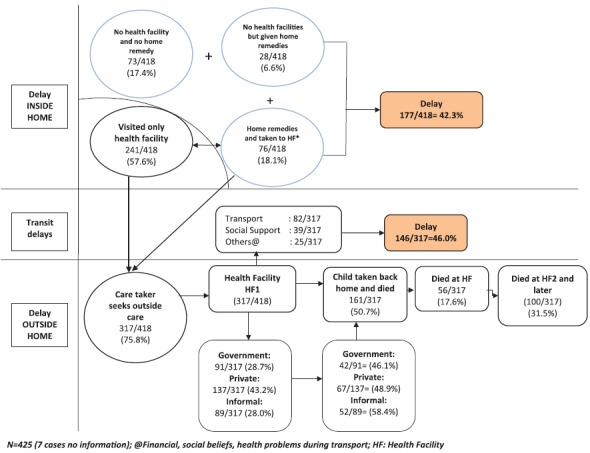
A total of 1,488 death histories were captured through verbal autopsy. Neonatal etiologies, acute respiratory infection (ARI), and diarrhea accounted for approximately 63.1% of all deaths in the under-five age group. The causes of death in neonates showed that birth asphyxia, prematurity, and neonatal infections contributed to more than 67.5% of all neonatal deaths, while in children aged 29 days to 59 months, ARI and diarrhea accounted for 54.3% of deaths. Care providers of 52.6% of the neonates and 21.7% of infants and under-five children did not seek any medical care before the death of the child. Substantial delays in seeking care occurred at home and during transit. For those who received medical care, there was an apparent amongst in their caregivers toward private health providers.
The deaths of neonates and postneonates taken to any health facilities highlight the need for providing equitable and high-quality health services in India. The findings could be used for policy planning and program refinement in India.
印度五岁以下儿童仍死于可治疗或可预防的原因。需要有关死亡原因、社区寻求医疗护理的做法以及死亡前事件的数据,以指导和完善卫生政策,实现国家目标。
开展了一项横断面调查,覆盖印度八个邦16个区的农村地区,以了解此类儿童死亡原因及照料者在其死亡前的就医模式。对已故儿童的母亲进行了访谈。采用医生审查程序确定死亡原因。定性数据按照标准方法进行分析,定量数据则使用STATA 10版进行分析。
通过口头尸检共获取了1488份死亡记录。新生儿病因、急性呼吸道感染(ARI)和腹泻约占五岁以下年龄组所有死亡的63.1%。新生儿死亡原因显示,出生窒息、早产和新生儿感染占所有新生儿死亡的67.5%以上,而在29天至59个月大的儿童中,ARI和腹泻占死亡的54.3%。52.6%的新生儿以及21.7%的婴儿和五岁以下儿童的照料者在孩子死亡前未寻求任何医疗护理。在家中和转运途中寻求护理出现了严重延误。对于那些接受医疗护理的儿童,其照料者明显倾向于私立医疗服务提供者。
新生儿和新生儿后期儿童在任何卫生设施中的死亡凸显了印度提供公平和高质量卫生服务的必要性。这些研究结果可用于印度的政策规划和项目完善。