Rozitis Eric, Johnson Ben, Cheng Yuen Yee, Lee Kenneth
Sydney Medical School, The University of Sydney, Sydney, NSW, Australia.
Asbestos Diseases Research Institute, Concord, NSW, Australia.
Front Oncol. 2020 Sep 9;10:1742. doi: 10.3389/fonc.2020.01742. eCollection 2020.
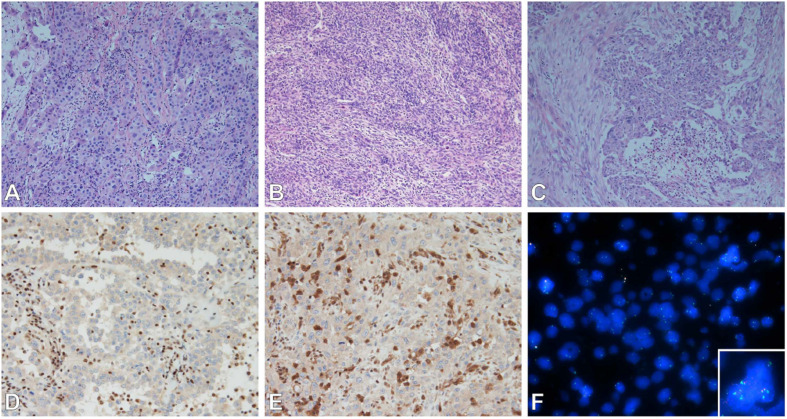
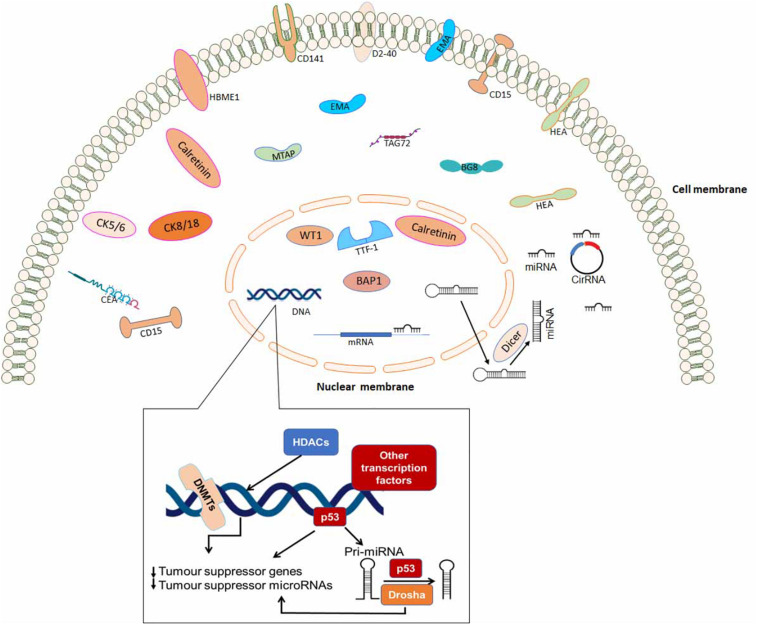
Malignant pleural mesothelioma (MPM) is an aggressive asbestos related disease that is generally considered to be difficult to diagnose, stage and treat. The diagnostic process is continuing to evolve and requires highly skilled pathology input, and generally an extensive list of biomarkers for definitive diagnosis. Diagnosis of MPM requires histological evidence of invasion by malignant mesothelial cells often confirmed by various immunohistochemical biomarkers in order to separate it from pleural metastatic carcinoma. Often when invasion of neoplastic mesothelial cells into adjacent tissue is not apparent, further immunohistochemical testing - namely BAP1 and MTAP, as well as FISH testing for loss of p16 (CDKN2A) are used to separate reactive mesothelial proliferation due to benign processes, from MPM. Various combinations of these markers, such as BAP1 and/or MTAP immunohistochemistry alongside FISH testing for loss of p16, have shown excellent sensitivity and specificity in the diagnosis of MPM. Additionally, over the recent years, research into epigenetic marker use in the diagnosis of MPM has gained momentum. Although still in their research stages, various markers in DNA methylation, long non-coding RNA, micro RNA, circular RNA, and histone modifications have all been found to support diagnosis of MPM with generally good sensitivity and specificity. Many of these studies are however, limited by small sample sizes or other study limitations and further research into the area would be beneficial. Epigenetic markers show promise for use in the future to facilitate the diagnosis of MPM.
恶性胸膜间皮瘤(MPM)是一种与石棉相关的侵袭性疾病,通常被认为难以诊断、分期和治疗。诊断过程仍在不断发展,需要高技能的病理学投入,并且通常需要大量生物标志物才能做出明确诊断。MPM的诊断需要恶性间皮细胞浸润的组织学证据,通常通过各种免疫组化生物标志物来证实,以便将其与胸膜转移性癌区分开来。当肿瘤性间皮细胞向邻近组织的浸润不明显时,通常会进行进一步的免疫组化检测——即BAP1和MTAP检测,以及针对p16(CDKN2A)缺失的荧光原位杂交(FISH)检测,以区分良性过程导致的反应性间皮增生与MPM。这些标志物的各种组合,如BAP1和/或MTAP免疫组化联合p16缺失的FISH检测,在MPM的诊断中显示出优异的敏感性和特异性。此外,近年来,关于表观遗传标志物在MPM诊断中的应用研究也日益增多。尽管仍处于研究阶段,但DNA甲基化、长链非编码RNA、微小RNA、环状RNA和组蛋白修饰中的各种标志物均已被发现可支持MPM的诊断,且通常具有良好的敏感性和特异性。然而,这些研究中有许多受到样本量小或其他研究局限性的限制,对该领域的进一步研究将是有益的。表观遗传标志物有望在未来用于促进MPM的诊断。