Kumar Binod, Lupold Shawn E
The James Buchanan Brady Urological Institute, Department of Urology, Johns Hopkins School of Medicine, Baltimore, MD, USA.
Asian J Androl. 2016 Jul-Aug;18(4):559-67. doi: 10.4103/1008-682X.177839.
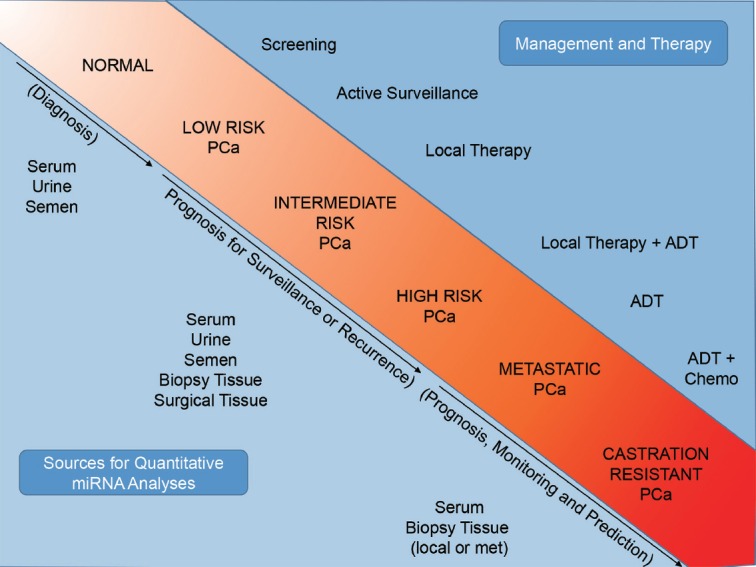
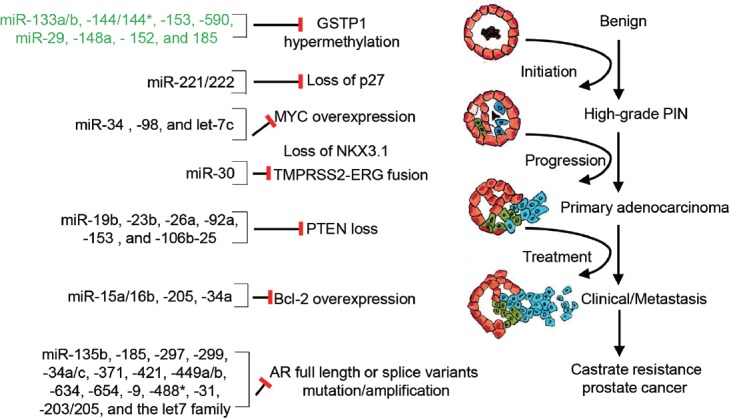
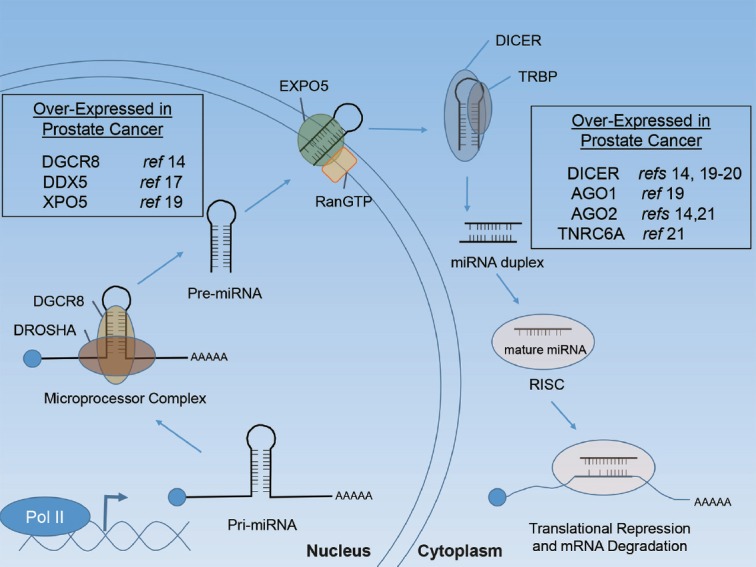
MicroRNAs (miRNAs) are well-conserved noncoding RNAs that broadly regulate gene expression through posttranscriptional silencing of coding genes. Dysregulated miRNA expression in prostate and other cancers implicates their role in cancer biology. Moreover, functional studies provide support for the contribution of miRNAs to several key pathways in cancer initiation and progression. Comparative analyses of miRNA gene expression between malignant and nonmalignant prostate tissues, healthy controls and prostate cancer (PCa) patients, as well as less aggressive versus more aggressive disease indicate that miRNAs may be future diagnostic or prognostic biomarkers in tumor tissue, blood, or urine. Further, miRNAs may be future therapeutics or therapeutic targets. In this review, we examine the miRNAs most commonly observed to be de-regulated in PCa gene expression analyses and review the potential contribution of these miRNAs to important pathways in PCa initiation and progression.
微小RNA(miRNA)是高度保守的非编码RNA,通过对编码基因的转录后沉默广泛调控基因表达。前列腺癌和其他癌症中miRNA表达失调暗示了它们在癌症生物学中的作用。此外,功能研究为miRNA对癌症发生和进展的几个关键途径的贡献提供了支持。对恶性和非恶性前列腺组织、健康对照与前列腺癌(PCa)患者之间,以及侵袭性较低与侵袭性较高疾病之间的miRNA基因表达进行比较分析表明,miRNA可能成为肿瘤组织、血液或尿液中未来的诊断或预后生物标志物。此外,miRNA可能成为未来的治疗手段或治疗靶点。在本综述中,我们研究了在PCa基因表达分析中最常观察到失调的miRNA,并综述了这些miRNA对PCa发生和进展的重要途径的潜在贡献。