
韩国带状疱疹后神经痛的流行病学:基于电子人口健康保险系统的研究
Epidemiology of Postherpetic Neuralgia in Korea: An Electronic Population Health Insurance System Based Study.
作者信息
Hong Myong-Joo, Kim Yeon-Dong, Cheong Yong-Kwan, Park Seon-Jeong, Choi Seung-Won, Hong Hyon-Joo
机构信息
From the Department of Rheumatology (M-JH), Presbyterian Medical Center, Jeonju; Department of Anesthesiology and Pain Medicine, Wonkwang University Hospital, School of Medicine (Y-DK, Y-KC, S-JP, S-WC), Institute of Wonkwang Medical Science (Y-DK), Iksan; and Department of Nursing (H-JH), Graduate School, Kyung Hee University, Seoul, Republic of Korea.
出版信息
Medicine (Baltimore). 2016 Apr;95(14):e3304. doi: 10.1097/MD.0000000000003304.
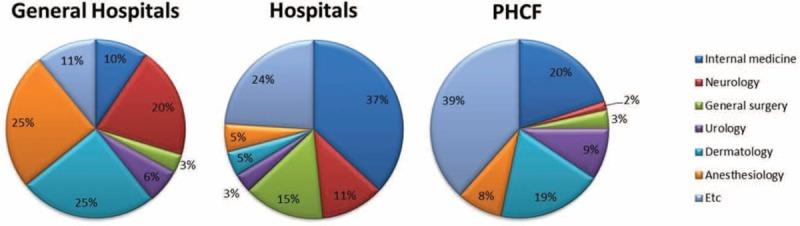
Postherpetic neuralgia (PHN) is a disease entity defined as persistent pain after the acute pain of herpes zoster gradually resolves. It is associated with impaired daily activities, resulting in reduced quality of life. General epidemiological data on PHN is necessary for the effective management. However, data on the epidemiology of PHN in Korea is lacking. The aim of this study was to evaluate the epidemiological features of PHN in the general population.We used population-based medical data for 51,448,491 subscribers to the Health Insurance Service in the year of 2013 to analyze of PHN epidemiology in Korea, such as the incidence, regional distribution, seasonal variation, and healthcare resource utilization. Total number of patients and medical cost on PHN were analyzed from 2009 to 2013.Findings indicate that the incidence of PHN in Korea was 2.5 per 1000 person-years, which was strongly correlated with age and sex. There were no differences in seasonal variation or regional distribution. The medical cost increased steadily over the study period. When admitted to general hospitals, patients with PHN were mainly managed in the dermatology and anesthesiology departments.The incidence and prevalence rates of PHN in Koreans appear to be considerably higher compared to those in western populations, while the sex and age predisposition was similar. Considering that the pain associated with PHN can have a marked impact on a patient's quality of life resulting in a medicosocial economic burden, anesthesiology physicians have an important role in primary care in Korea. Future research on the cost-effectiveness of the management of PHN is needed.
带状疱疹后神经痛(PHN)是一种疾病实体,定义为带状疱疹急性疼痛逐渐缓解后持续存在的疼痛。它与日常活动受损相关,导致生活质量下降。PHN的一般流行病学数据对于有效管理至关重要。然而,韩国缺乏关于PHN流行病学的数据。本研究的目的是评估普通人群中PHN的流行病学特征。我们使用了2013年健康保险服务的51448491名参保人的基于人群的医疗数据,以分析韩国PHN的流行病学情况,如发病率、地区分布、季节变化和医疗资源利用情况。分析了2009年至2013年PHN患者的总数和医疗费用。研究结果表明,韩国PHN的发病率为每1000人年2.5例,与年龄和性别密切相关。季节变化和地区分布没有差异。在研究期间,医疗费用稳步增加。当入住综合医院时,PHN患者主要在皮肤科和麻醉科接受治疗。与西方人群相比,韩国人PHN的发病率和患病率似乎要高得多,而性别和年龄易感性相似。考虑到与PHN相关的疼痛会对患者的生活质量产生显著影响,从而导致社会医疗经济负担,麻醉科医生在韩国的初级保健中发挥着重要作用。未来需要对PHN管理的成本效益进行研究。


 Zotero 插件