Zhang Ying, Zhang Ying-Chun, Sheng Yu-Jing, Chen Xiao-Fang, Wang Cai-Shan, Ma Qi, Chen Han-Bing, Yu Li-Fang, Mao Cheng-Jie, Xiong Kang-Ping, Luo Wei-Feng, Liu Chun-Feng
Department of Ultrasound, The Second Affiliated Hospital of Soochow University, Suzhou, Jiangsu 215004, China.
Chin Med J (Engl). 2016 Apr 20;129(8):942-5. doi: 10.4103/0366-6999.179792.
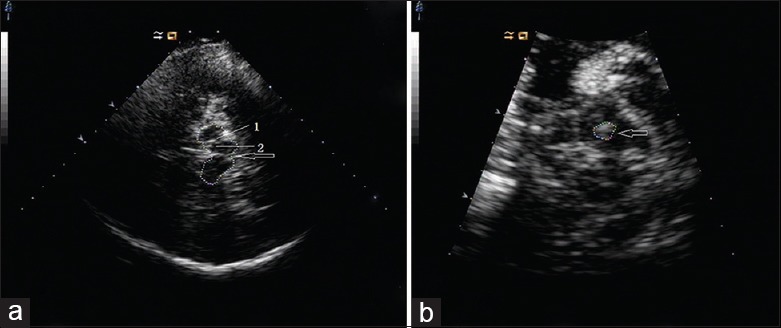
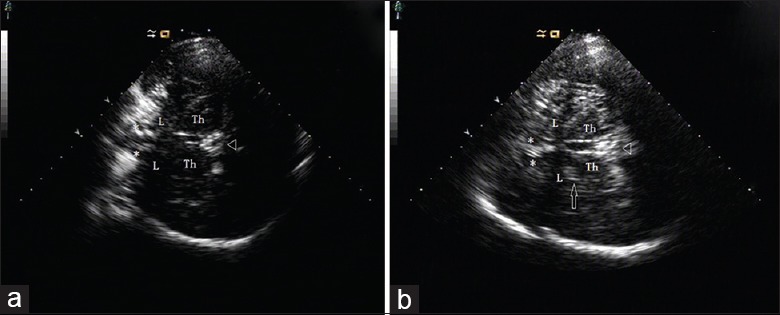
Few studies have addressed whether abnormalities in the lenticular nucleus (LN) are characteristic transcranial sonography (TCS) echo features in patients with primary dystonia. This study aimed to explore alterations in the basal ganglia in different forms of primary focal dystonia.
cross-sectional observational study was performed between December 2013 and December 2014 in 80 patients with different forms of primary focal dystonia and 55 neurologically normal control subjects. TCS was performed in patients and control subjects. Multiple comparisons of multiple rates were used to compare LN hyperechogenicity ratios between control and patient groups.
Thirteen individuals were excluded due to poor temporal bone windows, and two subjects were excluded due to disagreement in evaluation by sonologists. Totally, 70 patients (cervical dystonia, n = 30; blepharospasm, n = 30; oromandibular dystonia, n = 10) and 50 normal controls were included in the final analysis. LN hyperechogenicity was observed in 51% (36/70) of patients with primary focal dystonia, compared with 12% (6/50) of controls (P < 0.001). Substantia nigra hyperechogenicity did not differ between the two groups. LN hyperechogenicity was observed in 73% (22/30) of patients with cervical dystonia, a greater prevalence than in patients with blepharospasm (33%, 10/30, P = 0.002) and oromandibular dystonia (40%, 4/10, P = 0.126). LN hyperechogenicity was more frequently observed in patients with cervical dystonia compared with controls (73% vs. 12%, P < 0.001); however, no significant difference was detected in patients with blepharospasm (33% vs. 12%, P = 0.021) or oromandibular dystonia (40% vs. 12%, P = 0.088).
LN hyperechogenicity is more frequently observed in patients with primary focal dystonia than in controls. It does not appear to be a characteristic TCS echo feature in patients with blepharospasm or oromandibular dystonia.
很少有研究探讨豆状核(LN)异常是否是原发性肌张力障碍患者经颅超声检查(TCS)的特征性回声表现。本研究旨在探讨不同类型原发性局灶性肌张力障碍患者基底节的改变。
2013年12月至2014年12月,对80例不同类型原发性局灶性肌张力障碍患者和55例神经功能正常的对照者进行了横断面观察研究。对患者和对照者进行了TCS检查。采用多个率的多重比较来比较对照组和患者组之间的LN高回声率。
13例因颞骨窗不佳被排除,2例因超声科医生评估意见不一致被排除。最终分析纳入70例患者(颈部肌张力障碍30例、眼睑痉挛30例、口下颌肌张力障碍10例)和50例正常对照者。原发性局灶性肌张力障碍患者中51%(36/70)观察到LN高回声,而对照组为12%(6/50)(P<0.001)。两组之间黑质高回声无差异。颈部肌张力障碍患者中73%(22/30)观察到LN高回声,其患病率高于眼睑痉挛患者(33%,10/30,P = 0.002)和口下颌肌张力障碍患者(40%,4/10,P = 0.126)。与对照组相比,颈部肌张力障碍患者更常观察到LN高回声(73%比12%,P<0.001);然而,眼睑痉挛患者(33%比12%,P = 0.021)或口下颌肌张力障碍患者(40%比12%,P = 0.088)未检测到显著差异。
原发性局灶性肌张力障碍患者比对照组更常观察到LN高回声。它似乎不是眼睑痉挛或口下颌肌张力障碍患者的特征性TCS回声表现。