Li Yun-Lan, Zhang Jiali, Min Dong, Hongyan Zhou, Lin Niu, Li Qing-Shan
School of Pharmaceutical Science, Shanxi Medical University, Taiyuan 030001, PR China.
PLoS One. 2016 Apr 11;11(4):e0151502. doi: 10.1371/journal.pone.0151502. eCollection 2016.
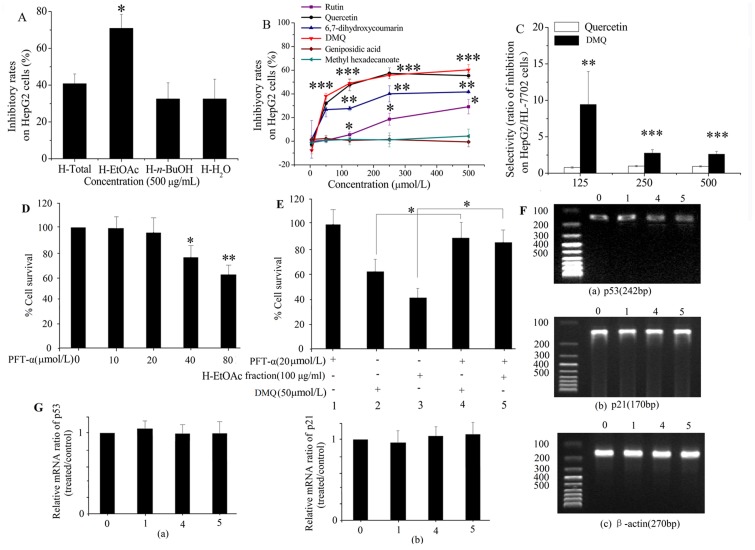
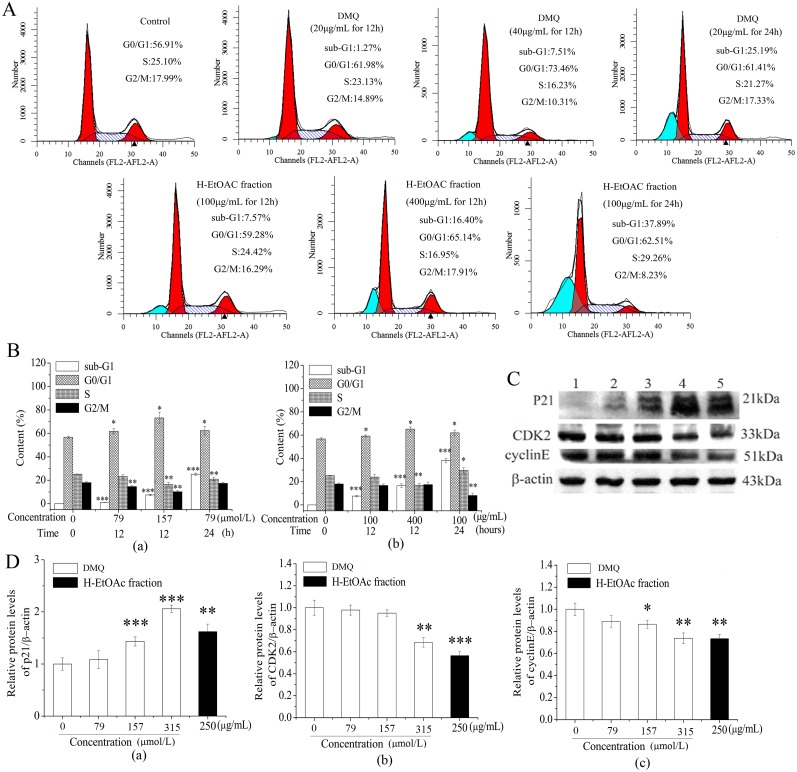
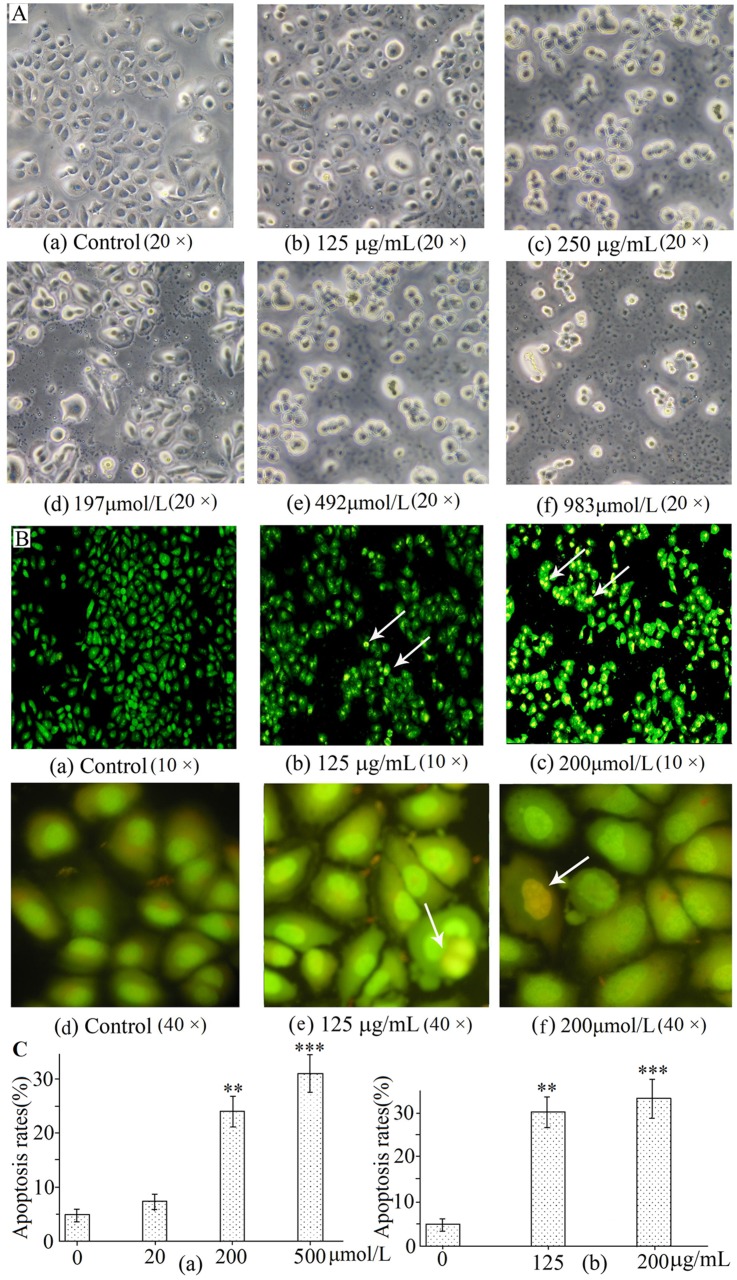
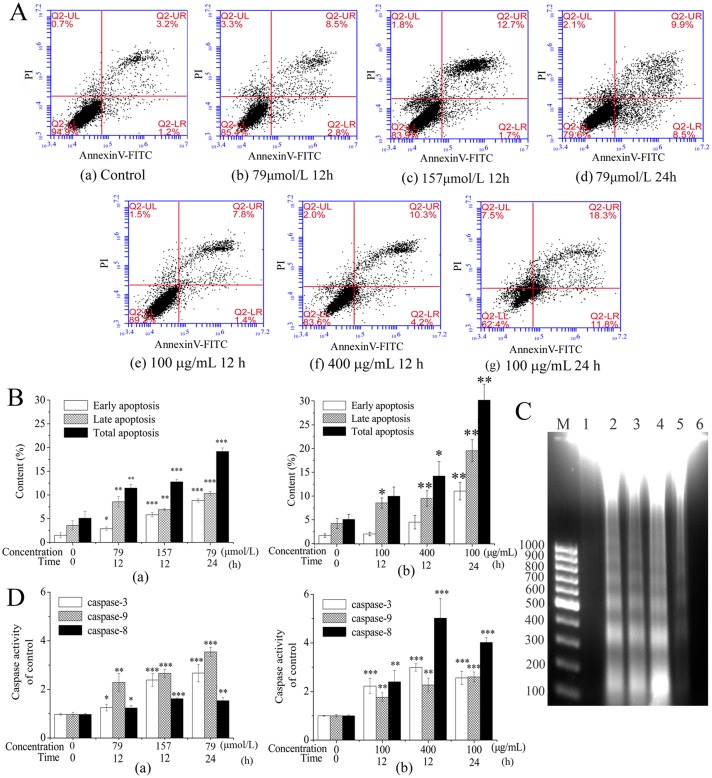
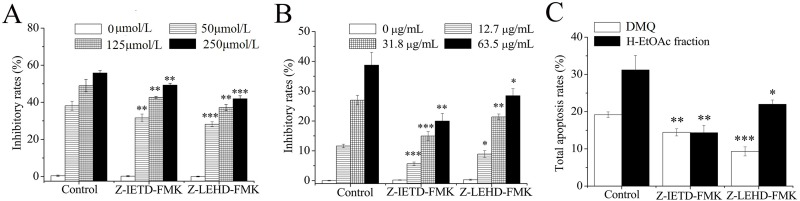
Hedyotis Diffusa Willd, used in Traditional Chinese Medicine, is a treatment for various diseases including cancer, owing to its mild effectiveness and low toxicity. The aim of this study was to identify the main anticancer components in Hedyotis Diffusa Willd, and explore mechanisms underlying their activity. Hedyotis Diffusa Willd was extracted and fractionated using ethyl acetate to obtain the H-Ethyl acetate fraction, which showed higher anticancer activity than the other fractions obtained against HepG2 cells with sulforhodamine B assays. The active component of the H-Ethyl acetate fraction was identified to be 1,3-dihydroxy-2-methylanthraquinone (DMQ) with much high inhibitory rate up to 48.9 ± 3.3% and selectivity rate up to 9.4 ± 4.5 folds (p<0.01) at 125 μmol/L. HepG2 cells treated with the fraction and DMQ visualized morphologically using light and fluorescence microscopy. Annexin V--fluorescein isothiocyanate / propidium iodide staining flow cytometry, DNA ladder and cell cycle distribution assays. Mechanistic studies showed up-regulation of caspase-3, -8, and -9 proteases activities (p<0.001), indicating involvement of mitochondrial apoptotic and death receptor pathways. Further studies revealed that reactive oxygen species in DMQ and the fraction treated HepG2 cells increased (p<0.01) while mitochondrial membrane potential reduced significantly (p<0.001) compared to the control by flow cytometry assays. Western blot analysis showed that Bax, p53, Fas, FasL, p21 and cytoplasmic cytochrome C were up-regulated (p<0.01), while Bcl-2, mitochondrial cytochrome C, cyclin E and CDK 2 were down-regulated dose-dependently (p<0.01). The reverse transcriptase-polymerase chain reaction showed that mRNA expressions of p53 and Bax increased (p<0.001) while that of Bcl-2 decreased (p<0.001). Pre-treatment with caspase-8 inhibitor Z-IETD-FMK, or caspase-9 inhibitor Z-LEHD-FMK, attenuated the growth-inhibitory and apoptosis-inducing effects of DMQ and the fraction on HepG2 cells. These results suggested that DMQ and the H-Ethyl acetate fraction of Hedyotis Diffusa Willd showed potential anticancer effects. Furthermore, the mechanisms of action may involve mitochondrial apoptotic and death receptor pathways.
白花蛇舌草常用于传统中药,因其疗效温和、毒性低,可用于治疗包括癌症在内的多种疾病。本研究旨在确定白花蛇舌草中的主要抗癌成分,并探讨其抗癌活性的潜在机制。采用乙酸乙酯对白花蛇舌草进行提取和分离,得到乙酸乙酯提取物(H-Ethyl acetate fraction),通过磺基罗丹明B法检测发现,该提取物对HepG2细胞的抗癌活性高于其他提取物。经鉴定,乙酸乙酯提取物中的活性成分是1,3 - 二羟基 - 2 - 甲基蒽醌(DMQ),在125 μmol/L浓度下,其抑制率高达48.9 ± 3.3%,选择性率高达9.4 ± 4.5倍(p<0.01)。利用光学显微镜和荧光显微镜对经该提取物和DMQ处理的HepG2细胞进行形态学观察。采用膜联蛋白V - 异硫氰酸荧光素/碘化丙啶染色流式细胞术、DNA梯状条带分析和细胞周期分布分析。机制研究表明,caspase - 3、- 8和- 9蛋白酶活性上调(p<0.001),表明线粒体凋亡途径和死亡受体途径均参与其中。进一步研究发现,通过流式细胞术检测,与对照组相比,DMQ和该提取物处理的HepG2细胞中的活性氧增加(p<0.01),而线粒体膜电位显著降低(p<0.001)。蛋白质印迹分析表明,Bax、p53、Fas、FasL、p21和细胞质细胞色素C上调(p<0.01),而Bcl - 2、线粒体细胞色素C、细胞周期蛋白E和细胞周期蛋白依赖性激酶2呈剂量依赖性下调(p<0.01)。逆转录聚合酶链反应表明,p53和Bax的mRNA表达增加(p<0.001),而Bcl - 2的mRNA表达降低(p<0.001)。用caspase - 8抑制剂Z - IETD - FMK或caspase - 9抑制剂Z - LEHD - FMK预处理可减弱DMQ和该提取物对HepG2细胞的生长抑制和凋亡诱导作用。这些结果表明,DMQ和白花蛇舌草的乙酸乙酯提取物具有潜在的抗癌作用。此外,其作用机制可能涉及线粒体凋亡途径和死亡受体途径。