Bizzarri Melissa, Giudici Paolo, Cassanelli Stefano, Solieri Lisa
Department of Life Sciences, University of Modena and Reggio Emilia, Via Amendola 2, 42122, Reggio Emilia, Italy.
PLoS One. 2016 Apr 11;11(4):e0152558. doi: 10.1371/journal.pone.0152558. eCollection 2016.
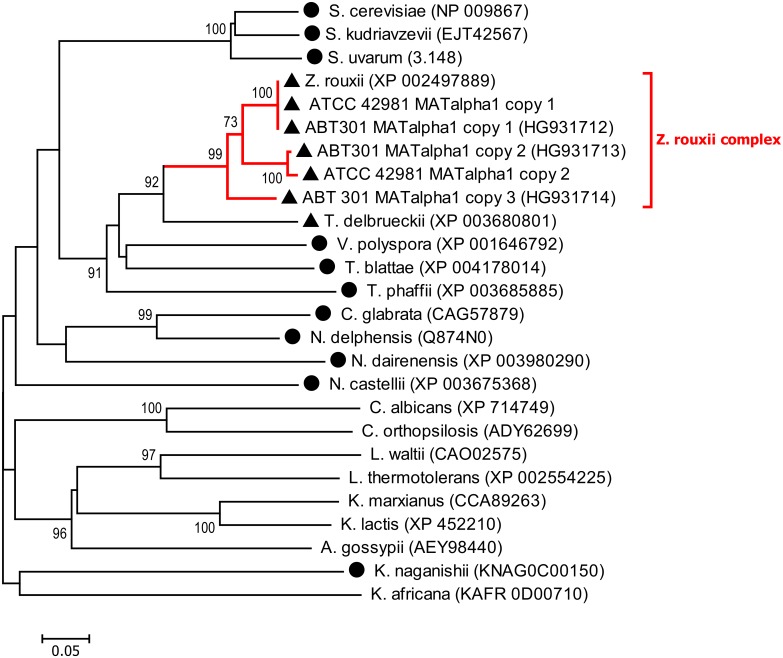
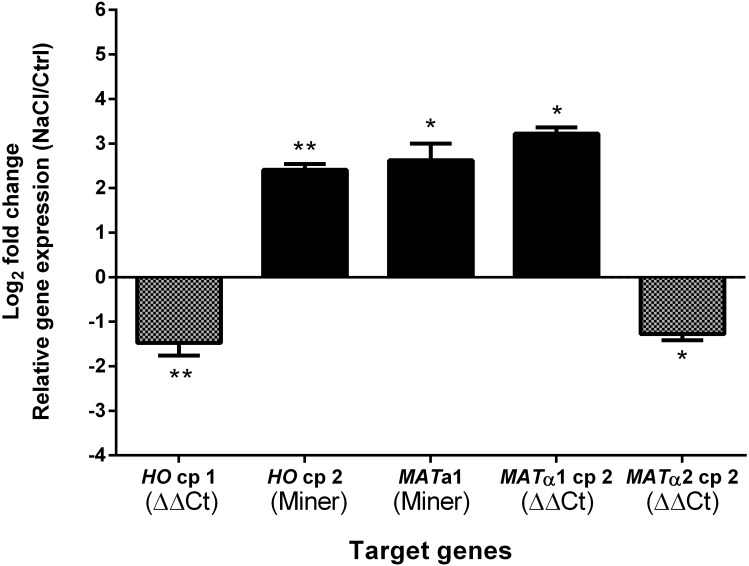
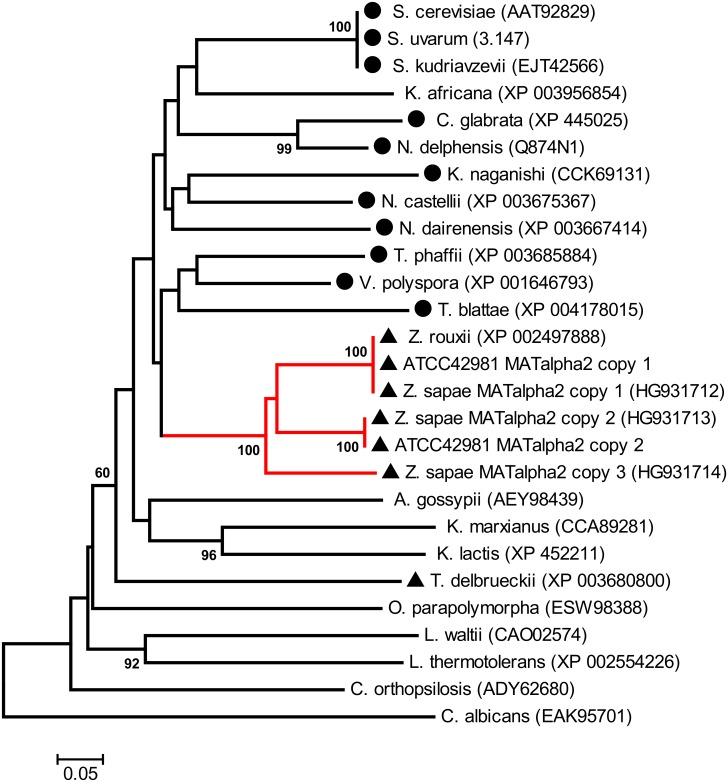
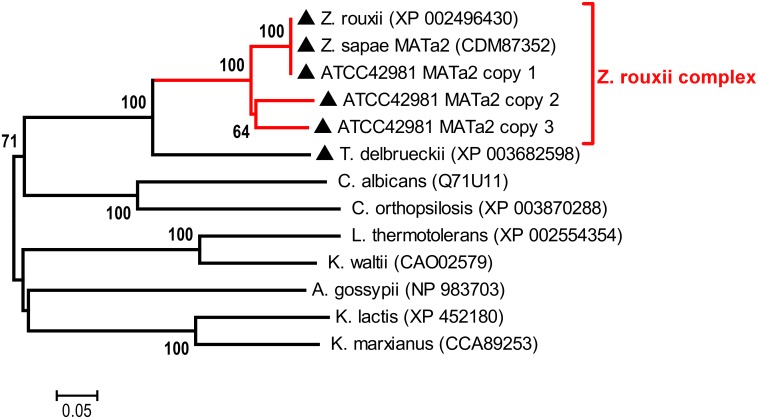
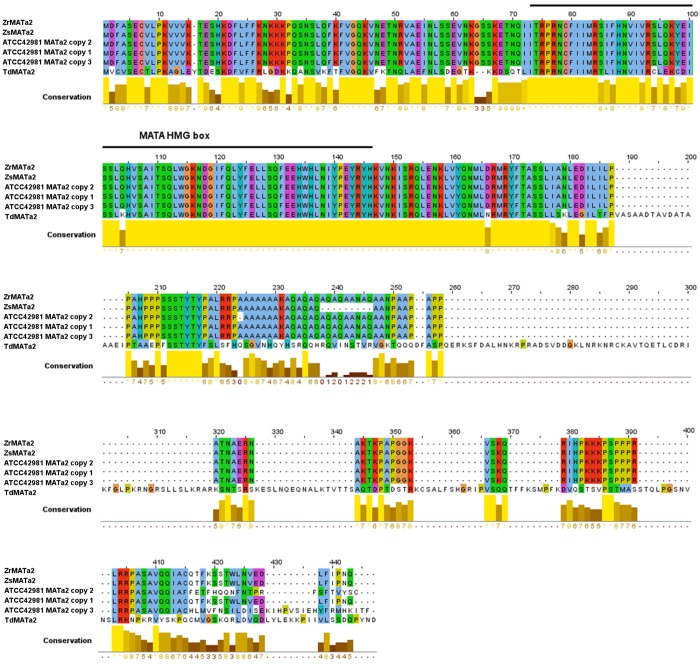
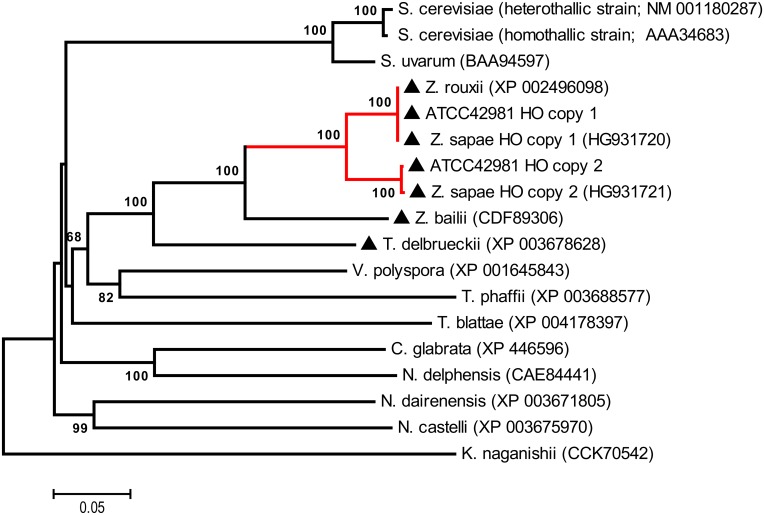
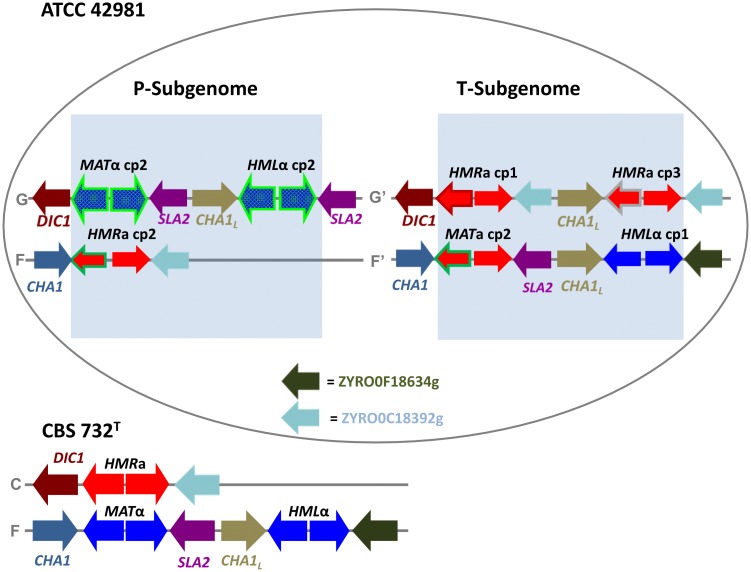
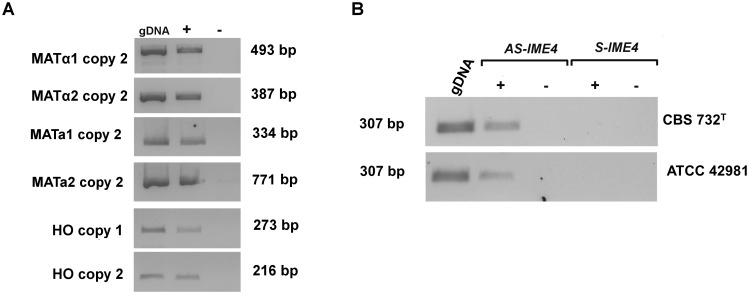
Allodiploidization is a fundamental yet evolutionarily poorly characterized event, which impacts genome evolution and heredity, controlling organismal development and polyploid cell-types. In this study, we investigated the sex determination system in the allodiploid and sterile ATCC 42981 yeast, a member of the Zygosaccharomyces rouxii species complex, and used it to study how a chimeric mating-type gene repertoire contributes to hybrid reproductive isolation. We found that ATCC 42981 has 7 MAT-like (MTL) loci, 3 of which encode α-idiomorph and 4 encode a-idiomorph. Two phylogenetically divergent MAT expression loci were identified on different chromosomes, accounting for a hybrid a/α genotype. Furthermore, extra a-idimorph-encoding loci (termed MTLa copies 1 to 3) were recognized, which shared the same MATa1 ORFs but diverged for MATa2 genes. Each MAT expression locus was linked to a HML silent cassette, while the corresponding HMR loci were located on another chromosome. Two putative parental sex chromosome pairs contributed to this unusual genomic architecture: one came from an as-yet-undescribed taxon, which has the NCYC 3042 strain as a unique representative, while the other did not match any MAT-HML and HMR organizations previously described in Z. rouxii species. This chimeric rearrangement produces two copies of the HO gene, which encode for putatively functional endonucleases essential for mating-type switching. Although both a and α coding sequences, which are required to obtain a functional cell-type a1-α2 regulator, were present in the allodiploid ATCC 42981 genome, the transcriptional circuit, which regulates entry into meiosis in response to meiosis-inducing salt stress, appeared to be turned off. Furthermore, haploid and α-specific genes, such as MATα1 and HO, were observed to be actively transcribed and up-regulated under hypersaline stress. Overall, these evidences demonstrate that ATCC 42981 is unable to repress haploid α-specific genes and to activate meiosis in response to stress. We argue that sequence divergence within the chimeric a1-α2 heterodimer could be involved in the generation of negative epistasis, contributing to the allodiploid sterility and the dysregulation of cell identity.
异源二倍体化是一个基本但在进化上特征尚不明确的事件,它影响基因组进化和遗传,控制生物体发育及多倍体细胞类型。在本研究中,我们调查了异源二倍体且不育的ATCC 42981酵母(鲁氏接合酵母物种复合体的一员)的性别决定系统,并利用它来研究嵌合交配型基因库如何导致杂种生殖隔离。我们发现ATCC 42981有7个类MAT(MTL)位点,其中3个编码α特异型,4个编码a特异型。在不同染色体上鉴定出两个系统发育上有差异的MAT表达位点,这导致了杂种a/α基因型。此外,还识别出额外的a特异型编码位点(称为MTLa拷贝1至3),它们共享相同的MATa1开放阅读框,但MATa2基因存在差异。每个MAT表达位点都与一个HML沉默盒相连,而相应的HMR位点位于另一条染色体上。两个推定的亲本性染色体对促成了这种不寻常的基因组结构:一个来自一个尚未描述的分类单元,以NCYC 3042菌株作为唯一代表,而另一个与鲁氏接合酵母物种中先前描述的任何MAT-HML和HMR组织都不匹配。这种嵌合重排产生了两个HO基因拷贝,它们编码交配型转换所需的假定功能性内切核酸酶。虽然在异源二倍体ATCC 42981基因组中存在获得功能性细胞类型a1-α2调节因子所需的a和α编码序列,但响应减数分裂诱导盐胁迫调节进入减数分裂的转录回路似乎被关闭。此外,观察到单倍体和α特异性基因,如MATα1和HO,在高盐胁迫下被积极转录并上调。总体而言,这些证据表明ATCC 42981无法抑制单倍体α特异性基因并在应激时激活减数分裂。我们认为嵌合a1-α2异二聚体内的序列差异可能参与负上位性的产生,导致异源二倍体不育和细胞身份失调。