
归巢至实体癌:嵌合抗原受体T细胞过继性细胞治疗中的血管检查点
Homing to solid cancers: a vascular checkpoint in adoptive cell therapy using CAR T-cells.
作者信息
Ager Ann, Watson H Angharad, Wehenkel Sophie C, Mohammed Rebar N
机构信息
Systems Immunity University Research Institute and Division of Infection and Immunity, School of Medicine, Cardiff University, Cardiff, CF14 4XN, U.K.
出版信息
Biochem Soc Trans. 2016 Apr 15;44(2):377-85. doi: 10.1042/BST20150254.
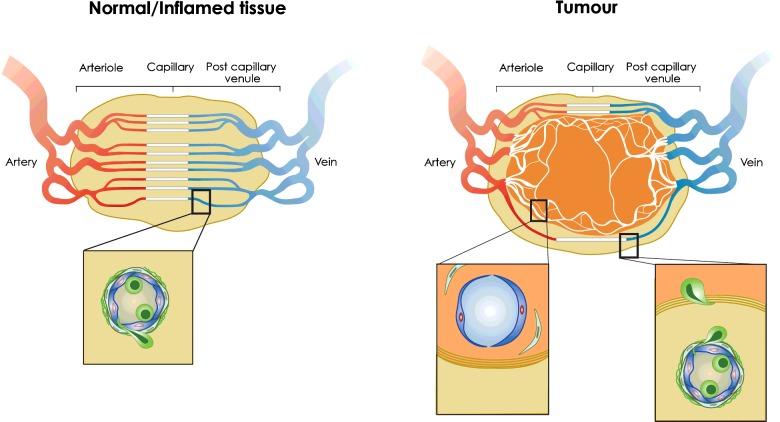
The success of adoptive T-cell therapies for the treatment of cancer patients depends on transferred T-lymphocytes finding and infiltrating cancerous tissues. For intravenously transferred T-cells, this means leaving the bloodstream (extravasation) from tumour blood vessels. In inflamed tissues, a key event in extravasation is the capture, rolling and arrest of T-cells inside blood vessels which precedes transmigration across the vessel wall and entry into tissues. This depends on co-ordinated signalling of selectins, integrins and chemokine receptors on T-cells by their respective ligands which are up-regulated on inflamed blood vessels. Clinical data and experimental studies in mice suggest that tumour blood vessels are anergic to inflammatory stimuli and the recruitment of cytotoxic CD8(+)T-lymphocytes is not very efficient. Interestingly, and somewhat counter-intuitively, anti-angiogenic therapy can promote CD8(+)T-cell infiltration of tumours and increase the efficacy of adoptive CD8(+)T-cell therapy. Rather than inhibit tumour angiogenesis, anti-angiogenic therapy 'normalizes' (matures) tumour blood vessels by promoting pericyte recruitment, increasing tumour blood vessel perfusion and sensitizing tumour blood vessels to inflammatory stimuli. A number of different approaches are currently being explored to increase recruitment by manipulating the expression of homing-associated molecules on T-cells and tumour blood vessels. Future studies should address whether these approaches improve the efficacy of adoptive T-cell therapies for solid, vascularized cancers in patients.
过继性T细胞疗法治疗癌症患者的成功取决于转移的T淋巴细胞找到并浸润癌组织。对于静脉内转移的T细胞而言,这意味着要从肿瘤血管离开血流(外渗)。在炎症组织中,外渗的一个关键事件是T细胞在血管内的捕获、滚动和停滞,这先于其穿过血管壁并进入组织的迁移过程。这取决于T细胞上的选择素、整合素和趋化因子受体通过其各自在炎症血管上上调的配体进行的协调信号传导。临床数据和小鼠实验研究表明,肿瘤血管对炎症刺激无反应,细胞毒性CD8(+)T淋巴细胞的募集效率不高。有趣的是,且有点违反直觉的是,抗血管生成疗法可促进CD8(+)T细胞浸润肿瘤,并提高过继性CD8(+)T细胞疗法的疗效。抗血管生成疗法并非抑制肿瘤血管生成,而是通过促进周细胞募集、增加肿瘤血管灌注并使肿瘤血管对炎症刺激敏感,使肿瘤血管“正常化”(成熟)。目前正在探索多种不同方法,通过操纵T细胞和肿瘤血管上归巢相关分子的表达来增加募集。未来的研究应探讨这些方法是否能提高过继性T细胞疗法对患者实体血管化癌症的疗效。


 Zotero 插件