Maor-Landaw Keren, Levy Oren
The Mina and Everard Goodman Faculty of Life Sciences, Bar-Ilan University , Ramat Gan , Israel.
PeerJ. 2016 Mar 28;4:e1814. doi: 10.7717/peerj.1814. eCollection 2016.
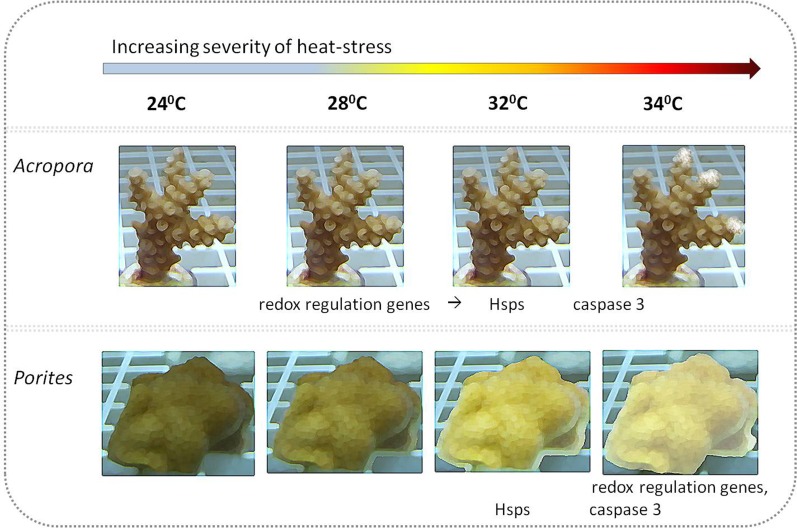
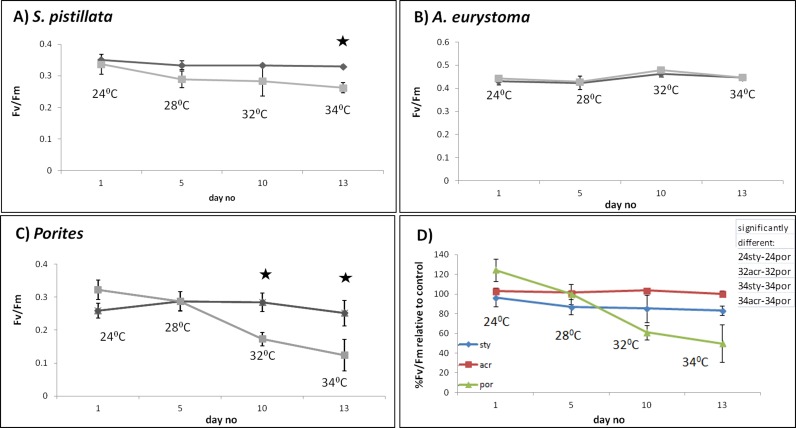
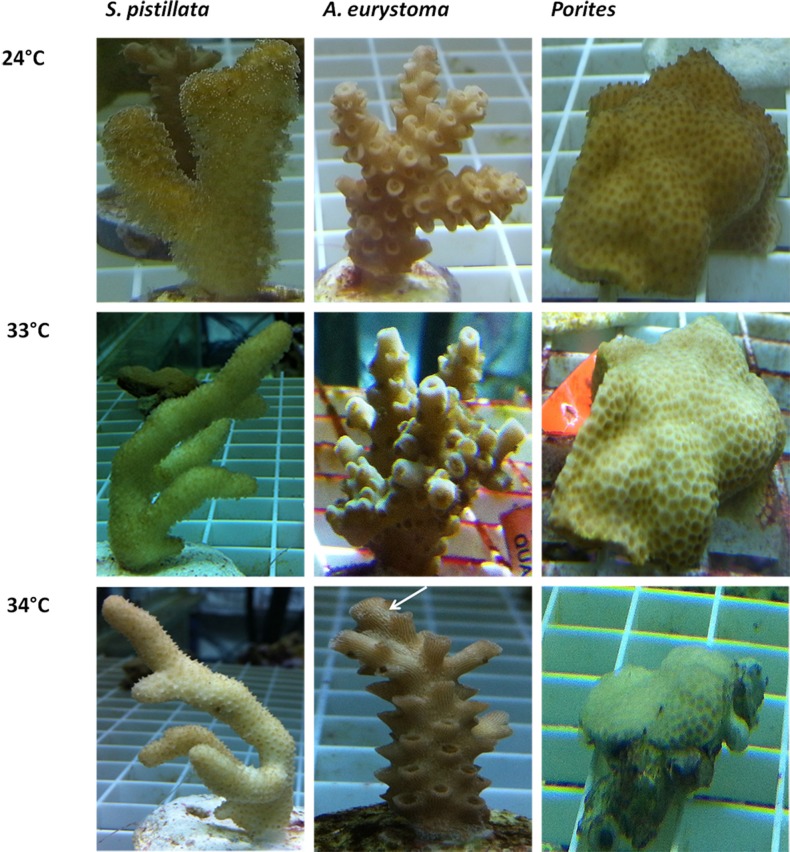
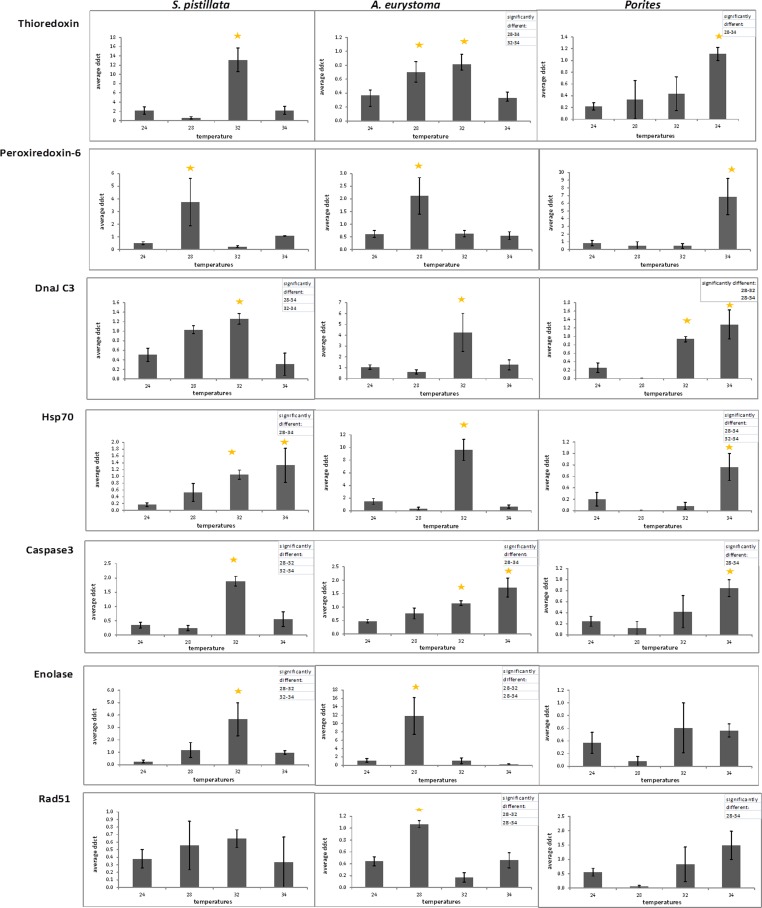
It is well-established that there is a hierarchy of susceptibilities amongst coral genera during heat-stress. However, molecular mechanisms governing these differences are still poorly understood. Here we explored if specific corals possessing different morphologies and different susceptibilities to heat stress may manifest varied gene expression patterns. We examined expression patterns of seven genes in the branching corals Stylophora pistillata and Acropora eurystoma and additionally in the massive robust coral, Porites sp. The tested genes are representatives of key cellular processes occurring during heat-stress in Cnidaria: oxidative stress, ER stress, energy metabolism, DNA repair and apoptosis. Varied response to the heat-stress, in terms of visual coral paling, algal maximum quantum yield and host gene expression was evident in the different growth forms. The two branching corals exhibited similar overall responses that differed from that of the massive coral. A. eurystoma that is considered as a susceptible species did not bleach in our experiment, but tissue sloughing was evident at 34 °C. Interestingly, in this species redox regulation genes were up-regulated at the very onset of the thermal challenge. In S. pistillata, bleaching was evident at 34 °C and most of the stress markers were already up-regulated at 32 °C, either remaining highly expressed or decreasing when temperatures reached 34 °C. The massive Porites species displayed severe bleaching at 32 °C but stress marker genes were only significantly elevated at 34 °C. We postulate that by expelling the algal symbionts from Porites tissues, oxidation damages are reduced and stress genes are activated only at a progressed stage. The differential gene expression responses exhibited here can be correlated with the literature well-documented hierarchy of susceptibilities amongst coral morphologies and genera in Eilat's coral reef.
众所周知,在热应激期间,珊瑚属之间存在易感性等级差异。然而,控制这些差异的分子机制仍知之甚少。在这里,我们探讨了具有不同形态和不同热应激易感性的特定珊瑚是否可能表现出不同的基因表达模式。我们研究了分支珊瑚鹿角杯形珊瑚和美丽鹿角珊瑚以及另外的块状健壮珊瑚多孔珊瑚属中七个基因的表达模式。所测试的基因是刺胞动物热应激期间发生的关键细胞过程的代表:氧化应激、内质网应激、能量代谢、DNA修复和细胞凋亡。在不同的生长形式中,热应激在视觉上的珊瑚白化、藻类最大量子产量和宿主基因表达方面表现出不同的反应。两种分支珊瑚表现出相似的总体反应,与块状珊瑚不同。被认为是易感物种的美丽鹿角珊瑚在我们的实验中没有白化,但在34°C时组织脱落明显。有趣的是,在这个物种中,氧化还原调节基因在热挑战开始时就上调了。在鹿角杯形珊瑚中,34°C时白化明显,大多数应激标记在32°C时已经上调,当温度达到34°C时,要么保持高表达,要么下降。块状多孔珊瑚物种在32°C时表现出严重白化,但应激标记基因仅在34°C时显著升高。我们推测,通过从多孔珊瑚组织中排出藻类共生体,氧化损伤减少,应激基因仅在进展阶段被激活。这里展示的差异基因表达反应可以与文献中充分记录的埃拉特珊瑚礁中珊瑚形态和属之间的易感性等级相关联。