Wang Nian, McAllister Hugh A, Bartlett Paul R, Buggs Richard J A
School of Biological and Chemical Sciences, Queen Mary University of London, London E1 4NS, UK.
Institute of Integrative Biology, Biosciences Building, University of Liverpool, Crown Street, Liverpool L69 7ZB, UK and.
Ann Bot. 2016 May;117(6):1023-35. doi: 10.1093/aob/mcw048. Epub 2016 Apr 11.
Betula L. (birch) is a genus of approx. 60 species, subspecies or varieties with a wide distribution in the northern hemisphere, of ecological and economic importance. A new classification of Betula has recently been proposed based on morphological characters. This classification differs somewhat from previously published molecular phylogenies, which may be due to factors such as convergent evolution, hybridization, incomplete taxon sampling or misidentification of samples. While chromosome counts have been made for many species, few have had their genome size measured. The aim of this study is to produce a new phylogenetic and genome size analysis of the genus.
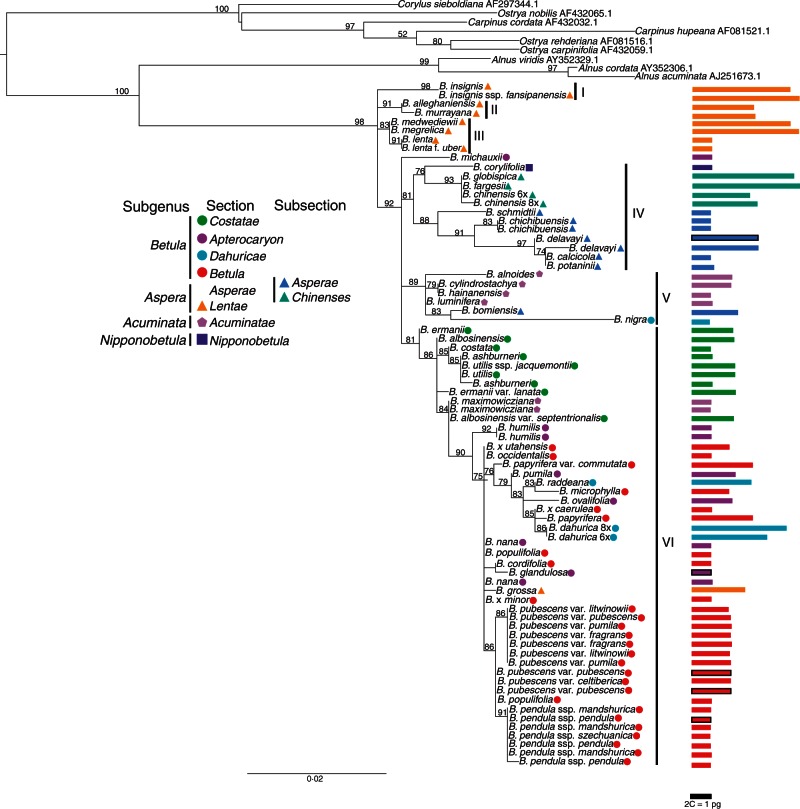
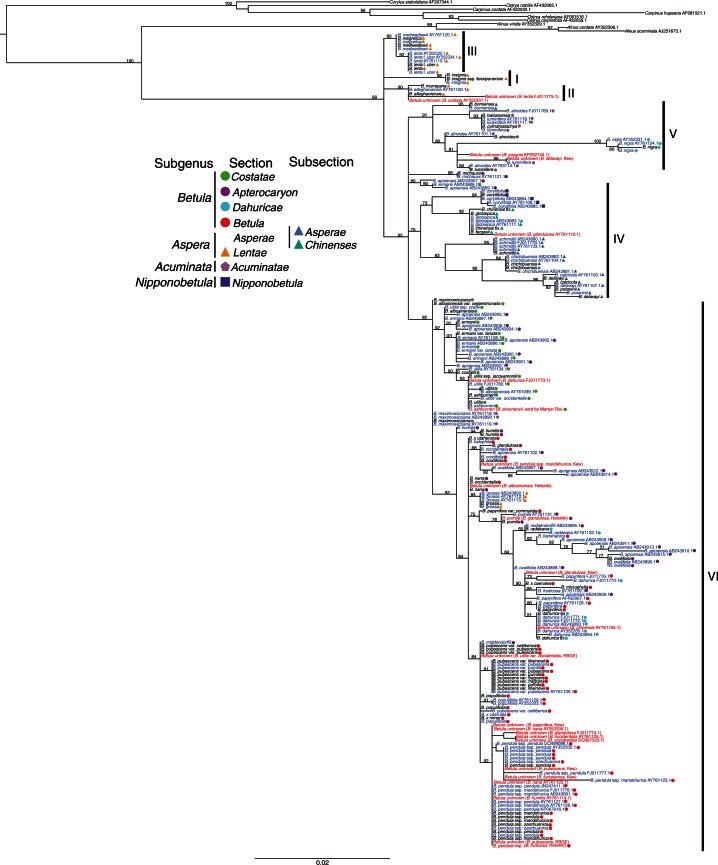
Internal transcribed spacer (ITS) regions of nuclear ribosomal DNA were sequenced for 76 Betula samples verified by taxonomic experts, representing approx. 60 taxa, of which approx. 24 taxa have not been included in previous phylogenetic analyses. A further 49 samples from other collections were also sequenced, and 108 ITS sequences were downloaded from GenBank. Phylogenetic trees were built for these sequences. The genome sizes of 103 accessions representing nearly all described species were estimated using flow cytometry.
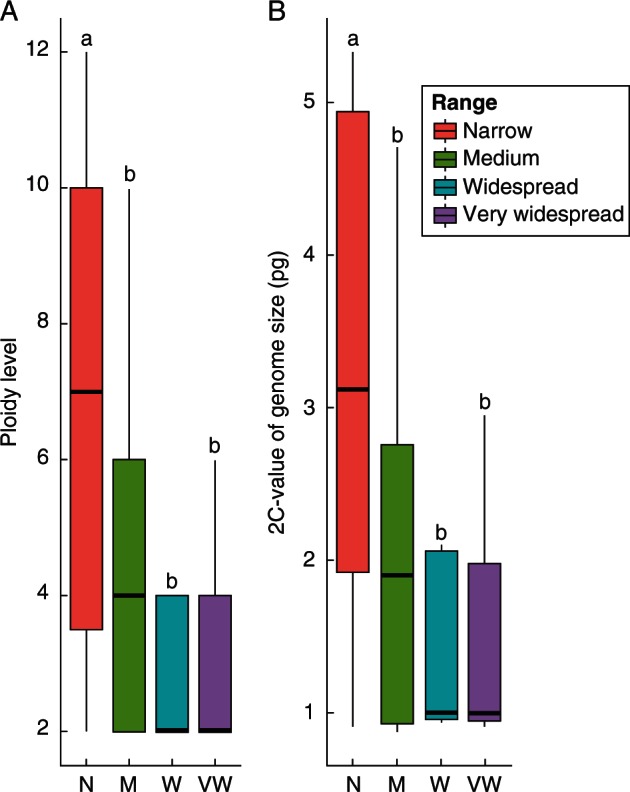
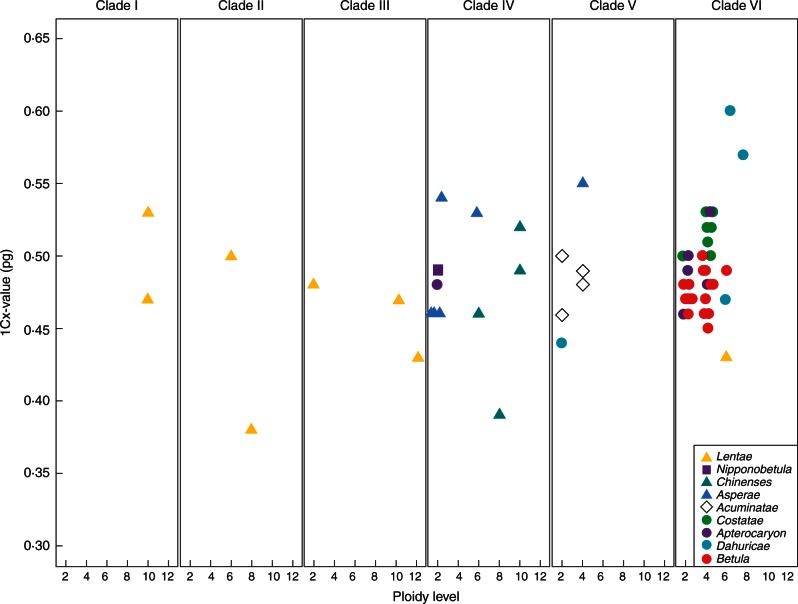
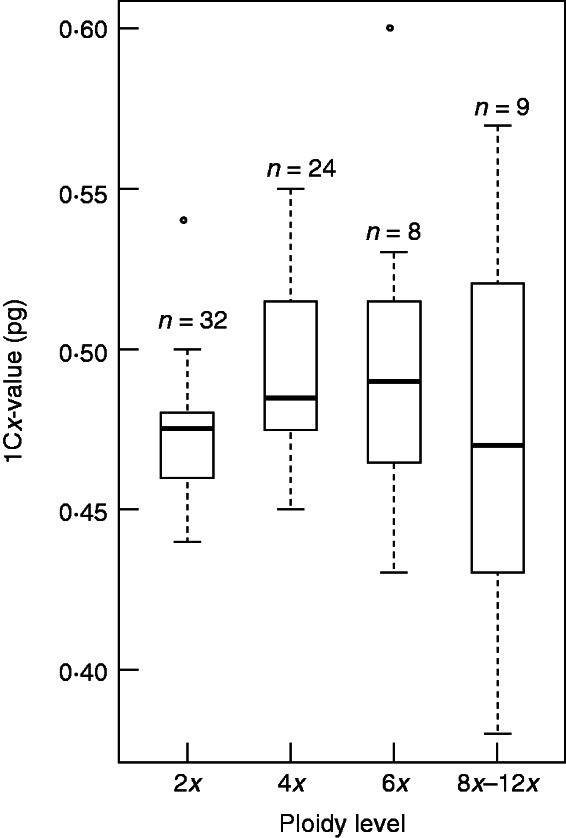
As expected for a gene tree of a genus where hybridization and allopolyploidy occur, the ITS tree shows clustering, but not resolved monophyly, for the morphological subgenera recently proposed. Most sections show some clustering, but species of the dwarf section Apterocaryon are unusually scattered. Betula corylifolia (subgenus Nipponobetula) unexpectedly clusters with species of subgenus Aspera Unexpected placements are also found for B. maximowicziana, B. bomiensis, B. nigra and B. grossa Biogeographical disjunctions were found within Betula between Europe and North America, and also disjunctions between North-east and South-west Asia. The 2C-values for Betula ranged from 0·88 to 5·33 pg, and polyploids are scattered widely throughout the ITS phylogeny. Species with large genomes tend to have narrow ranges.
Betula grossa may have formed via allopolyploidization between parents in subgenus Betula and subgenus Aspera. Betula bomiensis may also be a wide allopolyploid. Betula corylifolia may be a parental species of allopolyploids in the subsection Chinenses Placements of B. maximowicziana, B. michauxii and B. nigra need further investigation. This analysis, in line with previous studies, suggests that section Apterocaryon is not monophyletic and thus dwarfism has evolved repeatedly in different lineages of Betula Polyploidization has occurred many times independently in the evolution of Betula.
桦木属(Betula L.)约有60个物种、亚种或变种,在北半球广泛分布,具有重要的生态和经济价值。最近基于形态特征提出了桦木属的新分类。这种分类与先前发表的分子系统发育有所不同,这可能是由于趋同进化、杂交、分类群抽样不完整或样本鉴定错误等因素导致的。虽然已对许多物种进行了染色体计数,但很少有物种测量过其基因组大小。本研究的目的是对该属进行新的系统发育和基因组大小分析。
对经分类学专家鉴定的76个桦木样本的核糖体DNA内部转录间隔区(ITS)进行测序,这些样本代表约60个分类群,其中约24个分类群未包含在先前的系统发育分析中。还对来自其他 collection 的另外49个样本进行了测序,并从GenBank下载了108条ITS序列。为这些序列构建了系统发育树。使用流式细胞术估计了代表几乎所有已描述物种的103个种质的基因组大小。
正如对一个发生杂交和异源多倍体的属的基因树所预期的那样,ITS树显示了最近提出的形态亚属的聚类,但未解析出单系性。大多数组显示出一定程度的聚类,但矮生组翅果桦属(Apterocaryon)的物种异常分散。毛榛叶桦(Betula corylifolia,日本桦木亚属)意外地与糙皮桦亚属的物种聚类。大果桦(B. maximowicziana)、波密桦(B. bomiensis)、黑桦(B. nigra)和粗穗桦(B. grossa)也有意外的分类位置。在桦木属中发现了欧洲和北美之间以及东北亚和西南亚之间的生物地理间断分布。桦木属的2C值范围为0.88至5.33 pg,多倍体广泛分布于整个ITS系统发育中。基因组大的物种往往分布范围狭窄。
粗穗桦可能是由桦木亚属和糙皮桦亚属的亲本通过异源多倍体化形成的。波密桦也可能是一个广泛的异源多倍体。毛榛叶桦可能是华桦组异源多倍体的亲本物种。大果桦、米氏桦(B. michauxii)和黑桦的分类位置需要进一步研究。与先前的研究一致,该分析表明翅果桦属不是单系的,因此矮化在桦木属的不同谱系中反复进化。多倍体化在桦木属的进化中多次独立发生。