Günter Julia, Wolint Petra, Bopp Annina, Steiger Julia, Cambria Elena, Hoerstrup Simon P, Emmert Maximilian Y
Institute for Regenerative Medicine, University of Zurich, 8044 Zurich, Switzerland; Division of Surgical Research, University Hospital of Zurich, 8091 Zurich, Switzerland.
Institute for Regenerative Medicine, University of Zurich, 8044 Zurich, Switzerland; Division of Surgical Research, University Hospital of Zurich, 8091 Zurich, Switzerland; Heart Center Zurich, University Hospital of Zurich, Zurich, Switzerland; Wyss Translational Center Zurich, Zurich, Switzerland.
Stem Cells Int. 2016;2016:9098523. doi: 10.1155/2016/9098523. Epub 2016 Mar 17.
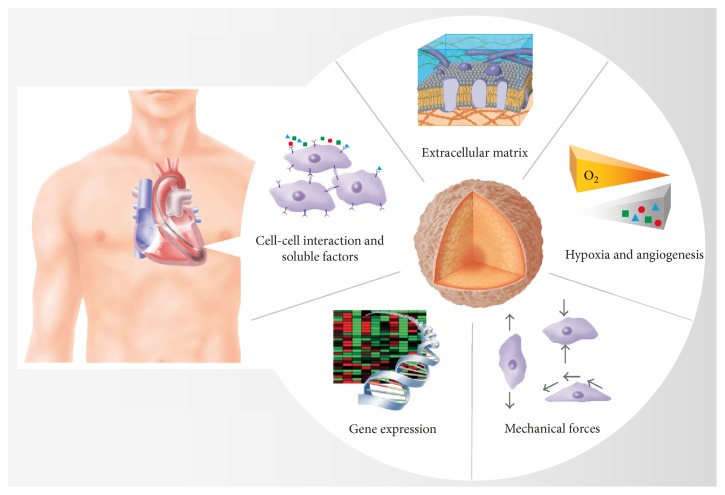
More people die annually from cardiovascular diseases than from any other cause. In particular, patients who suffer from myocardial infarction may be affected by ongoing adverse remodeling processes of the heart that may ultimately lead to heart failure. The introduction of stem and progenitor cell-based applications has raised substantial hope for reversing these processes and inducing cardiac regeneration. However, current stem cell therapies using single-cell suspensions have failed to demonstrate long-lasting efficacy due to the overall low retention rate after cell delivery to the myocardium. To overcome this obstacle, the concept of 3D cell culture techniques has been proposed to enhance therapeutic efficacy and cell engraftment based on the simulation of an in vivo-like microenvironment. Of great interest is the use of so-called microtissues or spheroids, which have evolved from their traditional role as in vitro models to their novel role as therapeutic agents. This review will provide an overview of the therapeutic potential of microtissues by addressing primarily cardiovascular regeneration. It will accentuate their advantages compared to other regenerative approaches and summarize the methods for generating clinically applicable microtissues. In addition, this review will illustrate the unique properties of the microenvironment within microtissues that makes them a promising next-generation therapeutic approach.
每年死于心血管疾病的人数比死于其他任何原因的都多。特别是,患有心肌梗死的患者可能会受到心脏持续不良重塑过程的影响,这最终可能导致心力衰竭。基于干细胞和祖细胞的应用的引入为逆转这些过程和诱导心脏再生带来了巨大希望。然而,目前使用单细胞悬液的干细胞疗法在将细胞输送到心肌后,由于总体保留率较低,未能证明具有持久疗效。为了克服这一障碍,人们提出了3D细胞培养技术的概念,以基于模拟体内样微环境来提高治疗效果和细胞植入率。所谓的微组织或球体的使用引起了极大的兴趣,它们已从作为体外模型的传统作用演变为作为治疗剂的新作用。本综述将主要通过探讨心血管再生来概述微组织的治疗潜力。它将强调与其他再生方法相比它们的优势,并总结生成临床适用微组织的方法。此外,本综述将说明微组织内微环境的独特特性,这些特性使其成为一种有前途的下一代治疗方法。