• 文献检索
  • 文档翻译
  • 深度研究
  • 学术资讯
  • Suppr Zotero 插件Zotero 插件
  • 邀请有礼
  • 套餐&价格
  • 历史记录
应用&插件
Suppr Zotero 插件Zotero 插件浏览器插件Mac 客户端Windows 客户端微信小程序
定价
高级版会员购买积分包购买API积分包
服务
文献检索文档翻译深度研究API 文档MCP 服务
关于我们
关于 Suppr公司介绍联系我们用户协议隐私条款
关注我们

Suppr 超能文献

核心技术专利:CN118964589B侵权必究
粤ICP备2023148730 号-1Suppr @ 2026

文献检索

告别复杂PubMed语法,用中文像聊天一样搜索,搜遍4000万医学文献。AI智能推荐,让科研检索更轻松。

立即免费搜索

文件翻译

保留排版,准确专业,支持PDF/Word/PPT等文件格式,支持 12+语言互译。

免费翻译文档

深度研究

AI帮你快速写综述,25分钟生成高质量综述,智能提取关键信息,辅助科研写作。

立即免费体验

用于精准心血管组织工程的人类诱导多能干细胞和基因组编辑技术

Human iPSCs and Genome Editing Technologies for Precision Cardiovascular Tissue Engineering.

作者信息

Gähwiler Eric K N, Motta Sarah E, Martin Marcy, Nugraha Bramasta, Hoerstrup Simon P, Emmert Maximilian Y

机构信息

Institute for Regenerative Medicine (IREM), University of Zurich, Zurich, Switzerland.

Wyss Zurich, University and ETH Zurich, Zurich, Switzerland.

出版信息

Front Cell Dev Biol. 2021 Jun 28;9:639699. doi: 10.3389/fcell.2021.639699. eCollection 2021.

DOI:10.3389/fcell.2021.639699
PMID:34262897
原文链接:https://pmc.ncbi.nlm.nih.gov/articles/PMC8273765/
Abstract

Induced pluripotent stem cells (iPSCs) originate from the reprogramming of adult somatic cells using four Yamanaka transcription factors. Since their discovery, the stem cell (SC) field achieved significant milestones and opened several gateways in the area of disease modeling, drug discovery, and regenerative medicine. In parallel, the emergence of clustered regularly interspaced short palindromic repeats (CRISPR)-associated protein 9 (CRISPR-Cas9) revolutionized the field of genome engineering, allowing the generation of genetically modified cell lines and achieving a precise genome recombination or random insertions/deletions, usefully translated for wider applications. Cardiovascular diseases represent a constantly increasing societal concern, with limited understanding of the underlying cellular and molecular mechanisms. The ability of iPSCs to differentiate into multiple cell types combined with CRISPR-Cas9 technology could enable the systematic investigation of pathophysiological mechanisms or drug screening for potential therapeutics. Furthermore, these technologies can provide a cellular platform for cardiovascular tissue engineering (TE) approaches by modulating the expression or inhibition of targeted proteins, thereby creating the possibility to engineer new cell lines and/or fine-tune biomimetic scaffolds. This review will focus on the application of iPSCs, CRISPR-Cas9, and a combination thereof to the field of cardiovascular TE. In particular, the clinical translatability of such technologies will be discussed ranging from disease modeling to drug screening and TE applications.

摘要

诱导多能干细胞(iPSC)源自使用四种山中转录因子对成体体细胞进行重编程。自发现以来,干细胞(SC)领域取得了重大进展,并在疾病建模、药物发现和再生医学领域开辟了多个途径。与此同时,成簇规律间隔短回文重复序列(CRISPR)相关蛋白9(CRISPR-Cas9)的出现彻底改变了基因组工程领域,使得能够生成基因编辑细胞系,并实现精确的基因组重组或随机插入/缺失,这对于更广泛的应用具有重要意义。心血管疾病是社会日益关注的问题,人们对其潜在的细胞和分子机制了解有限。iPSC分化为多种细胞类型的能力与CRISPR-Cas9技术相结合,能够系统地研究病理生理机制或进行潜在治疗药物的筛选。此外,这些技术可以通过调节靶向蛋白的表达或抑制作用,为心血管组织工程(TE)方法提供细胞平台,从而有可能构建新的细胞系和/或微调仿生支架。本综述将重点关注iPSC、CRISPR-Cas9及其组合在心血管TE领域的应用。特别是,将讨论这些技术从疾病建模到药物筛选以及TE应用的临床可转化性。
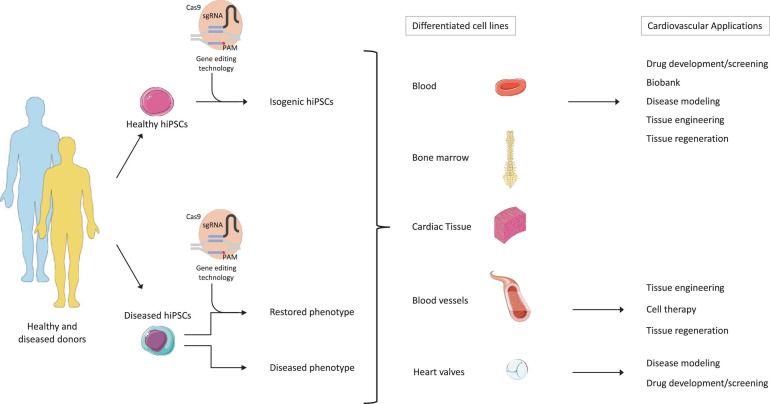
https://cdn.ncbi.nlm.nih.gov/pmc/blobs/4254/8273765/bd63df483ead/fcell-09-639699-g003.jpg
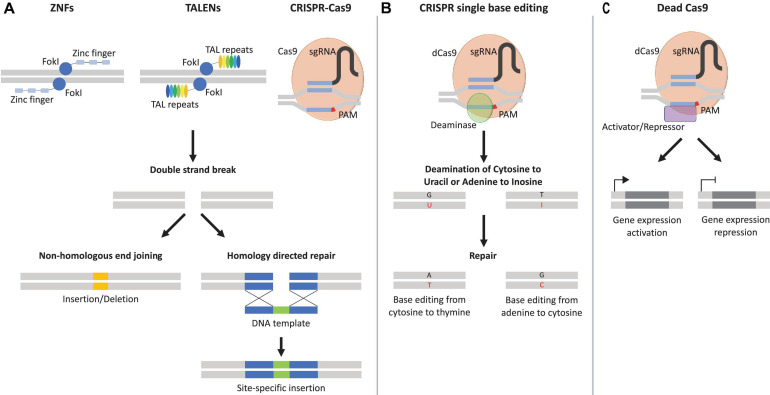
https://cdn.ncbi.nlm.nih.gov/pmc/blobs/4254/8273765/8c44300d7a32/fcell-09-639699-g001.jpg
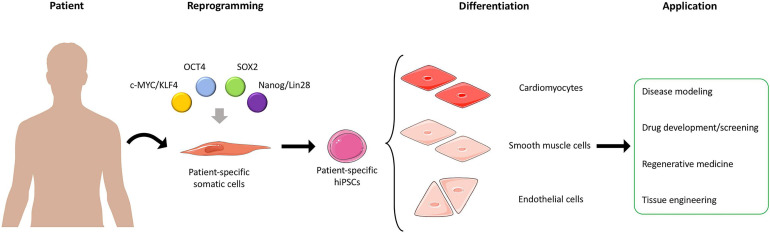
https://cdn.ncbi.nlm.nih.gov/pmc/blobs/4254/8273765/e4691182642d/fcell-09-639699-g002.jpg
https://cdn.ncbi.nlm.nih.gov/pmc/blobs/4254/8273765/bd63df483ead/fcell-09-639699-g003.jpg
https://cdn.ncbi.nlm.nih.gov/pmc/blobs/4254/8273765/8c44300d7a32/fcell-09-639699-g001.jpg
https://cdn.ncbi.nlm.nih.gov/pmc/blobs/4254/8273765/e4691182642d/fcell-09-639699-g002.jpg
https://cdn.ncbi.nlm.nih.gov/pmc/blobs/4254/8273765/bd63df483ead/fcell-09-639699-g003.jpg

相似文献

1
Human iPSCs and Genome Editing Technologies for Precision Cardiovascular Tissue Engineering.用于精准心血管组织工程的人类诱导多能干细胞和基因组编辑技术
Front Cell Dev Biol. 2021 Jun 28;9:639699. doi: 10.3389/fcell.2021.639699. eCollection 2021.
2
May I Cut in? Gene Editing Approaches in Human Induced Pluripotent Stem Cells.我可以插个话吗?人类诱导多能干细胞中的基因编辑方法。
Cells. 2017 Feb 6;6(1):5. doi: 10.3390/cells6010005.
3
The Impact of CRISPR/Cas9 Technology on Cardiac Research: From Disease Modelling to Therapeutic Approaches.CRISPR/Cas9技术对心脏研究的影响:从疾病建模到治疗方法
Stem Cells Int. 2017;2017:8960236. doi: 10.1155/2017/8960236. Epub 2017 Dec 25.
4
Gene Therapy with CRISPR/Cas9 Coming to Age for HIV Cure.基因治疗与 CRISPR/Cas9 渐趋成熟,有望攻克 HIV。
AIDS Rev. 2017 Oct-Dec;19(3):167-172.
5
Induced Pluripotent Stem Cells: Reprogramming Platforms and Applications in Cell Replacement Therapy.诱导多能干细胞:重编程平台及其在细胞替代疗法中的应用
Biores Open Access. 2020 Apr 28;9(1):121-136. doi: 10.1089/biores.2019.0046. eCollection 2020.
6
Targeted genome engineering in human induced pluripotent stem cells from patients with hemophilia B using the CRISPR-Cas9 system.利用 CRISPR-Cas9 系统对血友病 B 患者来源的诱导多能干细胞进行靶向基因组编辑。
Stem Cell Res Ther. 2018 Apr 6;9(1):92. doi: 10.1186/s13287-018-0839-8.
7
Targeted mutagenesis in human iPSCs using CRISPR genome-editing tools.利用 CRISPR 基因组编辑工具对人诱导多能干细胞进行靶向突变。
Methods. 2021 Jul;191:44-58. doi: 10.1016/j.ymeth.2021.01.002. Epub 2021 Jan 12.
8
Footprint-free gene mutation correction in induced pluripotent stem cell (iPSC) derived from recessive dystrophic epidermolysis bullosa (RDEB) using the CRISPR/Cas9 and piggyBac transposon system.利用CRISPR/Cas9和猪尾巴转座子系统对源自隐性营养不良性大疱性表皮松解症(RDEB)的诱导多能干细胞(iPSC)进行无足迹基因突变校正。
J Dermatol Sci. 2020 Jun;98(3):163-172. doi: 10.1016/j.jdermsci.2020.04.004. Epub 2020 Apr 24.
9
Application of CRISPR/Cas9 technologies combined with iPSCs in the study and treatment of retinal degenerative diseases.CRISPR/Cas9 技术与 iPSCs 的联合应用在视网膜退行性疾病的研究和治疗中的应用。
Hum Genet. 2018 Sep;137(9):679-688. doi: 10.1007/s00439-018-1933-9. Epub 2018 Sep 10.
10
A Broad Overview and Review of CRISPR-Cas Technology and Stem Cells.CRISPR-Cas技术与干细胞的广泛概述及综述
Curr Stem Cell Rep. 2016;2(1):9-20. doi: 10.1007/s40778-016-0037-5. Epub 2016 Feb 11.

引用本文的文献

1
Pluripotent Stem Cells: Recent Advances and Emerging Trends.多能干细胞:最新进展与新兴趋势
Biomedicines. 2025 Mar 21;13(4):765. doi: 10.3390/biomedicines13040765.
2
Cell Reprogramming, Transdifferentiation, and Dedifferentiation Approaches for Heart Repair.用于心脏修复的细胞重编程、转分化和去分化方法。
Int J Mol Sci. 2025 Mar 27;26(7):3063. doi: 10.3390/ijms26073063.
3
Advances in CRISPR-Cas technology and its applications: revolutionising precision medicine.CRISPR-Cas技术进展及其应用:革新精准医学

本文引用的文献

1
Cardioids reveal self-organizing principles of human cardiogenesis.心形线揭示了人类心脏发生的自组织原理。
Cell. 2021 Jun 10;184(12):3299-3317.e22. doi: 10.1016/j.cell.2021.04.034. Epub 2021 May 20.
2
Geometry influences inflammatory host cell response and remodeling in tissue-engineered heart valves in-vivo.几何形状影响体内组织工程心脏瓣膜中炎性宿主细胞反应和重塑。
Sci Rep. 2020 Nov 16;10(1):19882. doi: 10.1038/s41598-020-76322-9.
3
Base editing: advances and therapeutic opportunities.碱基编辑:进展与治疗机遇。
Front Genome Ed. 2024 Dec 12;6:1509924. doi: 10.3389/fgeed.2024.1509924. eCollection 2024.
4
Generation of Isogenic iPSC Lines for Studying the Effect of the p.N515del (c.1543_1545delAAC) Variant on MYBPC3 Function and Hypertrophic Cardiomyopathy Pathogenesis.用于研究p.N515del(c.1543_1545delAAC)变异对MYBPC3功能及肥厚型心肌病发病机制影响的同基因诱导多能干细胞系的产生
Int J Mol Sci. 2024 Nov 30;25(23):12900. doi: 10.3390/ijms252312900.
5
Advances in therapies using mesenchymal stem cells and their exosomes for treatment of peripheral nerve injury: state of the art and future perspectives.间充质干细胞及其外泌体治疗周围神经损伤的疗法进展:现状与未来展望
Neural Regen Res. 2025 Nov 1;20(11):3151-3171. doi: 10.4103/NRR.NRR-D-24-00235. Epub 2024 Oct 22.
6
Three-Dimensional iPSC-Based In Vitro Cardiac Models for Biomedical and Pharmaceutical Research Applications.基于三维 iPSC 的体外心脏模型在生物医学和药物研发中的应用。
Int J Mol Sci. 2024 Oct 4;25(19):10690. doi: 10.3390/ijms251910690.
7
How can we use stem cell-derived cardiomyocytes to understand the involvement of energetic metabolism in alterations of cardiac function?我们如何利用干细胞衍生的心肌细胞来了解能量代谢在心脏功能改变中的作用?
Front Mol Med. 2023 Sep 1;3:1222986. doi: 10.3389/fmmed.2023.1222986. eCollection 2023.
8
Architecture design and advanced manufacturing of heart-on-a-chip: scaffolds, stimulation and sensors.芯片上心脏的架构设计与先进制造:支架、刺激与传感器
Microsyst Nanoeng. 2024 Jul 11;10:96. doi: 10.1038/s41378-024-00692-7. eCollection 2024.
9
P18: Novel Anticancer Peptide from Induced Tumor-Suppressing Cells Targeting Breast Cancer and Bone Metastasis.P18:来自诱导性抑癌细胞的新型抗癌肽,靶向乳腺癌和骨转移
Cancers (Basel). 2024 Jun 15;16(12):2230. doi: 10.3390/cancers16122230.
10
Employment of diverse in vitro systems for analyzing multiple aspects of disease, hereditary hemorrhagic telangiectasia (HHT).使用多种体外系统分析疾病(遗传性出血性毛细血管扩张症,即HHT)的多个方面。
Cell Biosci. 2024 May 22;14(1):65. doi: 10.1186/s13578-024-01247-z.
Nat Rev Drug Discov. 2020 Dec;19(12):839-859. doi: 10.1038/s41573-020-0084-6. Epub 2020 Oct 19.
4
Drug Development and the Use of Induced Pluripotent Stem Cell-Derived Cardiomyocytes for Disease Modeling and Drug Toxicity Screening.药物研发与诱导多能干细胞衍生心肌细胞在疾病建模和药物毒性筛选中的应用。
Int J Mol Sci. 2020 Oct 3;21(19):7320. doi: 10.3390/ijms21197320.
5
Global trends in clinical trials involving pluripotent stem cells: a systematic multi-database analysis.涉及多能干细胞的临床试验的全球趋势:一项系统的多数据库分析。
NPJ Regen Med. 2020 Sep 11;5:15. doi: 10.1038/s41536-020-00100-4. eCollection 2020.
6
Recognition of Research Participants' Need for Autonomy: Remembering the Legacy of Henrietta Lacks.认识研究参与者对自主权的需求:铭记海瑞塔·拉克斯的遗产。
JAMA. 2020 Sep 15;324(11):1027-1028. doi: 10.1001/jama.2020.15936.
7
Next-generation tissue-engineered heart valves with repair, remodelling and regeneration capacity.具有修复、重塑和再生能力的下一代组织工程心脏瓣膜。
Nat Rev Cardiol. 2021 Feb;18(2):92-116. doi: 10.1038/s41569-020-0422-8. Epub 2020 Sep 9.
8
Intrinsic Endocardial Defects Contribute to Hypoplastic Left Heart Syndrome.固有心内膜缺陷导致左心发育不全综合征。
Cell Stem Cell. 2020 Oct 1;27(4):574-589.e8. doi: 10.1016/j.stem.2020.07.015. Epub 2020 Aug 17.
9
Tissue engineered heart valves for transcatheter aortic valve implantation: current state, challenges, and future developments.用于经导管主动脉瓣植入的组织工程心脏瓣膜:现状、挑战与未来发展
Expert Rev Cardiovasc Ther. 2020 Oct;18(10):681-696. doi: 10.1080/14779072.2020.1792777. Epub 2020 Sep 23.
10
Human Cardiac Organoids for Modeling Genetic Cardiomyopathy.人类心脏类器官用于建模遗传性心肌病。
Cells. 2020 Jul 20;9(7):1733. doi: 10.3390/cells9071733.