Xu Yixiao, Richlen Mindy L, Liefer Justin D, Robertson Alison, Kulis David, Smith Tyler B, Parsons Michael L, Anderson Donald M
Key Laboratory of Environment Change and Resources Use in Beibu Gulf, Ministry of Education, Guangxi Teachers Education University, Nanning, Guangxi, China.
School of Geographical and Oceanographic Sciences, Nanjing University, Nanjing, Jiangsu, China.
PLoS One. 2016 Apr 13;11(4):e0153197. doi: 10.1371/journal.pone.0153197. eCollection 2016.
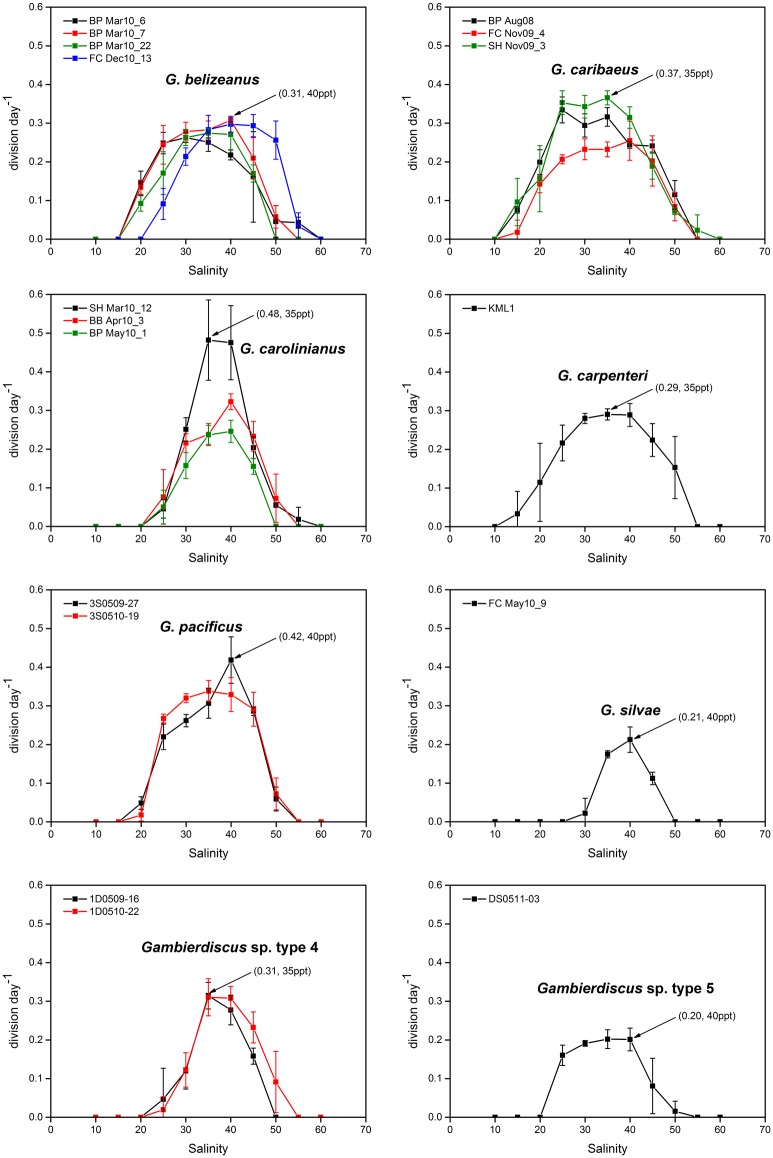
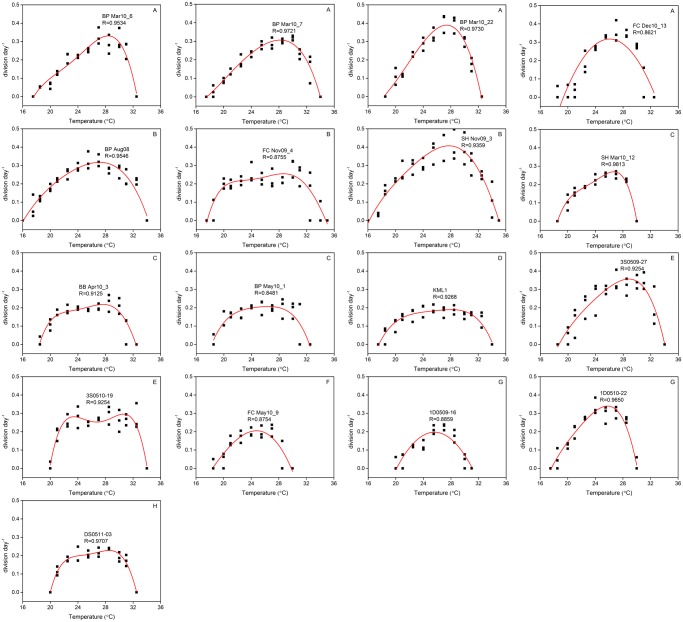
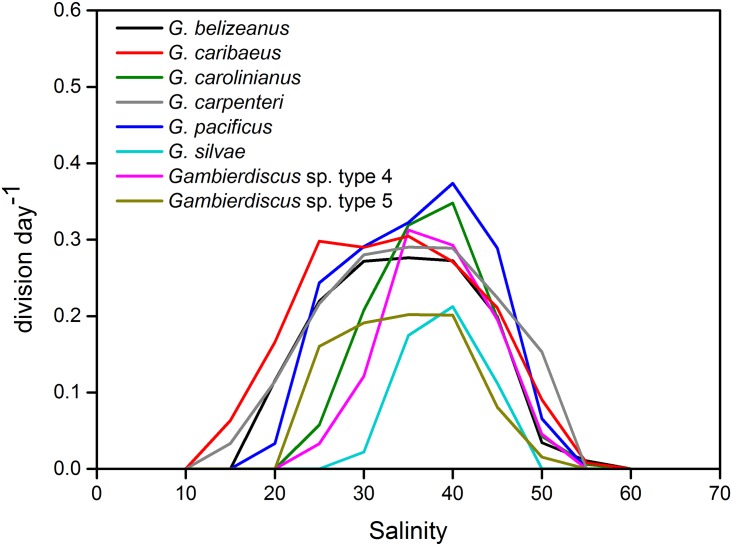
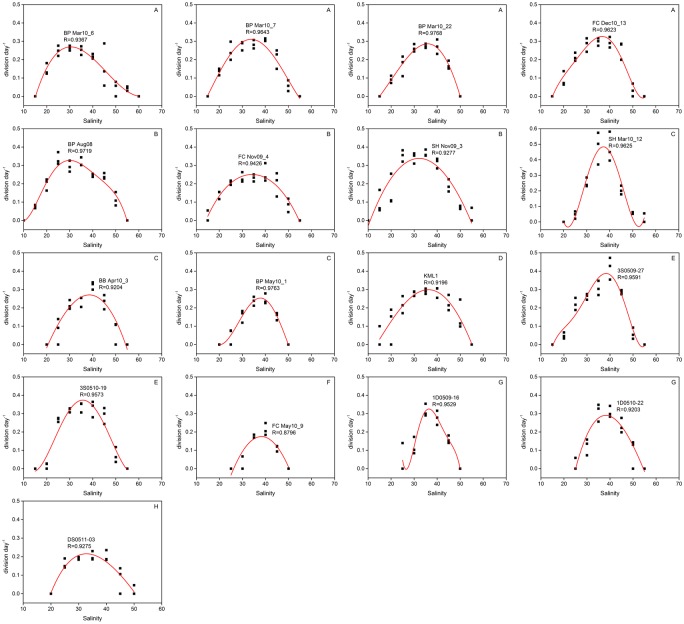
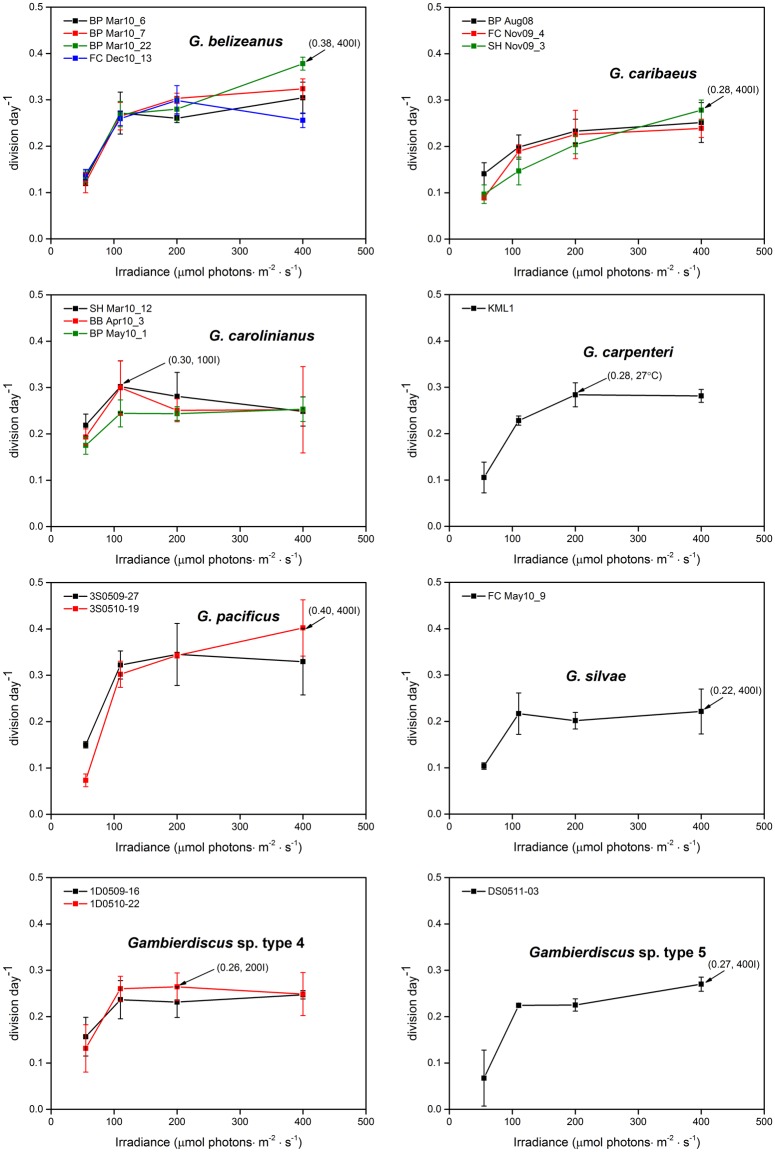
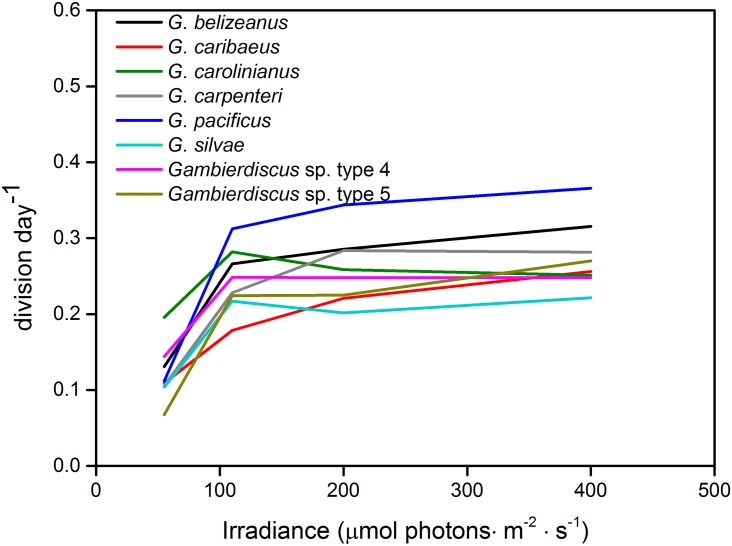
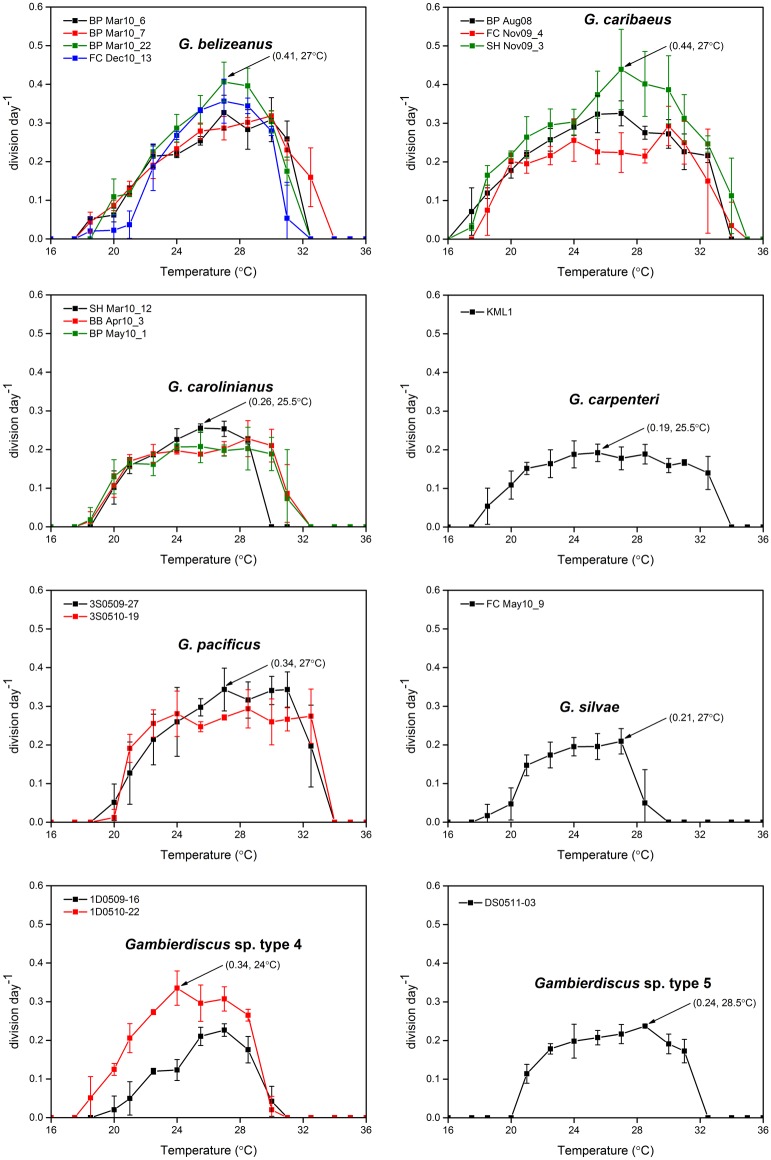
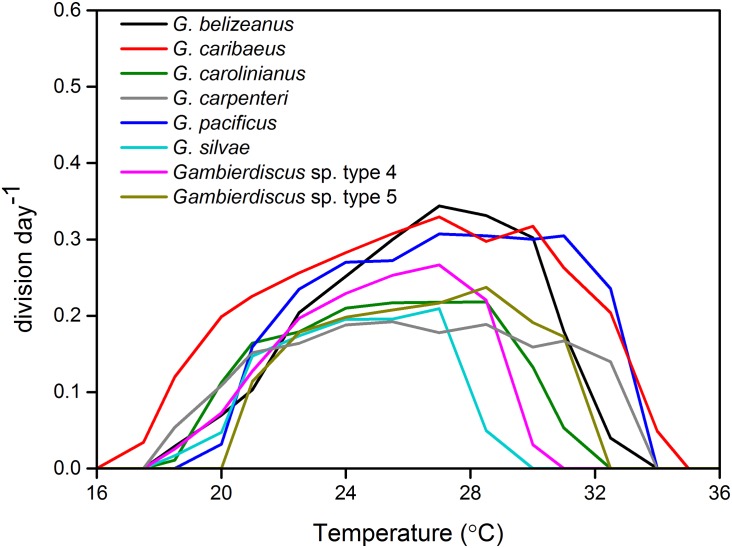
Benthic dinoflagellates in the genus Gambierdiscus produce the ciguatoxin precursors responsible for the occurrence of ciguatera toxicity. The prevalence of ciguatera toxins in fish has been linked to the presence and distribution of toxin-producing species in coral reef ecosystems, which is largely determined by the presence of suitable benthic habitat and environmental conditions favorable for growth. Here using single factor experiments, we examined the effects of salinity, irradiance, and temperature on growth of 17 strains of Gambierdiscus representing eight species/phylotypes (G. belizeanus, G. caribaeus, G. carolinianus, G. carpenteri, G. pacificus, G. silvae, Gambierdiscus sp. type 4-5), most of which were established from either Marakei Island, Republic of Kiribati, or St. Thomas, United States Virgin Island (USVI). Comparable to prior studies, growth rates fell within the range of 0-0.48 divisions day(-1). In the salinity and temperature studies, Gambierdiscus responded in a near Gaussian, non-linear manner typical for such studies, with optimal and suboptimal growth occurring in the range of salinities of 25 and 45 and 21.0 and 32.5°C. In the irradiance experiment, no mortality was observed; however, growth rates at 55 μmol photons · m(-2) · s(-1) were lower than those at 110-400 μmol photons · m(-2) · s(-1). At the extremes of the environmental conditions tested, growth rates were highly variable, evidenced by large coefficients of variability. However, significant differences in intraspecific growth rates were typically found only at optimal or near-optimal growth conditions. Polynomial regression analyses showed that maximum growth occurred at salinity and temperature levels of 30.1-38.5 and 23.8-29.2°C, respectively. Gambierdiscus growth patterns varied among species, and within individual species: G. belizeanus, G. caribaeus, G. carpenteri, and G. pacificus generally exhibited a wider range of tolerance to environmental conditions, which may explain their broad geographic distribution. In contrast, G. silvae and Gambierdiscus sp. types 4-5 all displayed a comparatively narrow range of tolerance to temperature, salinity, and irradiance.
岗比甲藻属的底栖甲藻产生导致雪卡毒素中毒事件的雪卡毒素前体。鱼类中雪卡毒素的流行与珊瑚礁生态系统中产生毒素的物种的存在和分布有关,而这在很大程度上取决于合适的底栖生境的存在以及有利于其生长的环境条件。在这里,我们通过单因素实验,研究了盐度、光照强度和温度对代表8个物种/系统型(伯利兹岗比甲藻、加勒比岗比甲藻、卡罗莱纳岗比甲藻、卡彭特岗比甲藻、太平洋岗比甲藻、西尔瓦岗比甲藻、岗比甲藻4 - 5型)的17株岗比甲藻生长的影响,其中大多数菌株取自基里巴斯共和国的马拉凯岛或美属维尔京群岛的圣托马斯岛。与先前的研究类似,生长速率在0 - 0.48次/天的范围内。在盐度和温度研究中,岗比甲藻的反应呈现出此类研究中典型的近似高斯分布的非线性方式,在盐度为25和45以及温度为21.0和32.5°C的范围内出现最佳和次优生长。在光照强度实验中,未观察到死亡情况;然而,55 μmol光子·m⁻²·s⁻¹时的生长速率低于110 - 400 μmol光子·m⁻²·s⁻¹时的生长速率。在所测试的环境条件极端值下,生长速率变化很大,变异系数很大就证明了这一点。然而,种内生长速率的显著差异通常仅在最佳或接近最佳生长条件下才会出现。多项式回归分析表明,最大生长分别出现在盐度为30.1 - 38.5以及温度为23.8 - 29.2°C时。岗比甲藻的生长模式因物种而异,且在单个物种内部也有所不同:伯利兹岗比甲藻、加勒比岗比甲藻、卡彭特岗比甲藻和太平洋岗比甲藻通常对环境条件表现出更广泛的耐受性,这可能解释了它们广泛的地理分布。相比之下,西尔瓦岗比甲藻和岗比甲藻4 - 5型对温度、盐度和光照强度的耐受性范围都相对较窄。