Seuba Jordi, Deville Sylvain, Guizard Christian, Stevenson Adam J
Laboratoire de Synthèse et Fonctionnalisation des Céramiques, UMR3080 CNRS/Saint-Gobain, F-84306 Cavaillon, France.
Institut Européen des Membranes, Université de Montpellier 2, Place Eugéne Bataillon, 34095 Montpellier Cedex 5, France.
Sci Rep. 2016 Apr 14;6:24326. doi: 10.1038/srep24326.
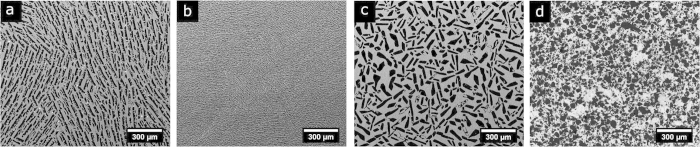
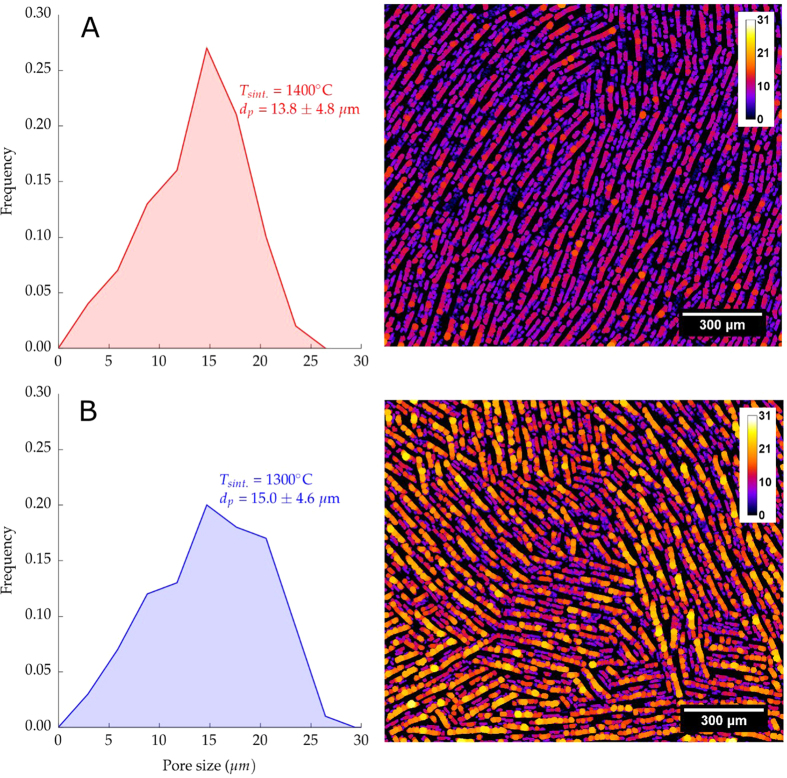
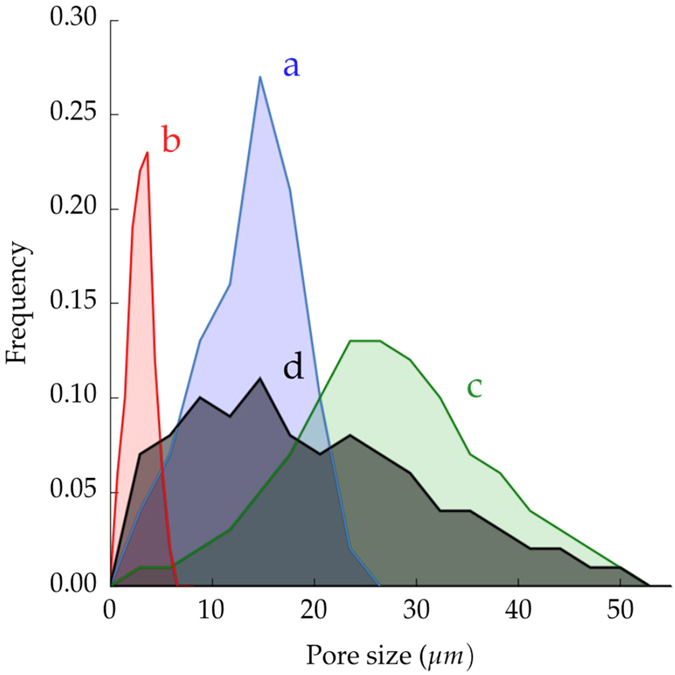
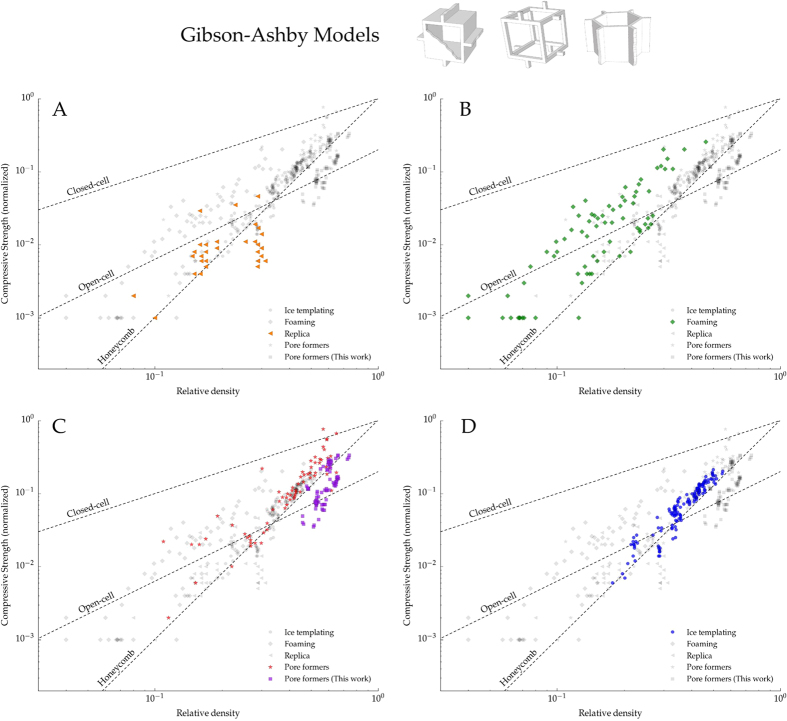
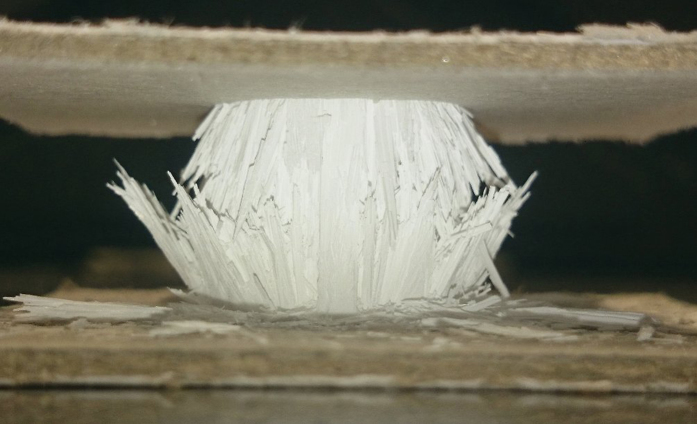
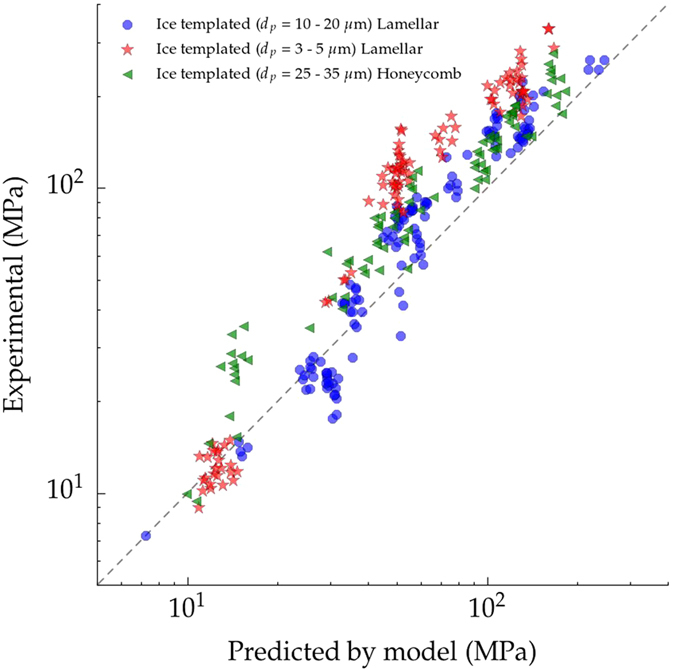
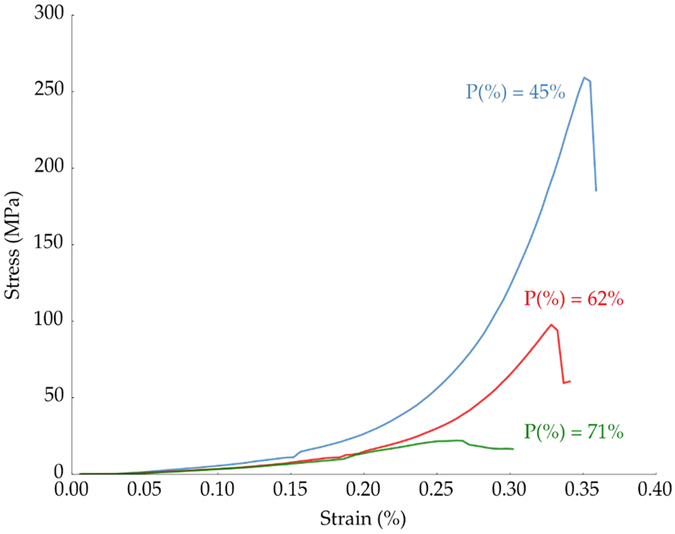
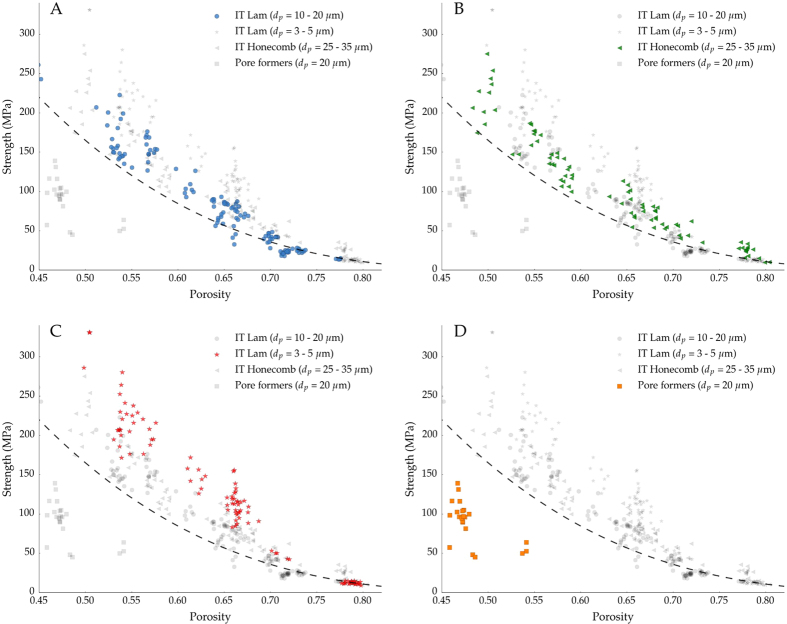
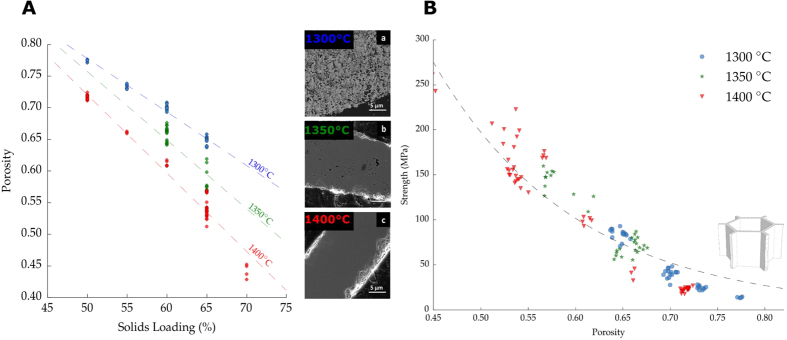
We show that the honeycomb out-of-plane model derived by Gibson and Ashby can be applied to describe the compressive behavior of unidirectional porous materials. Ice-templating allowed us to process samples with accurate control over pore volume, size, and morphology. These samples allowed us to evaluate the effect of this microstructural variations on the compressive strength in a porosity range of 45-80%. The maximum strength of 286 MPa was achieved in the least porous ice-templated sample (P(%) = 49.9), with the smallest pore size (3 μm). We found that the out-of-plane model only holds when buckling is the dominant failure mode, as should be expected. Furthermore, we controlled total pore volume by adjusting solids loading and sintering temperature. This strategy allows us to independently control macroporosity and densification of walls, and the compressive strength of ice-templated materials is exclusively dependent on total pore volume.
我们表明,吉布森和阿什比推导的蜂窝面外模型可用于描述单向多孔材料的压缩行为。冰模板法使我们能够精确控制孔隙体积、尺寸和形态来制备样品。这些样品使我们能够评估这种微观结构变化在45%-80%孔隙率范围内对压缩强度的影响。在孔隙率最低(P(%) = 49.9)、孔径最小(3μm)的冰模板样品中实现了286MPa的最大强度。我们发现,正如预期的那样,面外模型仅在屈曲是主要失效模式时成立。此外,我们通过调整固体负载量和烧结温度来控制总孔隙体积。这种策略使我们能够独立控制大孔隙率和壁的致密化,并且冰模板材料的压缩强度仅取决于总孔隙体积。