Oyagbemi Ademola Adetokunbo, Omobowale Olutayo Temidayo, Asenuga Ebunoluwa Rachael, Akinleye Akinrinde Stephen, Ogunsanwo Rachael Omolola, Saba Adebowale Bernard
Department of Veterinary Physiology, Biochemistry and Pharmacology, Faculty of Veterinary Medicine, University of Ibadan, Nigeria.
Department of Veterinary Medicine, Faculty of Veterinary Medicine, University of Ibadan, Ibadan, Nigeria.
Int J Prev Med. 2016 Mar 1;7:51. doi: 10.4103/2008-7802.177898. eCollection 2016.
Gallic acid (GA) is an endogenous plant phenol known to have antioxidant, free radical scavenging ability, anti-inflammatory, anti-cancer, and anti-fungal properties. The aim of this study was to assess the protective effect of GA on cyclophosphamide (CPA)-induced hepatotoxicity in male Wistar rats.
Sixty rats were grouped into six groups of 10 rats per group. Group 1 received distilled water. Group 2 received CPA at 200 mg/kg single dose intraperitoneally on day 1. Groups 3 and 4 received a single dose of CPA (200 mg/kg) intraperitoneally on day 1 and then were treated with GA at 60 and 120 mg/kg body weight for 14 days, respectively. Rats in Groups 5 and 6 only received GA at 60 and 120 mg/kg body weight for 14 days, respectively. GA was administered orally.
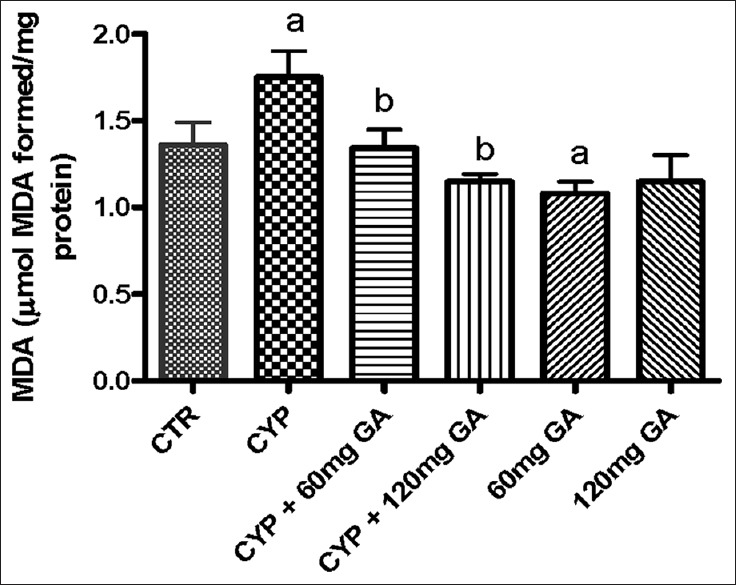
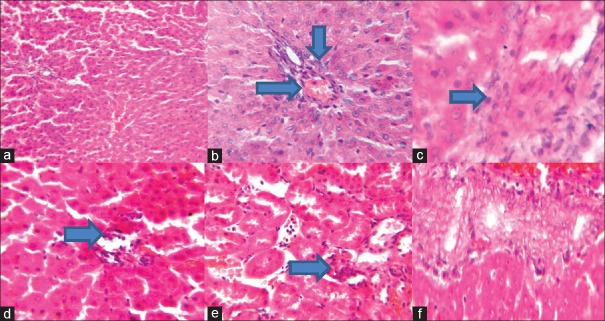
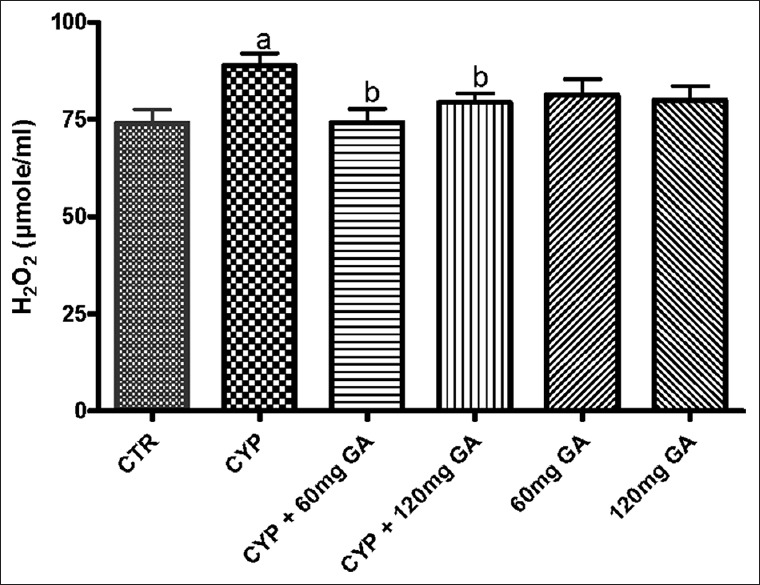
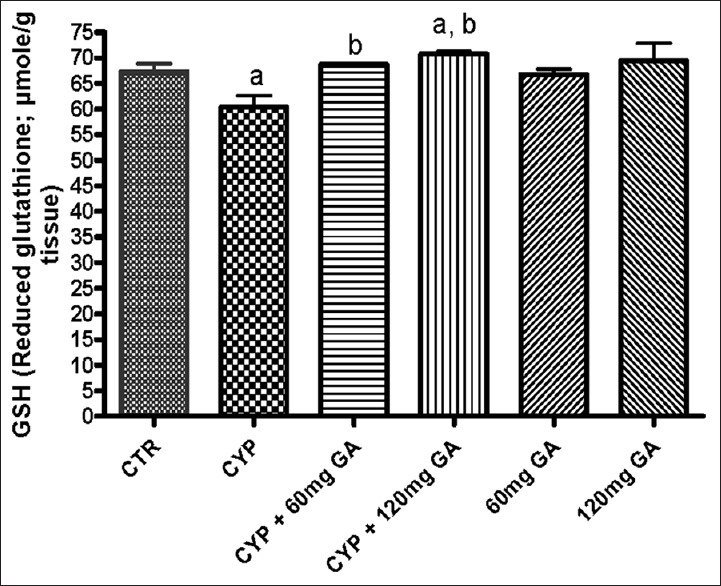
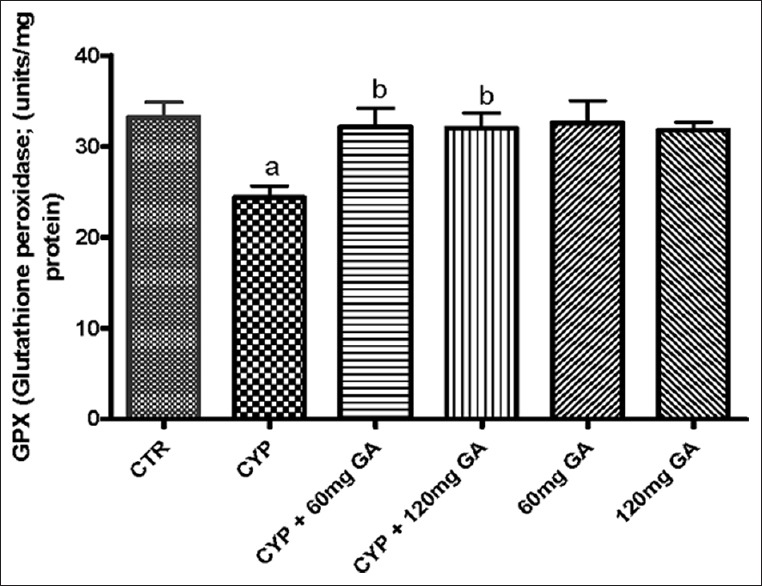
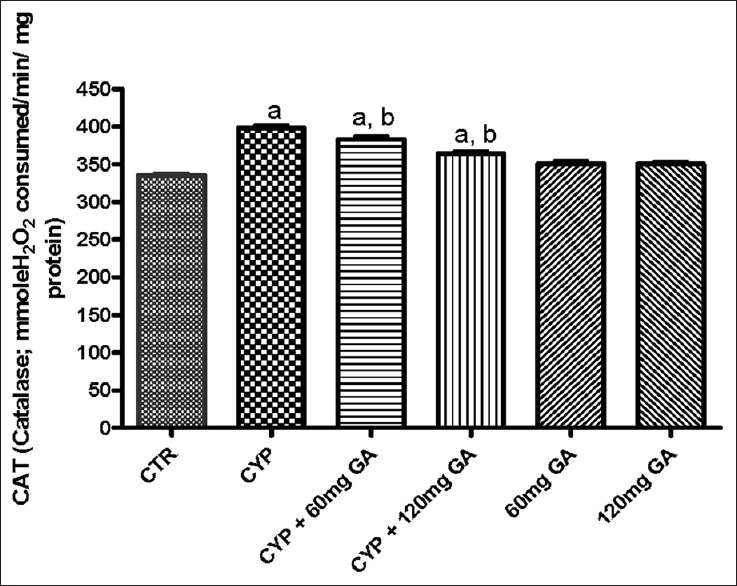
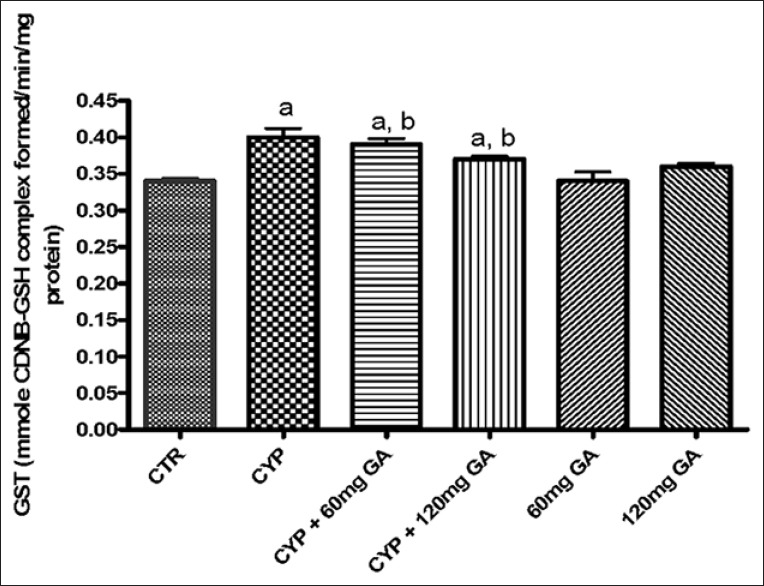
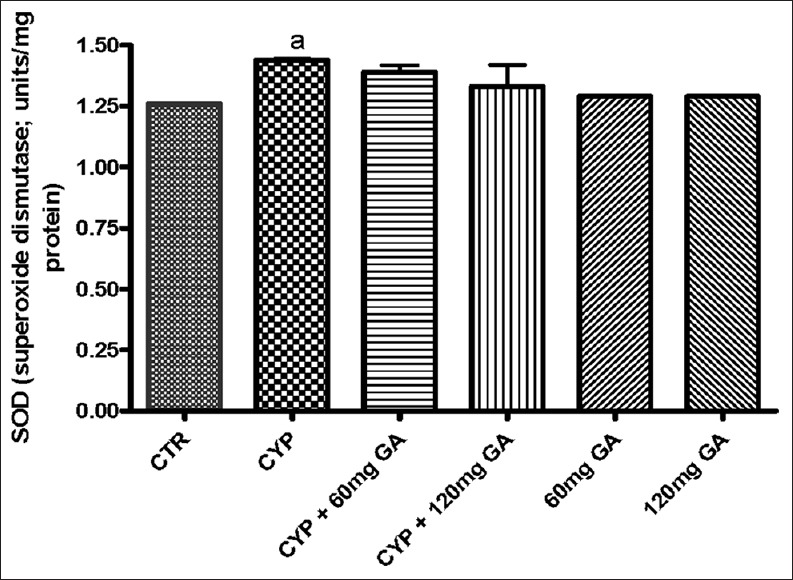
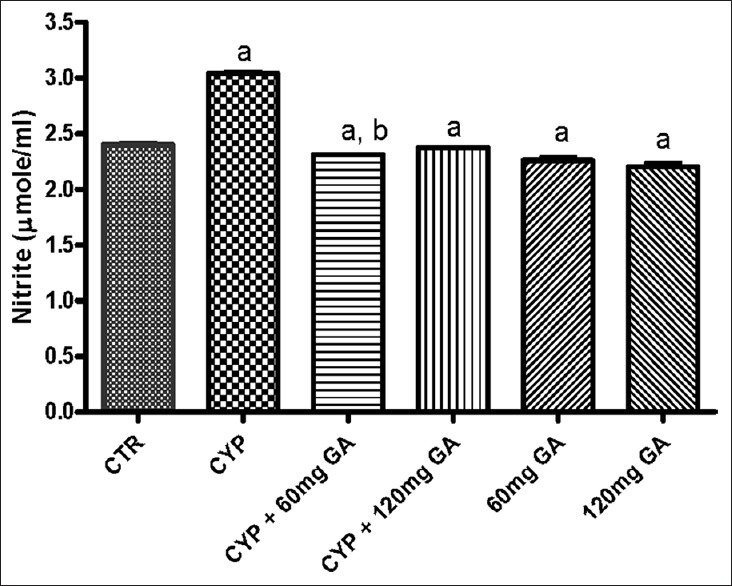
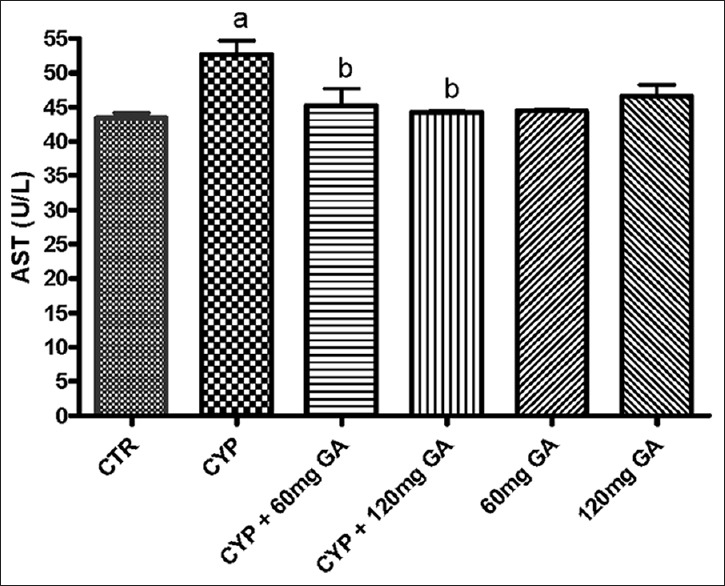
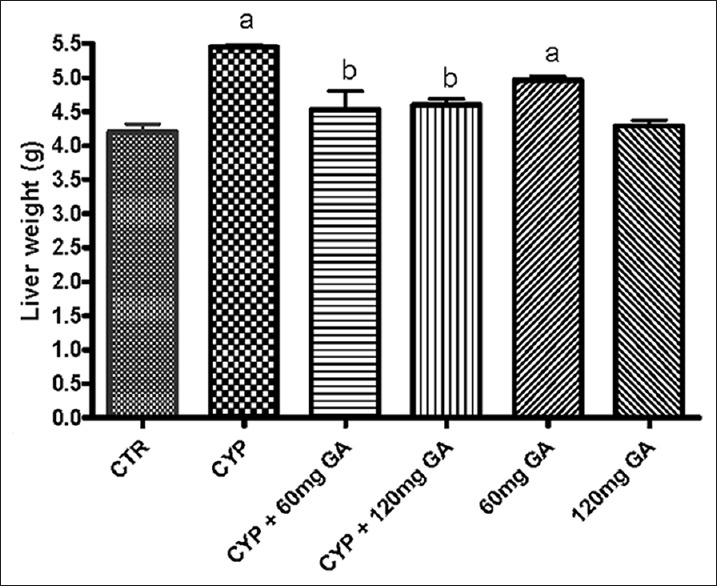
CPA induced hepatic damage as indicated by significant elevation (P < 0.05) in aspartate aminotransferase, organ weight, and evidence by the histological study. CPA also induced hepatic oxidative stress as indicated by significant elevation (P < 0.05) in malondialdehyde content, hydrogen peroxide (H2O2) generation, nitrite level, and the level of glutathione (GSH) peroxidase crashed in the CPA-treated group. GA enhanced the antioxidant defense system as indicated by significant elevation (P < 0.05) in GSH level, catalase activity, and GSH-S-transferase activity.
Taken together, the result of this present study shows that GA has a protective effect on CPA-induced hepatotoxicity.
没食子酸(GA)是一种内源性植物酚,已知具有抗氧化、清除自由基能力、抗炎、抗癌和抗真菌特性。本研究的目的是评估GA对环磷酰胺(CPA)诱导的雄性Wistar大鼠肝毒性的保护作用。
60只大鼠分为6组,每组10只。第1组给予蒸馏水。第2组在第1天腹腔注射200mg/kg单剂量的CPA。第3组和第4组在第1天腹腔注射单剂量的CPA(200mg/kg),然后分别用60mg/kg和120mg/kg体重的GA治疗14天。第5组和第6组的大鼠分别仅接受60mg/kg和120mg/kg体重的GA治疗14天。GA通过口服给药。
CPA诱导肝损伤,表现为天冬氨酸转氨酶、器官重量显著升高(P<0.05),组织学研究也证实了这一点。CPA还诱导肝氧化应激,表现为丙二醛含量、过氧化氢(H2O2)生成、亚硝酸盐水平显著升高(P<0.05),且CPA治疗组谷胱甘肽(GSH)过氧化物酶水平下降。GA增强了抗氧化防御系统,表现为GSH水平、过氧化氢酶活性和GSH-S-转移酶活性显著升高(P<0.05)。
综上所述,本研究结果表明GA对CPA诱导的肝毒性具有保护作用。