German Center for Neurodegenerative Diseases (DZNE), Otfried-Müller Strasse 23, Tübingen, 72076, Germany.
Department of Neurodegenerative Diseases, Hertie Institute for Clinical Brain Research, University of Tübingen, Tübingen, 72076, Germany.
Acta Neuropathol Commun. 2016 Apr 14;4(1):37. doi: 10.1186/s40478-016-0306-7.
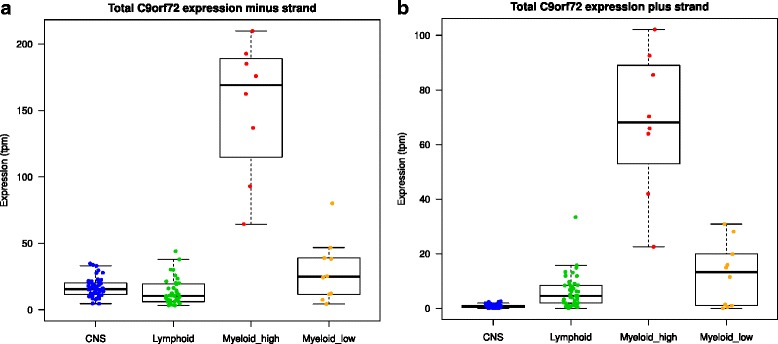
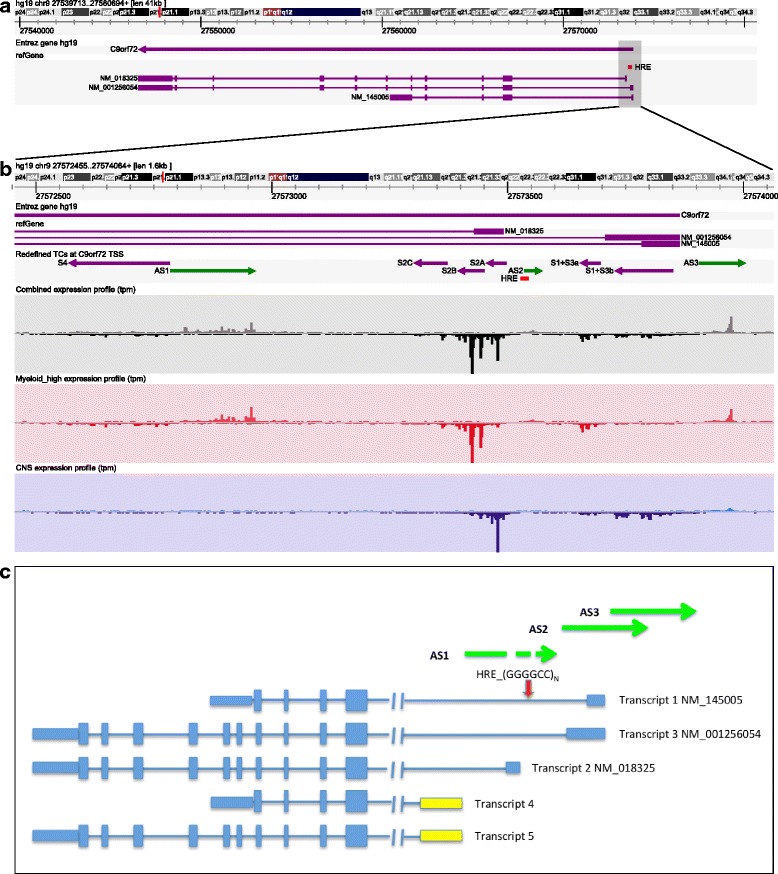
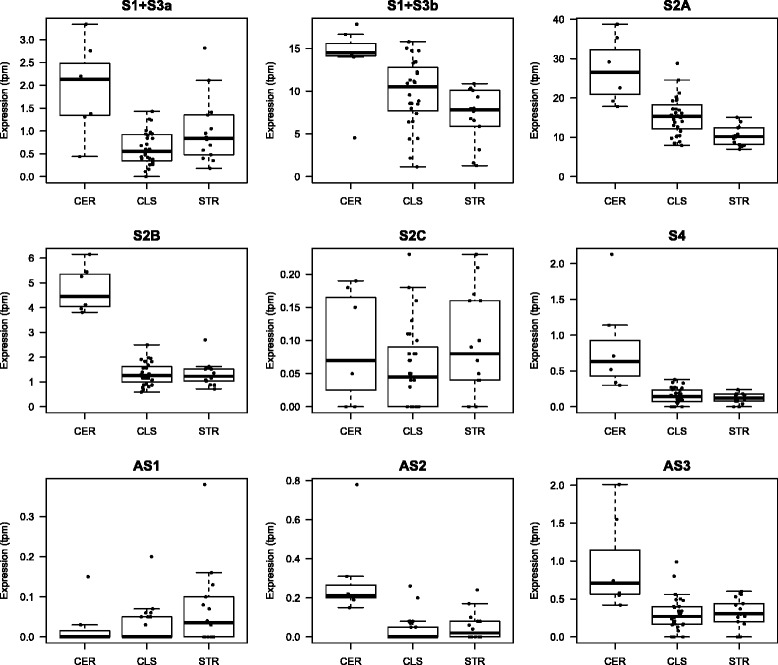
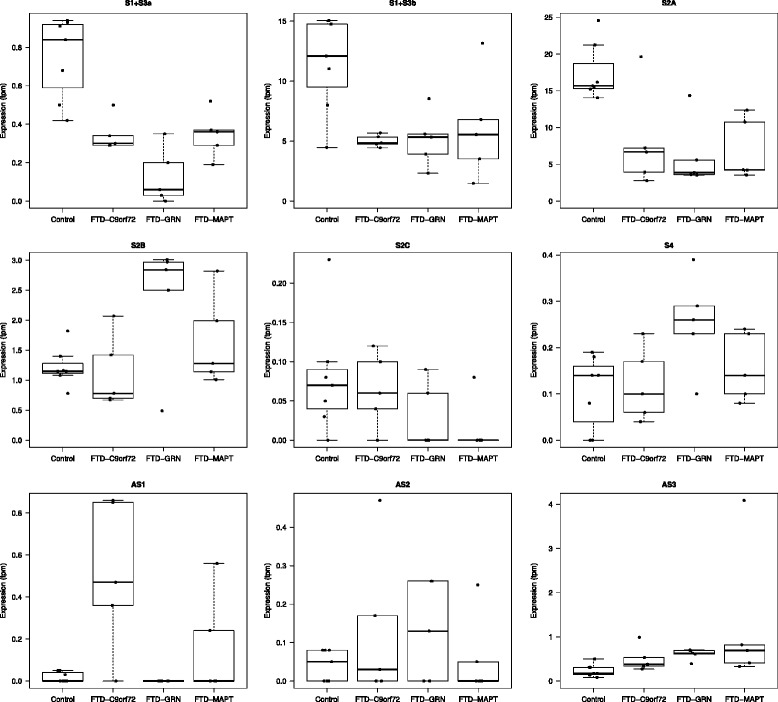
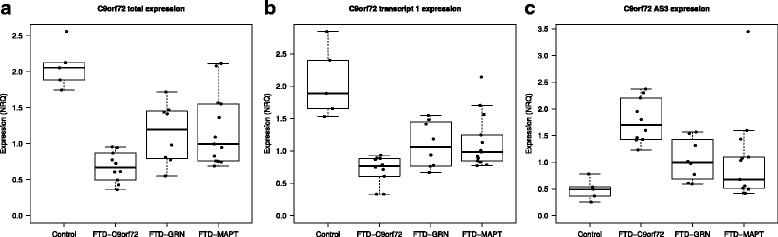
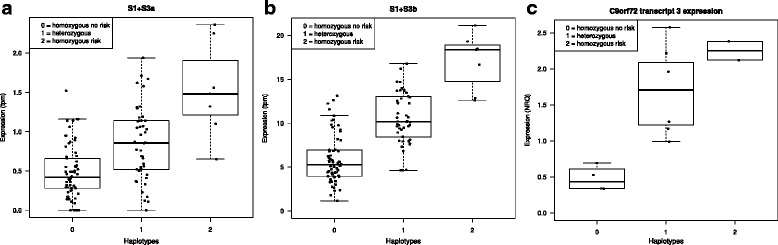
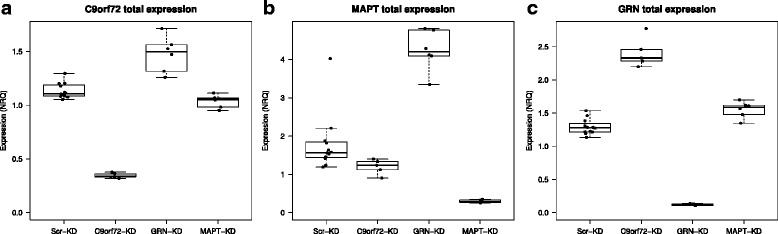
A non-coding hexanucleotide repeat expansion (HRE) in C9orf72 is a common cause of amyotrophic lateral sclerosis (ALS) and frontotemporal dementia (FTD) acting through a loss of function mechanism due to haploinsufficiency of C9orf72 or a gain of function mediated by aggregates of bidirectionally transcribed HRE-RNAs translated into di-peptide repeat (DPR) proteins. To fully understand regulation of C9orf72 expression we surveyed the C9orf72 locus using Cap Analysis of Gene Expression sequence data (CAGEseq). We observed C9orf72 was generally lowly expressed with the exception of a subset of myeloid cells, particularly CD14+ monocytes that showed up to seven fold higher expression as compared to central nervous system (CNS) and other tissues. The expression profile at the C9orf72 locus showed a complex architecture with differential expression of the transcription start sites (TSSs) for the annotated C9orf72 transcripts between myeloid and CNS tissues suggesting cell and/or tissue specific functions. We further detected novel TSSs in both the sense and antisense strand at the C9orf72 locus and confirmed their existence in brain tissues and CD14+ monocytes. Interestingly, our experiments showed a consistent decrease of C9orf72 coding transcripts not only in brain tissue and monocytes from C9orf72-HRE patients, but also in brains from MAPT and GRN mutation carriers together with an increase in antisense transcripts suggesting these could play a role in regulation of C9orf72. We found that the non-HRE related expression changes cannot be explained by promoter methylation but by the presence of the C9orf72-HRE risk haplotype and unknown functional interactions between C9orf72, MAPT and GRN.
C9orf72 中的非编码六核苷酸重复扩增 (HRE) 是肌萎缩侧索硬化症 (ALS) 和额颞叶痴呆 (FTD) 的常见病因,其作用机制为 C9orf72 的杂合子功能缺失或通过双向转录的 HRE-RNA 形成的聚合体介导的获得性功能,导致 C9orf72 功能丧失。为了全面了解 C9orf72 表达的调控机制,我们使用基因表达序列数据 (CAGEseq) 对 C9orf72 基因座进行了调查。我们观察到 C9orf72 的表达通常较低,但在一组髓样细胞中除外,尤其是 CD14+单核细胞的表达水平比中枢神经系统 (CNS) 和其他组织高七倍。C9orf72 基因座的表达谱显示出复杂的结构,髓样细胞和 CNS 组织之间注释的 C9orf72 转录本的转录起始位点 (TSS) 表达存在差异,表明存在细胞和/或组织特异性功能。我们还在 C9orf72 基因座的 sense 和 antisense 链上检测到新的 TSS,并在脑组织和 CD14+单核细胞中证实了它们的存在。有趣的是,我们的实验表明,不仅在 C9orf72-HRE 患者的脑组织和单核细胞中,而且在 MAPT 和 GRN 突变携带者的脑组织中,C9orf72 编码转录本的一致性减少,同时反义转录本增加,这表明它们可能在 C9orf72 的调控中发挥作用。我们发现,非 HRE 相关的表达变化不能用启动子甲基化来解释,而是与 C9orf72-HRE 风险单倍型的存在以及 C9orf72、MAPT 和 GRN 之间未知的功能相互作用有关。