Zhang Yueqi, Liu Chengeng, Wang Jinling, Li Qiliang, Ping Hong, Gao Shichao, Wang Peichang
Clinical Laboratory of Xuanwu Hospital, Capital Medical University, Beijing 100053, P.R. China.
Department of Medical Laboratory of Beijing Children's Hospital, Capital Medical University, Beijing 100053, P.R. China.
Sci Rep. 2016 Apr 15;6:24566. doi: 10.1038/srep24566.
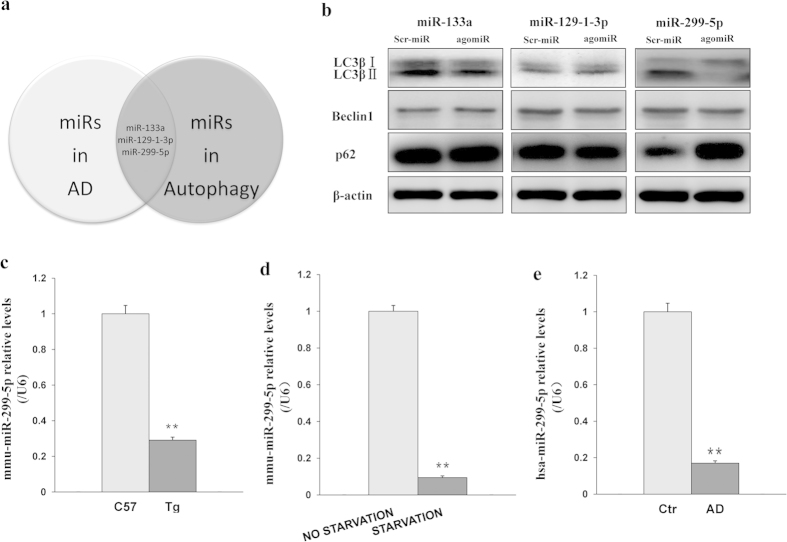
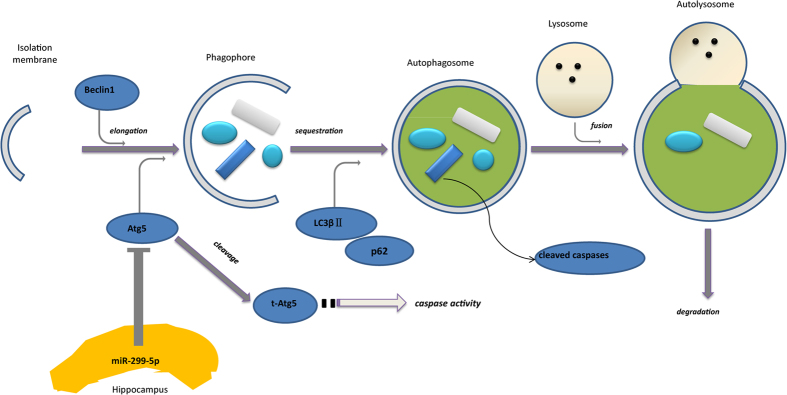
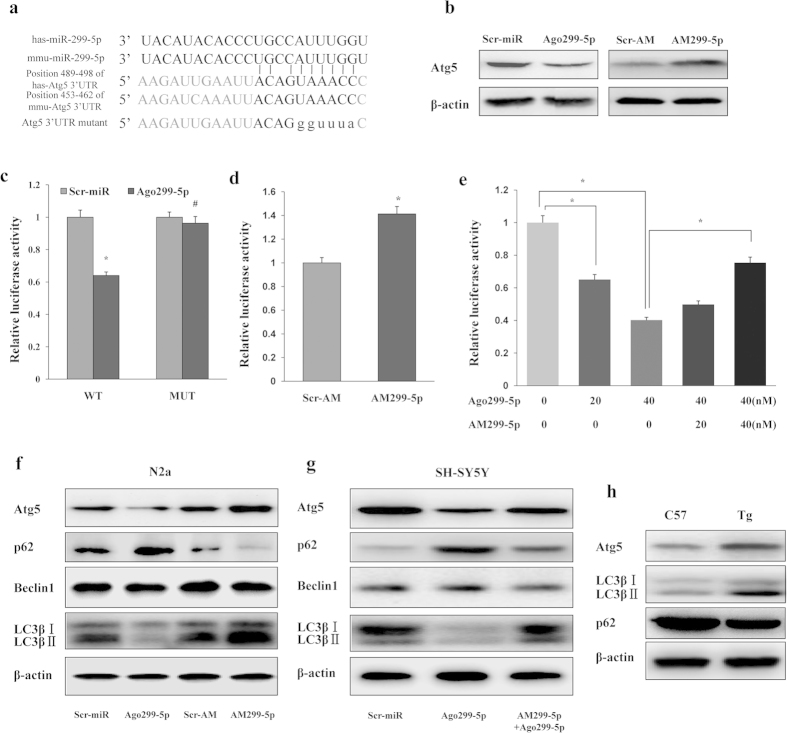
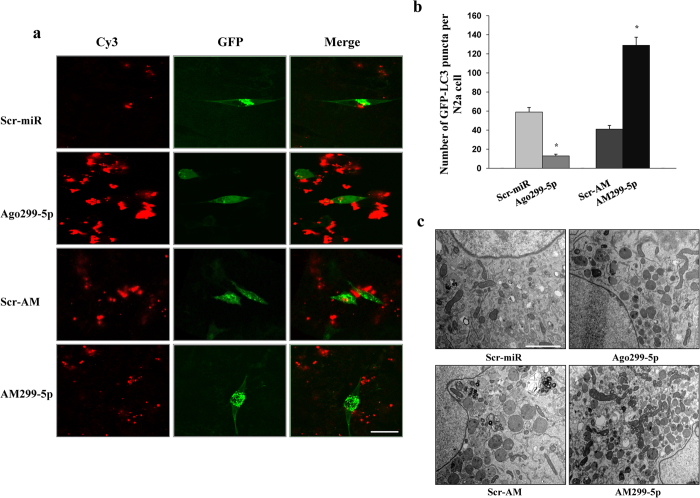
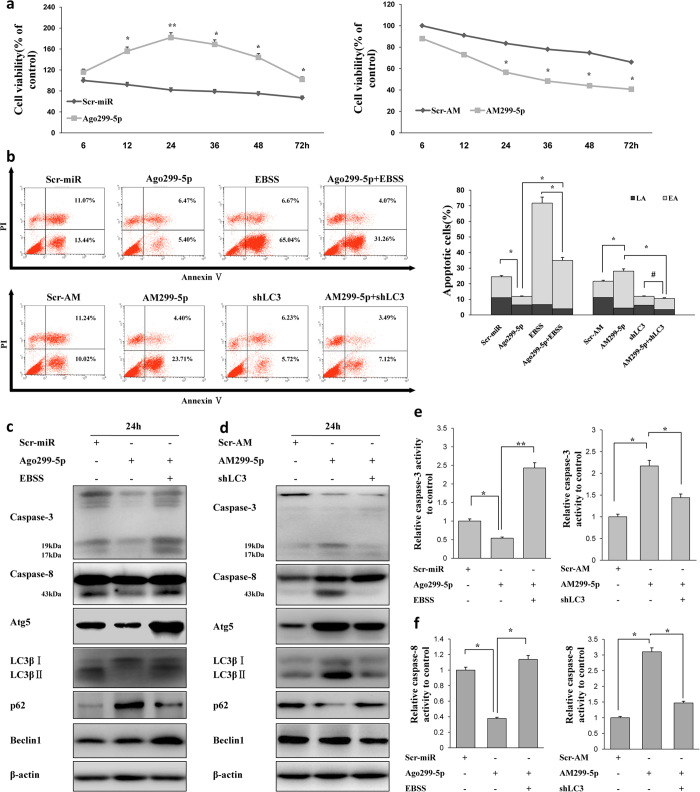
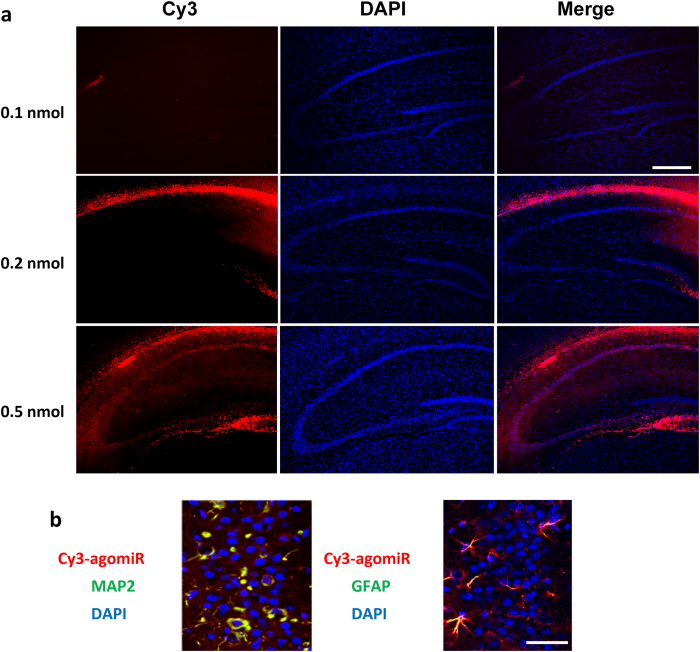
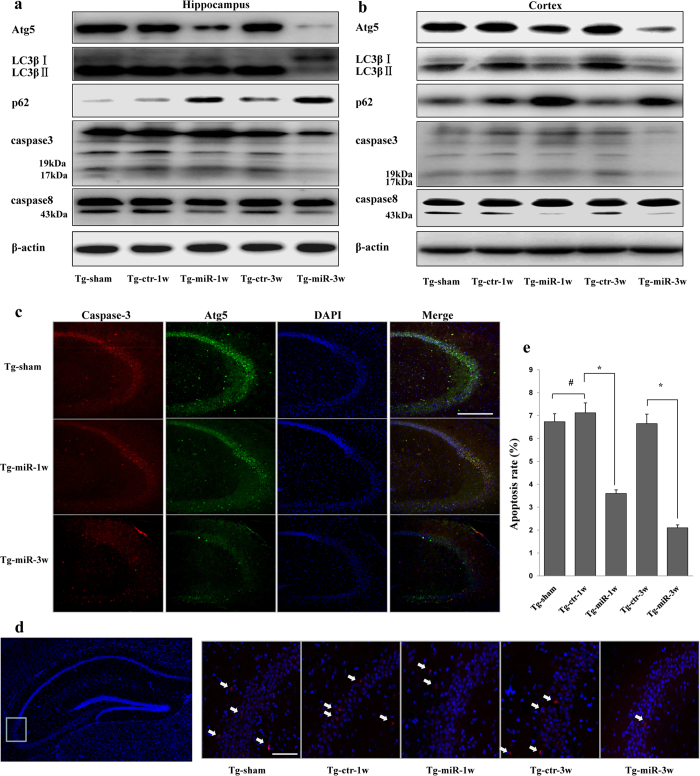
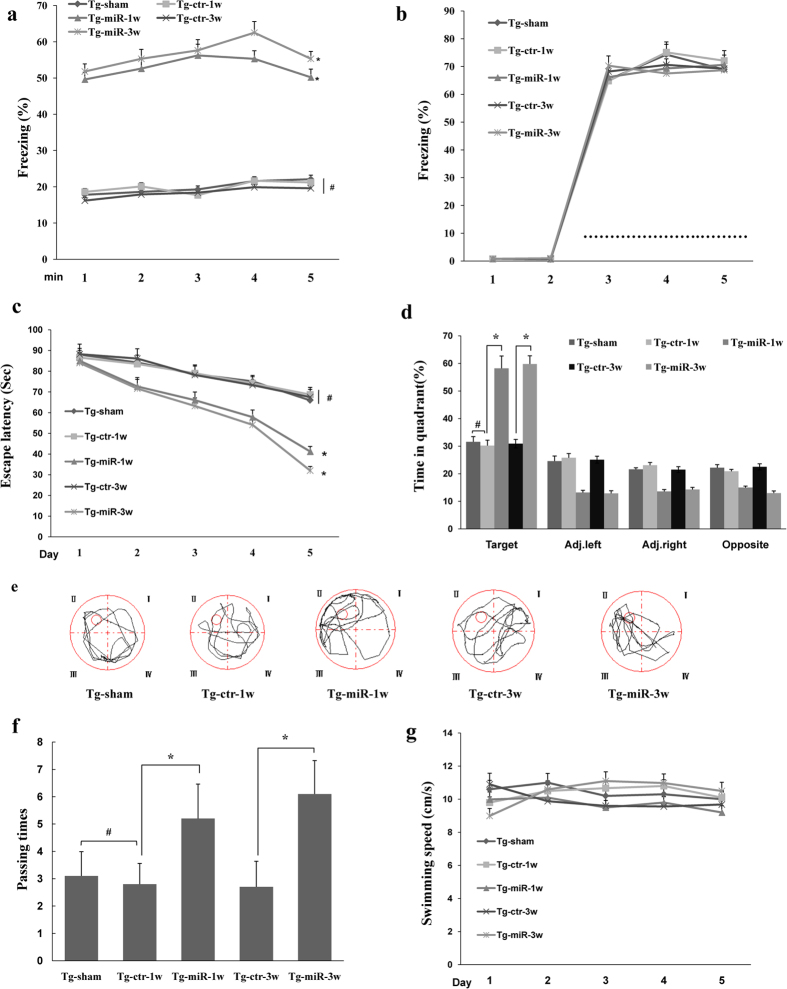
Abnormalities of autophagy can result in neurodegenerative disorders such as Alzheimer's disease (AD). Nevertheless, the regulatory mechanisms of autophagy in AD are not well understood. Here, we describe our findings that microRNA (miR)-299-5p functions as an autophagy inhibitor by suppressing Atg5 and antagonizing caspase-dependent apoptosis. We observed decreased levels of miR-299-5p both in primary neurons under conditions of starvation and in hippocampi of APPswe/PS1dE9 mice. Additionally, low levels of miR-299-5p were observed in cerebrospinal fluid of AD patients. MiR-299-5p treatment resulted in attenuation of Atg5 and autophagy in primary neurons from APPswe/PS1dE9 mice, N2a cells and SH-SY5Y cells, whereas antagomiR-299-5p enhanced autophagy. Atg5 was verified as a direct target of miR-299-5p by dual luciferase reporter assays. Furthermore, transfection of miR-299-5p into primary hippocampal neurons caused the attenuation of caspase-mediated apoptosis, which was reversed upon starvation-induced autophagy. Inhibition of autophagy by shRNA knockdown of LC3β reduced apoptotic neuron death induced by antagomiR-299-5p. Injection of agomiR-299-5p into the cerebral ventricles of AD mice inhibited both autophagy and apoptosis and also improved the cognitive performance of mice. Overall, our results suggest that miR-299-5p modulates neuron survival programs by regulating autophagy. Thus, miR-299-5p serves as a potential neuroprotective factor in AD.
自噬异常可导致神经退行性疾病,如阿尔茨海默病(AD)。然而,AD中自噬的调控机制尚未完全阐明。在此,我们描述了我们的研究结果,即微小RNA(miR)-299-5p通过抑制Atg5和拮抗半胱天冬酶依赖性凋亡发挥自噬抑制剂的作用。我们观察到,在饥饿条件下的原代神经元以及APPswe/PS1dE9小鼠的海马体中,miR-299-5p水平均降低。此外,在AD患者的脑脊液中也观察到miR-299-5p水平较低。用miR-299-5p处理可导致APPswe/PS1dE9小鼠的原代神经元、N2a细胞和SH-SY5Y细胞中Atg5和自噬减弱,而抗miR-299-5p则增强自噬。通过双荧光素酶报告基因检测证实Atg5是miR-299-5p的直接靶点。此外,将miR-299-5p转染到原代海马神经元中可导致半胱天冬酶介导的凋亡减弱,而饥饿诱导的自噬可逆转这种情况。通过短发夹RNA敲低LC3β抑制自噬可减少抗miR-299-5p诱导的凋亡神经元死亡。向AD小鼠脑室注射agomiR-299-5p可抑制自噬和凋亡,并改善小鼠的认知能力。总体而言,我们的结果表明,miR-299-5p通过调节自噬来调控神经元存活程序。因此,miR-299-5p可作为AD中一种潜在的神经保护因子。