Maus Marcela V, June Carl H
Massachusetts General Hospital Cancer Center, Harvard Medical School, Boston, Massachusetts.
Abramson Cancer Center, University of Pennsylvania, Philadelphia, Pennsylvania.
Clin Cancer Res. 2016 Apr 15;22(8):1875-84. doi: 10.1158/1078-0432.CCR-15-1433.
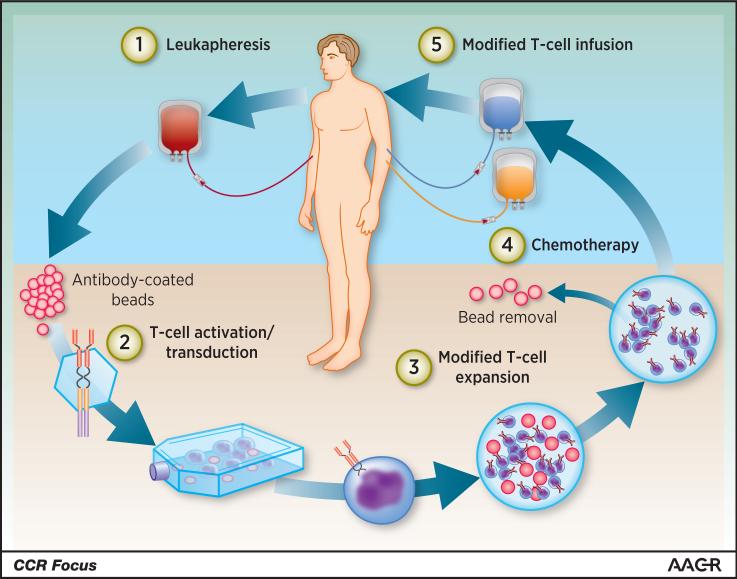
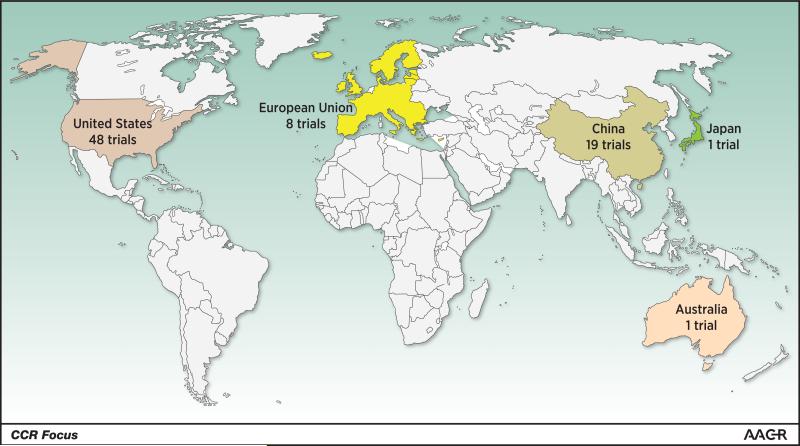
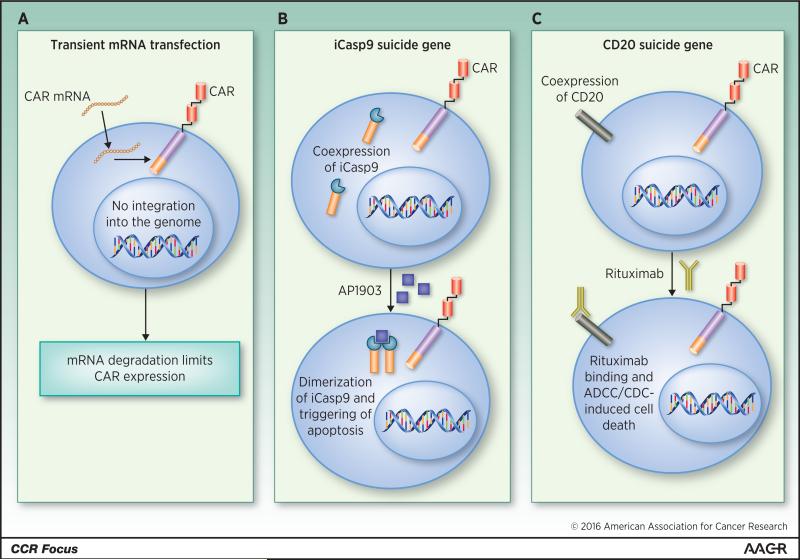
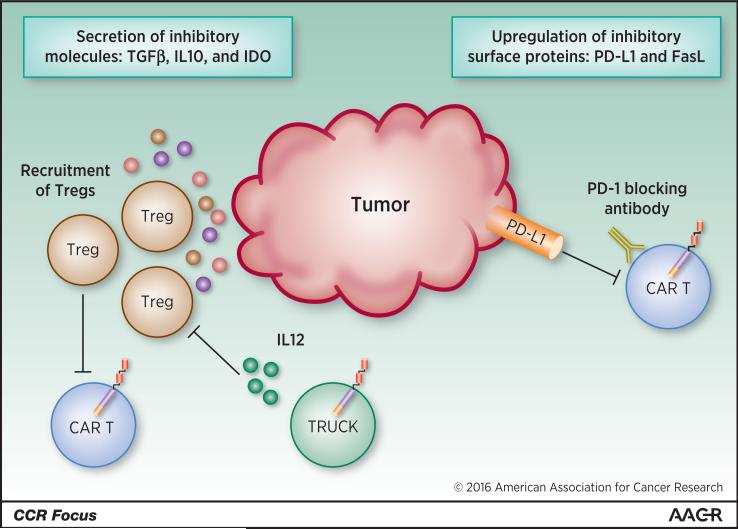
Chimeric antigen receptors (CAR) are engineered fusion proteins constructed from antigen recognition, signaling, and costimulatory domains that can be expressed in cytotoxic T cells with the purpose of reprograming the T cells to specifically target tumor cells. CAR T-cell therapy uses gene transfer technology to reprogram a patient's own T cells to stably express CARs, thereby combining the specificity of an antibody with the potent cytotoxic and memory functions of a T cell. In early-phase clinical trials, CAR T cells targeting CD19 have resulted in sustained complete responses within a population of otherwise refractory patients with B-cell malignancies and, more specifically, have shown complete response rates of approximately 90% in patients with relapsed or refractory acute lymphoblastic leukemia. Given this clinical efficacy, preclinical development of CAR T-cell therapy for a number of cancer indications has been actively investigated, and the future of the CAR T-cell field is extensive and dynamic. Several approaches to increase the feasibility and safety of CAR T cells are currently being explored, including investigation into the mechanisms regulating the persistence of CAR T cells. In addition, numerous early-phase clinical trials are now investigating CAR T-cell therapy beyond targeting CD19, especially in solid tumors. Trials investigating combinations of CAR T cells with immune checkpoint blockade therapies are now beginning and results are eagerly awaited. This review evaluates several of the ongoing and future directions of CAR T-cell therapy.
嵌合抗原受体(CAR)是一种经过工程改造的融合蛋白,由抗原识别、信号传导和共刺激结构域构建而成,可在细胞毒性T细胞中表达,目的是对T细胞进行重编程,使其特异性靶向肿瘤细胞。CAR T细胞疗法利用基因转移技术对患者自身的T细胞进行重编程,使其稳定表达CAR,从而将抗体的特异性与T细胞强大的细胞毒性和记忆功能结合起来。在早期临床试验中,靶向CD19的CAR T细胞在一群原本难治的B细胞恶性肿瘤患者中产生了持续的完全缓解,更具体地说,在复发或难治性急性淋巴细胞白血病患者中显示出约90%的完全缓解率。鉴于这种临床疗效,针对多种癌症适应症的CAR T细胞疗法的临床前开发已得到积极研究,CAR T细胞领域的未来广阔且充满活力。目前正在探索几种提高CAR T细胞可行性和安全性的方法,包括对调节CAR T细胞持久性的机制进行研究。此外,众多早期临床试验目前正在研究除靶向CD19之外的CAR T细胞疗法,尤其是在实体瘤中。研究CAR T细胞与免疫检查点阻断疗法联合使用的试验现已开始,人们急切期待结果。本综述评估了CAR T细胞疗法的一些当前及未来发展方向。