Bolund Elisabeth, Lummaa Virpi, Smith Ken R, Hanson Heidi A, Maklakov Alexei A
Department of Ecology and Genetics, Evolutionary Biology Centre, Uppsala University, Uppsala SE-752 36, Sweden.
Department of Biology, University of Turku, FIN-20014 Turku, Finland.
Sci Rep. 2016 Apr 18;6:24672. doi: 10.1038/srep24672.
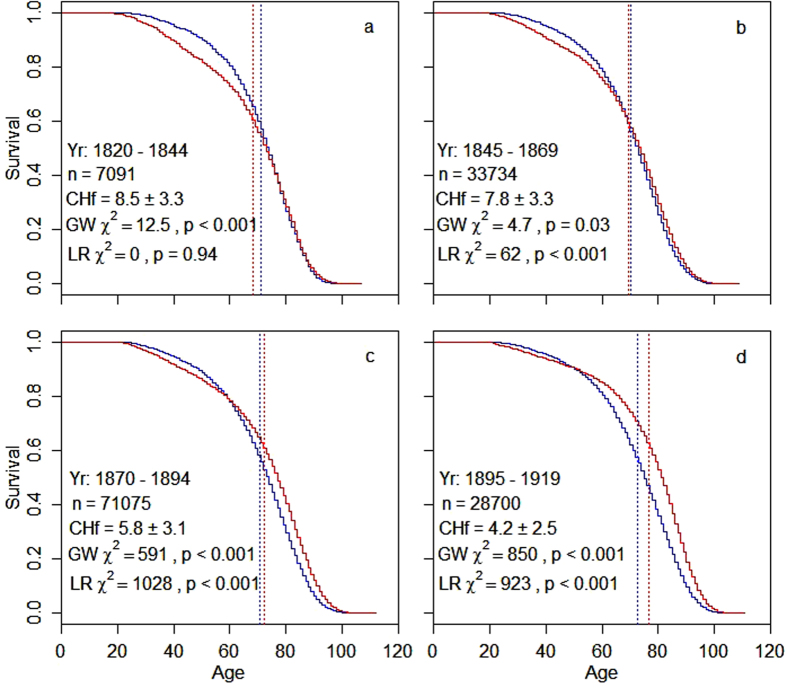
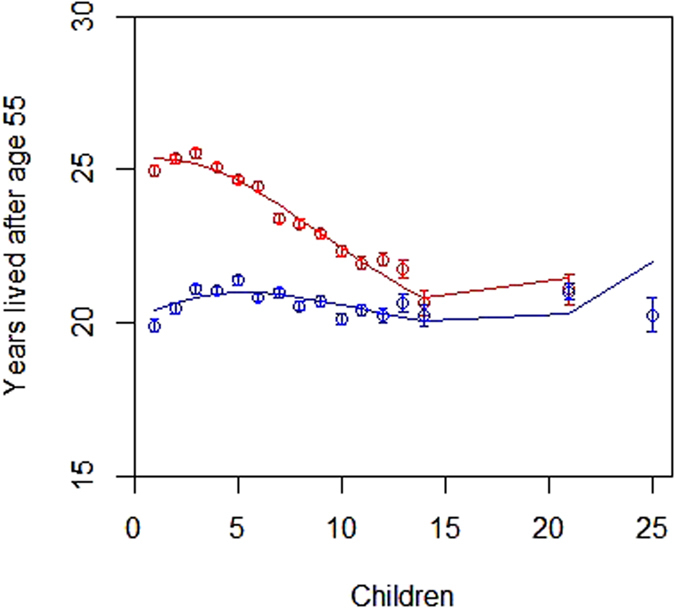
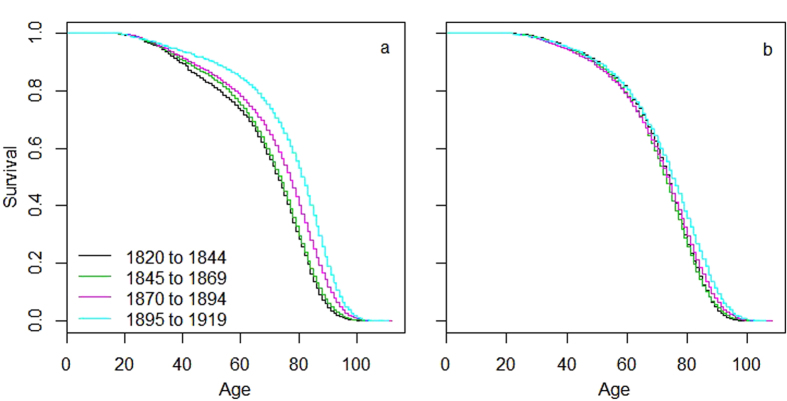
The causes underlying sex differences in lifespan are strongly debated. While females commonly outlive males in humans, this is generally less pronounced in societies before the demographic transition to low mortality and fertility rates. Life-history theory suggests that reduced reproduction should benefit female lifespan when females pay higher costs of reproduction than males. Using unique longitudinal demographic records on 140,600 reproducing individuals from the Utah Population Database, we demonstrate a shift from male-biased to female-biased adult lifespans in individuals born before versus during the demographic transition. Only women paid a cost of reproduction in terms of shortened post-reproductive lifespan at high parities. Therefore, as fertility decreased over time, female lifespan increased, while male lifespan remained largely stable, supporting the theory that differential costs of reproduction in the two sexes result in the shifting patterns of sex differences in lifespan across human populations. Further, our results have important implications for demographic forecasts in human populations and advance our understanding of lifespan evolution.
寿命性别差异背后的原因存在激烈争论。在人类中,女性通常比男性寿命长,但在人口结构向低死亡率和低生育率转变之前的社会中,这种差异通常不太明显。生活史理论表明,当女性比男性承担更高的生殖成本时,减少生育应该有利于女性寿命。利用犹他人口数据库中140600名育龄个体的独特纵向人口记录,我们证明了在人口转变之前和期间出生的个体中,成年寿命从男性偏向转向女性偏向。只有女性在高生育水平下因缩短生殖后期寿命而付出了生育成本。因此,随着时间推移生育率下降,女性寿命增加,而男性寿命基本保持稳定,这支持了两性不同的生殖成本导致不同人群寿命性别差异变化模式的理论。此外,我们的结果对人类人口的人口预测具有重要意义,并增进了我们对寿命演化的理解。